
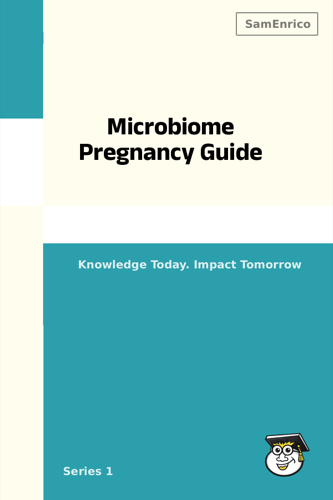
Microbiome Pregnancy Guide eBook
Optimize maternal gut health for baby's developmen
by Whitt Larita
Optimize maternal gut health for baby's development and postpartum recovery.
Formats
Free sample
Chapter 1: The Forgotten Organ...--When you think of the organs that sustain pregnancy, your mind likely goes to the uterus—that remarkable muscular cradle that expands from the size of a pear to house a full-term baby. Or perhaps the placenta, that temporary but mighty organ that orchestrates the exchange of oxygen, nutrients, and waste between mother and child. Maybe even the heart, which increases its output by nearly fifty percent to support the growing life within.But there is another organ—one that is not even technically "yours" in the conventional sense—that plays an equally critical role in determining the health of your pregnancy, the development of your baby, and the speed and completeness of your postpartum recovery. This organ is invisible. It is rarely discussed in obstetric appointments.
It does not appear on any standard ultrasound. And yet, it contains trillions of living organisms that collectively weigh as much as your brain and perform functions that no other part of your body can replicate.This organ is your gut microbiome.If you have never heard the term "microbiome" before, or if you have encountered it only as a vague health buzzword, you are not alone. Until very recently, the scientific community itself underestimated the profound influence that the community of bacteria, fungi, viruses, and other microorganisms living in your digestive tract has on virtually every aspect of human health. But over the past decade—and particularly with breakthrough research published in 2025 and 2026—our understanding has undergone a revolution. We now know that the gut microbiome is not a passive passenger along for the ride of pregnancy.
It is an active, dynamic, and metabolically powerful organ that changes in predictable ways to support fetal growth, programs the baby's developing immune system, and leaves a permanent mark on the mother's body that influences every subsequent pregnancy and her long-term health trajectory.This chapter will introduce you to this forgotten organ. You will learn what the microbiome actually is, how it communicates with the rest of your body, and why the period from conception through the first two years of your baby's life—known as the First 1000 Days—represents the most consequential window for microbial health that you will ever experience. You will also encounter one of the most surprising findings in modern reproductive science: the discovery that having a first child permanently rewires a woman's gut signature, creating what researchers call "microbiome memory." This memory does not benefit the first pregnancy itself—rather, it primes the mother's body for faster recovery and more efficient microbial transfer in subsequent pregnancies. In other words, the journey you are about to begin will change your body in ways that last far beyond this baby's first birthday.Let us start with the basics.What Exactly Is the Gut Microbiome?The word "microbiome" refers to the collective genetic material of all the microorganisms living in a particular environment. When scientists talk about the gut microbiome, they mean the community of roughly 100 trillion microbes—predominantly bacteria, but also including yeasts, other fungi, and even viruses—that reside in your gastrointestinal tract, with the highest concentrations in your large intestine.To put that number in perspective: you have approximately 30 trillion human cells in your body.
That means microbial cells outnumber your own cells by more than three to one. By cell count, you are more microbe than human.But numbers alone do not capture the functional importance of these organisms. Your gut bacteria are not freeloaders. They perform essential tasks that your own body cannot accomplish on its own. They break down dietary fibers that your digestive enzymes cannot handle, converting them into short-chain fatty acids—particularly butyrate, acetate, and propionate—that serve as fuel for the cells lining your colon, reduce inflammation throughout the body, and regulate appetite hormones.
They synthesize vitamins, including B vitamins and vitamin K. They metabolize bile acids, drugs, and environmental toxins. They train your immune system to distinguish between friend and foe, teaching it to attack pathogens while tolerating harmless substances like food proteins and your own tissues. And they communicate constantly with your brain via the gut-brain axis, influencing mood, stress responses, and even sleep quality.Not all gut microbiomes are created equal. The composition of your microbial community—which species are present and in what relative abundance—is shaped by a lifetime of factors: how you were born (vaginally or by C-section), whether you were breastfed, the foods you ate as a child and an adult, the medications you have taken (especially antibiotics), your stress levels, where you live, and even whether you have pets.
A diverse microbiome—one that contains many different species capable of performing many different functions—is generally a healthy microbiome. Low diversity, by contrast, is associated with a wide range of conditions, including obesity, type 2 diabetes, inflammatory bowel disease, allergies, asthma, depression, and even certain cancers.The Vocabulary of Gut Health: Probiotics, Prebiotics, and Postbiotics Before we go further, let us establish three terms that will appear throughout this book. Consider this your essential vocabulary for understanding the microbiome.Probiotics are live beneficial bacteria that, when consumed in adequate amounts, confer a health benefit. You can obtain probiotics from fermented foods—yogurt, kefir, kimchi, sauerkraut, miso, tempeh, and traditional buttermilk, among others—or from supplements that contain specific strains such as Lactobacillus rhamnosus GG, Bifidobacterium infantis, or Saccharomyces boulardii (a beneficial yeast). Probiotics work by directly adding beneficial organisms to your gut, where they can outcompete harmful bacteria, produce antimicrobial compounds, and interact with your immune system.Prebiotics are dietary fibers that your body cannot digest but that serve as food for beneficial gut bacteria.
Think of prebiotics as fertilizer for your microbial garden. Common prebiotics include inulin (found in chicory root, garlic, onions, and leeks), fructooligosaccharides (found in bananas, asparagus, and artichokes), galactooligosaccharides (found in legumes and dairy), and resistant starch (found in cooled potatoes, green bananas, cooked-and-cooled rice, and legumes). By consuming prebiotic-rich foods, you encourage the growth and activity of beneficial bacteria like Bifidobacterium and Lactobacillus.Postbiotics are the beneficial compounds that bacteria produce when they ferment prebiotic fibers. The most important postbiotics are short-chain fatty acids, particularly butyrate. Butyrate serves as the primary fuel source for the cells lining your colon, strengthens the gut barrier (preventing "leaky gut"), reduces inflammation, regulates appetite, and even influences gene expression.
Other postbiotics include antimicrobial peptides that kill pathogens and neurotransmitters like serotonin and GABA that affect mood and stress. When you support your microbiome with probiotics and prebiotics, the postbiotics your bacteria produce do much of the actual healing work.Throughout this book, you will encounter specific recommendations for incorporating probiotics and prebiotics into your diet during preconception, each trimester, and postpartum. You will also learn how to optimize your body's production of postbiotics, which are particularly important for reducing pregnancy-related inflammation and supporting your baby's developing immune system.The First 1000 Days: Why This Window Matters More Than Any Other The concept of the First 1000 Days—the period from conception to a child's second birthday—has become foundational in developmental biology, and for good reason. During this window, the brain grows faster than at any other time in life, the immune system learns to…
This is the end of the free sample. Get the eBook to keep going. Buy now
About this book
Details
- Author
- Whitt Larita
- Publisher
- SamEnrico
- Language
- English
- Genre
- Non-Fiction, Health & Wellness, Prenatal
- Released
- 2026-06-12
- Pages (approx.)
- 151
- Available as
- eBook, Audiobook

Read better in the ZLOADR app
Your eBooks on your phone or tablet. Sign in with your SamEnrico account and start reading.
More by Whitt Larita
 Chewing Tobacco Cessation GuideWhitt Larita$11.99
 Telecommuting for CalmWhitt Larita$11.99
 Daily Review for Couples GuideWhitt Larita$11.99
 Female Rulers Military Leadership StylesWhitt Larita$11.99
 Soul Stirrings: The Unseen Battles of Motown’s Backstage RevolutionariesWhitt Larita$11.99
 The DNA Thief: Unraveling the Heist That Rewrote Human HistoryWhitt Larita$11.99
 Gen X Meal Kit Spending GuideWhitt Larita$12.99
 Tax Implications Cross Border PaymentsWhitt Larita$12.99
 Internal Sales RepresentativeWhitt Larita$11.99
 How to Become a Inspector Of DredgingWhitt Larita$11.99
You may also like
 Vegan Pregnancy NutritionDotson Lesley$11.99
 Folate Pregnancy Neural Tube GuideSchuster Katheleen$11.99
 Detox For Pregnant WomenRowan Astrid$11.99
 Pregnancy Pelvic Health GuideRooney Columbus$11.99
 Perineal Massage TechniqueUrban Kandra$11.99
 Choline Brain Development GuideSmiley Lajuana$11.99
 Diarrhea in PregnancyHowe Sabina$11.99
 Constipation in PregnancyLadner Kimbery$11.99
 The Pregnancy Toxin GuideNagel Kristian$11.99
 Pregnancy Essential Oil GuideGuerin Ima$11.99
 IBS And Pregnancy GuideKruger Renay$11.99
 HIIT During Pregnancy GuideJay Ninfa$11.99