
Non-FictionHealth & WellnessPrebiotics
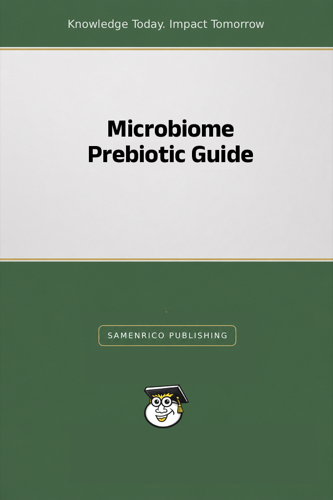
Microbiome Prebiotic Guide eBook
Selects prebiotics based on test results.
by Gary Isaura
Selects prebiotics based on test results.
Formats
Free sample
Chapter 1: The Fiber Lie...--I spent three years bloated, constipated, and exhausted while following every piece of "expert" advice perfectly. I ate my thirty plants a week. I loaded up on beans, lentils, and whole grains. I bought the expensive probiotics. And every single day, I looked six months pregnant by 4:00 PM.My doctor told me to eat more fiber.
So I did. I added ground flaxseed to my smoothies. I switched to brown rice. I snacked on raw vegetables. My bloating got worse.
My constipation, which had been intermittent, became constant. I started canceling dinner plans because I couldn't fit into my clothes by evening. I stopped going to yoga because lying on my stomach was agony.The breaking point came on a Tuesday. I had eaten my "perfect" gut-health lunch: a large salad with chickpeas, quinoa, roasted vegetables, and a generous sprinkle of chia seeds. By 3:00 PM, I was curled up in my office chair, sweat beading on my forehead, unable to stand up straight.
My colleague asked if I needed to go to the emergency room. I almost said yes.Instead, I went home and spent the next six hours on my bathroom floor.That night, I did what any desperate person does: I started searching. I read every best-selling gut health book I could find. I joined online forums. I spent hundreds of dollars on stool tests and breath tests.
And slowly, painfully, I discovered the truth that no one had told me.The advice to "eat more fiber" is not just oversimplified. For millions of people, it is actively harmful.This book exists because that night on my bathroom floor should not have happened. And it should not be happening to you.The One-Size-Fits-All Disaster Let me be direct: telling everyone to eat more fiber is like telling everyone to exercise more without asking if they have a broken leg. For someone with a healthy, resilient gut, more fiber is generally beneficial. But for someone with irritable bowel syndrome, small intestinal bacterial overgrowth, or histamine intolerance, more fiber can be catastrophic.The problem is that "fiber" is not one thing.
It is an umbrella term that covers dozens of different compounds with completely different effects on the human body. Some fibers increase stool bulk without changing your gut bacteria at all. Others are rapidly fermented and produce large amounts of gas. Some feed beneficial bacteria. Others feed the very bacteria that are making you sick.And yet, the standard medical advice remains stubbornly generic: "Eat more fiber.
Drink more water. Move your body."This is not malicious advice. Most doctors receive fewer than ten hours of nutrition training in medical school. They are repeating what they were taught. But that does not make it less dangerous for the person sitting in their office, bloated and miserable, being told to add more beans to their diet.The three populations most harmed by generic fiber advice are:Irritable Bowel Syndrome (IBS): Approximately 10-15 percent of the global population has IBS.
For these individuals, the gut is hypersensitive. Normal amounts of gas and distension cause pain. Rapidly fermented fibers like inulin and FOS—which are heavily promoted as "prebiotic superfoods"—can trigger debilitating symptoms within hours.Small Intestinal Bacterial Overgrowth (SIBO): When bacteria that belong in the colon migrate to the small intestine, they ferment any carbohydrate they encounter. Fiber that reaches the small intestine feeds these misplaced bacteria, causing massive gas production, bloating, and either diarrhea or constipation. For SIBO patients, many "healthy" fibers are essentially fuel for the fire.Histamine Intolerance: Some people cannot effectively break down histamine, a compound produced by certain gut bacteria during fermentation.
When these individuals eat fermentable fibers, they experience not just gut symptoms but systemic reactions: brain fog, fatigue, anxiety, headaches, and even skin rashes. Their "healthy" diet is poisoning them.If you are reading this book, you are likely in one of these three groups. You have tried the standard advice. You have eaten the kale salads and the lentil soups and the overnight oats. And you have gotten sicker.That is not your fault.
The advice was wrong for your body. And this book is going to show you why.The Critical Distinction: Fiber vs. Prebiotic Before we go any further, we need to establish a distinction that most books and doctors completely ignore. It is the foundation of everything that follows.Dietary fiber refers to the structural parts of plants that resist digestion. Think of the stringy parts of celery, the tough skins of corn, the husk of wheat bran.
These fibers primarily increase stool bulk and speed up transit time. They do not significantly alter your gut microbiome because they are not readily fermentable. They are like a broom sweeping through your colon: useful for regularity, but not for changing the bacterial ecosystem.Functional prebiotics are selectively fermented ingredients that specifically feed beneficial bacteria. They are not just any fiber. They are targeted fertilizers for your gut garden.
Inulin from chicory root is a prebiotic. Fructooligosaccharides are prebiotics. Galactooligosaccharides are prebiotics. Resistant starch is a prebiotic. Polyphenols from dark chocolate and red wine function as prebiotics.Here is the crucial point: all prebiotics are fibers, but not all fibers are prebiotics.
And more importantly, not all prebiotics are right for all people.The generic advice to "eat more fiber" lumps together insoluble roughage (which may help constipation but does nothing for dysbiosis) with rapidly fermented prebiotics (which may cause explosive symptoms in sensitive individuals). It is like telling someone to "add more liquid to their engine" without specifying whether they need oil, gasoline, or coolant. The wrong choice will destroy the engine.In this book, we are focused exclusively on functional prebiotics. We are not here to debate whether you should eat vegetables. You should.
But we are here to acknowledge that for many people, the standard "prebiotic" vegetables—onions, garlic, asparagus, artichokes, leeks—are the very foods causing their symptoms.And that is where the testing-first methodology comes in.The Evolution of Gut Science: From Diversity to Precision The first wave of popular gut health books—exemplified by Dr. Will Bulsiewicz's excellent Fiber Fueled—made a powerful and necessary argument: eat more plants, eat more variety, and your gut microbiome will thrive. This message was a crucial corrective to the low-carb, low-fiber diets that dominated the early 2000s. For healthy people, it remains excellent advice.But there is a problem that Bulsiewicz and others have begun to acknowledge: a significant subset of readers cannot follow their protocols. They try to add the thirty plants per week.
They try to increase their fiber intake gradually. And they end up in agony.The second wave of gut science—what I call the precision microbiome approach—accepts that diversity is a worthy goal but recognizes that not everyone can start there. Some people need to reduce fermentable fibers before they can increase diversity. Some people need to treat SIBO before they can tolerate any prebiotic. Some people need to avoid certain fibers entirely because their unique bacterial profile reacts poorly to them.This is not a rejection of the diversity message.
It is a refinement. It is the difference between telling someone to "exercise more" and giving them a physical therapy…
This is the end of the free sample. Get the eBook to keep going. Buy now
About this book
Details
- Author
- Gary Isaura
- Publisher
- SamEnrico
- Language
- English
- Genre
- Non-Fiction, Health & Wellness, Prebiotics
- Released
- 2026-06-10
- Pages (approx.)
- 141
- Available as
- eBook, Audiobook

Read better in the ZLOADR app
Your eBooks on your phone or tablet. Sign in with your SamEnrico account and start reading.
More by Gary Isaura
 Empathy For Postpartum MoodGary Isaura$11.99
 Governor's Second Term BluesGary Isaura$11.99
 Child Loss Parent Self Care GuideGary Isaura$11.99
 The Financial Envy Release GuideGary Isaura$11.99
 Weekend Sleep Catch Up GuideGary Isaura$11.99
 Supply Chain Crisis GuideGary Isaura$11.99
 Subclinical HypothyroidismGary Isaura$11.99
 The Khan’s Lightning: Subutai’s Ride to the Ends of the EarthGary Isaura$11.99
 The Billion-Dollar Bet: How a Math Genius Broke Wall StreetGary Isaura$11.99
 The Great Firewall: How China’s Digital Iron Curtain Reshaped the WorldGary Isaura$11.99
 Small Business Climate Insurance GuideGary Isaura$12.99
 Kyoto University ScholarshipsGary Isaura$12.99
You may also like
 Hong Kong Handover 1997Dunn Johnnie$11.99
 Zumba For Postnatal Recovery CourseNeal Christian$11.99
 Zumba for BeginnersLadner Nikia$11.99
 YouTube Comment Mining GuideHumes Pandora$12.99
 Worry Box MeditationCarlin Rudy$11.99
 Workplace Stress MeditationNguyen Lynn$11.99
 Workplace Stress and Sleep RepairHawley Ivory$11.99
 Workplace Perfectionism CureDelaney Jeffry$11.99
 Workplace Injustice Anger GuideWallen Isabelle$11.99
 Work Addiction and Burnout LinkGreenwood Ester$11.99
 Women in Yoga and WellnessBeattie Galina$11.99
 Women in Stand Up ComedyChun Evangeline$11.99