
Non-FictionHealth & WellnessEndurance
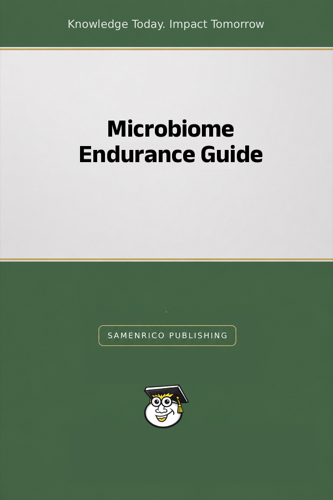
Microbiome Endurance Guide eBook
Boosts stamina through gut-derived metabolites.
by Tyler Lila
Boosts stamina through gut-derived metabolites.
Formats
Free sample
Chapter 1: The Endurance Organ--Every athlete knows the feeling. You have trained for months. Your heart is strong. Your lungs are ready. Your legs have logged thousands of miles.
And yet, on race day, something fails. Not your muscles. Not your will. Something deeper. You hit the wall at mile eighteen when you know you had twenty-two in you.
Your perceived exertion spikes for no reason. Your recovery takes days instead of hours. You cramp despite drinking all the right fluids. You have done everything right, and still, your body betrays you.The problem is not in your heart. It is not in your lungs.
It is not even in your muscles. The problem is in an organ you never knew you had.For decades, sports science has operated under a simple assumption: endurance is a function of cardiovascular capacity, muscular efficiency, and mental toughness. Train the heart to pump more blood. Train the lungs to exchange more oxygen. Train the muscles to clear lactate.
Train the mind to suffer longer. These are the pillars of traditional endurance training. They are not wrong. They are simply incomplete.Hidden within your digestive tract lies an ecosystem of staggering complexity. One hundred trillion microbes.
Over a thousand different species. Three million unique genes — one hundred times more than your own human genome. This is your gut microbiome, and it functions as a metabolic organ more powerful than your liver, more influential than your kidneys, and more directly connected to your performance than any supplement you have ever taken.This chapter will fundamentally change how you think about stamina. You will learn why elite athletes have different gut bacteria than everyone else. You will discover how microbial diversity directly determines your VO2 max and lactate threshold.
You will take a self-assessment to determine your current "microbial fitness age." And you will begin the first actionable step of your journey: a seven-day baseline log that will reveal exactly how your gut is either fueling or sabotaging your endurance.The old model of endurance training is dying. In its place rises a new paradigm where stamina is not just cardiovascular and muscular but microbial. Welcome to the era of the endurance organ.The Organ You Never Knew You Had The word "organ" typically conjures images of discrete anatomical structures: the heart, the liver, the kidneys. These are solid, visible, measurable. The gut microbiome is none of these things.
It is a fluid, invisible, constantly shifting ecosystem. And yet, by every functional definition, it is an organ.Consider the evidence. The liver weighs approximately three pounds and produces over five hundred known metabolic functions. The gut microbiome weighs approximately two to five pounds and produces thousands of metabolic functions. The liver processes nutrients, detoxifies compounds, and synthesizes proteins.
The gut microbiome processes undigested fiber, synthesizes essential vitamins, produces short-chain fatty acids that fuel your cells, and regulates your immune system. The liver communicates with the rest of your body via hormones and bloodstream signaling. The gut microbiome communicates via neurotransmitters, short-chain fatty acids, and immune modulators that travel systemically.The parallels are not coincidental. The gut microbiome is so integral to human physiology that many scientists now refer to it as the "forgotten organ" or the "microbial organ." In fact, a landmark paper in the journal Gut argued that the microbiome should be classified as an organ system in its own right, given its structural organization, metabolic activity, and impact on host physiology.For the endurance athlete, this reconceptualization is not academic. It is practical.
Your microbiome is metabolically active during exercise. It produces fuel while you run. It buffers acid while you bike. It clears lactate while you swim. It influences your brain's perception of fatigue.
It determines how quickly you recover. When your microbiome is healthy and diverse, it functions as a silent partner, providing energy and resilience without any conscious effort. When it is compromised, it acts as a metabolic drag, forcing your heart and lungs to work harder to achieve the same output.The difference can be measured in minutes per mile, watts per kilogram, and hours of recovery.What the Elite Athletes Teach Us In 2017, a team of researchers led by Dr. Jonathan Scheiman at Harvard Medical School made a remarkable discovery. They analyzed the gut microbiomes of elite marathon runners and Olympic rowers and compared them to sedentary controls.
The differences were striking. The athletes had significantly higher microbial diversity — meaning a wider range of bacterial species — than the non-athletes. More importantly, the athletes harbored specific bacteria that were either absent or rare in the control group.One bacterium, Veillonella atypica, stood out. It was present in nearly all of the elite runners but in almost none of the sedentary individuals. When the researchers isolated Veillonella and administered it to mice, the mice ran significantly longer on treadmill tests than controls.
The mechanism? Veillonella consumes lactate — the molecule traditionally viewed as a waste product and a cause of muscle fatigue — and converts it into propionate, a short-chain fatty acid that can be used as fuel.This discovery upended conventional sports physiology. Lactate is not merely a marker of fatigue. It is a potential fuel source. The difference depends entirely on whether you have the right bacteria to process it.Since that initial study, dozens of others have confirmed and extended the findings.
A 2019 study of professional cyclists found that gut microbial diversity correlated directly with peak power output and time to exhaustion. A 2020 study of ultramarathon runners found that microbial composition changed during a 100-mile race, with certain bacteria blooming to consume the byproducts of extreme exertion. A 2022 meta-analysis of over one thousand athletes concluded that athletic status is one of the strongest predictors of gut microbial diversity, rivaling diet and medication use.These studies point to an inescapable conclusion: elite athletes do not just train their hearts and lungs. They also train their microbiomes. The question is whether you can do the same.The answer, as you will see throughout this book, is a resounding yes.
The microbiome is not fixed. It changes in response to diet, exercise, stress, sleep, and targeted interventions. You can cultivate a high-performance microbiome just as you can cultivate a high-performance cardiovascular system.The Microbial Fitness Axis The relationship between exercise and the gut microbiome is bidirectional. Exercise improves the microbiome. The microbiome improves exercise capacity.
This two-way street is what we call the "microbial fitness axis."Let us examine each direction separately.How Exercise Shapes the Microbiome Multiple mechanisms explain why exercise benefits gut bacteria. First, exercise increases blood flow to the gut, which supports the growth and activity of beneficial microbes. Second, exercise reduces systemic inflammation, which creates a more hospitable environment for diverse bacterial species. Third, exercise alters the production of short-chain fatty acids and bile acids, which serve as signaling molecules that influence microbial composition.Perhaps most directly, exercise increases the production of lactate in the muscles. That lactate enters the bloodstream, travels to the gut, and serves as a food source for lactate-consuming bacteria like Veillonella.
In other words, when you exercise hard, you are literally feeding the bacteria that will later help you exercise harder.Studies have shown that even…
This is the end of the free sample. Get the eBook to keep going. Buy now
About this book
Details
- Author
- Tyler Lila
- Publisher
- SamEnrico
- Language
- English
- Genre
- Non-Fiction, Health & Wellness, Endurance
- Released
- 2026-06-07
- Pages (approx.)
- 146
- Available as
- eBook, Audiobook

Read better in the ZLOADR app
Your eBooks on your phone or tablet. Sign in with your SamEnrico account and start reading.
More by Tyler Lila
 Meditation For Nerve PainTyler Lila$11.99
 Blue Zone Seafood GuideTyler Lila$11.99
 The Forgiveness MemoirTyler Lila$11.99
 Leonardo da Vinci: The War Machine That Never WasTyler Lila$11.99
 US LLC Formation for Digital NomadsTyler Lila$12.99
 How to Produce Bus TubsTyler Lila$11.99
 Floor ManagerTyler Lila$11.99
 How to Start a Architectural Service BusinessTyler Lila$11.99
You may also like
 Hong Kong Handover 1997Dunn Johnnie$11.99
 Zumba For Postnatal Recovery CourseNeal Christian$11.99
 Zumba for BeginnersLadner Nikia$11.99
 YouTube Comment Mining GuideHumes Pandora$12.99
 Worry Box MeditationCarlin Rudy$11.99
 Workplace Stress MeditationNguyen Lynn$11.99
 Workplace Stress and Sleep RepairHawley Ivory$11.99
 Workplace Perfectionism CureDelaney Jeffry$11.99
 Workplace Injustice Anger GuideWallen Isabelle$11.99
 Work Addiction and Burnout LinkGreenwood Ester$11.99
 Women in Yoga and WellnessBeattie Galina$11.99
 Women in Stand Up ComedyChun Evangeline$11.99