
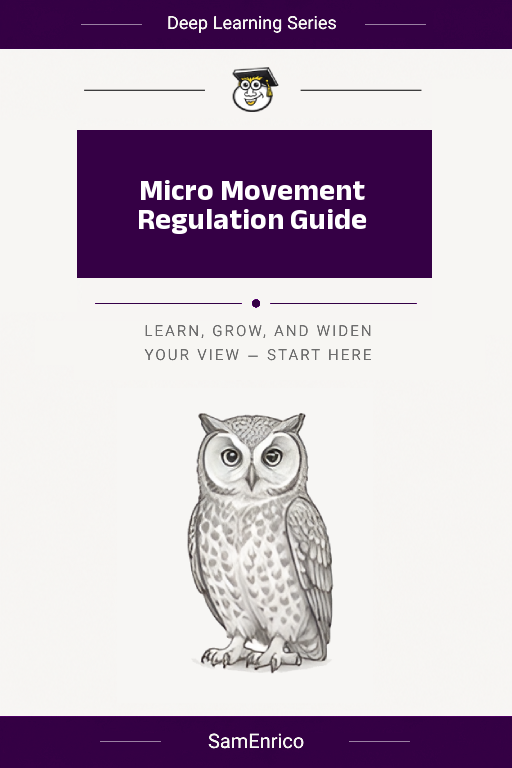
Non-FictionMental WealthMovement Therapy
Micro Movement Regulation Guide eBook
Shake, stretch, or sway for one minute to discharg
Shake, stretch, or sway for one minute to discharge stress hormones and reset your autonomic nervous system.
Formats
Free sample
Chapter 1: Your Built-in Reset Button--–- The body has always known how to heal. The problem is that modern life has taught us to ignore it.You wake up tired. You spend the day wired. You fall into bed exhausted but cannot sleep. Your jaw aches.
Your shoulders live somewhere near your ears. Your breath never seems to go deep enough. You have tried meditation, but sitting still makes your skin crawl. You have tried therapy, and while it helped your mind, your body remains stuck in a state of low-grade emergency. You have tried exercise, but after a long day, the thought of a workout feels like one more obligation rather than a release.This is not a personal failing.
It is a physiological reality.Your autonomic nervous system — the ancient, automatic command center that regulates heart rate, breathing, digestion, and stress response — was never designed for the modern world. It was designed for brief, intense threats followed by complete discharge. A predator appears. You fight or flee. The threat passes.
You shake, stretch, or collapse. Then you return to baseline.But you do not face predators. You face emails, notifications, traffic, deadlines, arguments, news cycles, and the endless hum of digital connection. Each of these triggers the same ancient stress response. Unlike a predator, however, they do not pass quickly.
They accumulate. And your body was never given the signal to discharge.This is the hidden epidemic of the twenty-first century: chronic low-grade dysregulation. Your nervous system is stuck somewhere between fight, flight, and freeze. Not stuck enough to qualify as a disorder, but stuck enough to ruin your sleep, shorten your patience, fog your thinking, and drain your joy.The good news is that the reset button is built into your body. You do not need an hour of yoga, a meditation retreat, or a prescription.
You need sixty seconds — sometimes less — and the knowledge of how to move.This chapter provides the foundational science for everything that follows. It explains what your autonomic nervous system is, how stress hormones become trapped in your tissues, and why the vagus nerve — that mysterious cranial nerve winding through your body — holds the key to resetting your entire stress response. By the end of this chapter, you will understand not just that micro movements work, but exactly why they work at the biological level.The Three Branches of Your Inner Command Center Your autonomic nervous system operates below the level of conscious thought. You do not decide to digest your lunch or speed up your heart when startled. These responses happen automatically.
But automatic does not mean unchangeable. By understanding the three branches of this system, you gain the ability to influence it from the bottom up — through movement.The Sympathetic Branch: Fight or Flight The sympathetic nervous system is your accelerator. When activated, it increases heart rate, dilates pupils, shunts blood away from digestion and toward large muscle groups, and releases cortisol and adrenaline from the adrenal glands. This system is essential for survival. It allows you to jump out of the way of a moving car, defend yourself against a threat, or perform under pressure.The problem is not activation.
The problem is chronic activation without completion.In a healthy stress response, sympathetic activation lasts for minutes, not hours. A threat appears. You respond. The threat ends. Your nervous system downregulates.
But modern stressors do not have clear endings. An email that angers you does not disappear after you read it. A traffic jam does not offer a moment of discharge after you arrive. A difficult conversation lingers in your mind for hours. Each of these events triggers a sympathetic spike.
Without discharge, these spikes accumulate. Your baseline level of sympathetic activation rises. What was once an emergency response becomes your new normal.The physical symptoms of chronic sympathetic activation are unmistakable: tension headaches, tight shoulders and jaw, rapid breathing, difficulty sleeping, irritability, digestive issues, and a persistent sense of being on edge. If you recognize any of these, your sympathetic branch has been running the show for far too long.The Parasympathetic Branch: Rest and Digest The parasympathetic nervous system is your brake. It slows heart rate, lowers blood pressure, constricts pupils, stimulates digestion, and supports repair and recovery.
This is the system that should dominate during sleep, after meals, and during periods of safety.There is a common misconception that parasympathetic activation is the opposite of stress. In reality, it is the completion of stress. Sympathetic activation prepares you to act. Parasympathetic activation returns you to baseline after action is no longer needed. Without parasympathetic engagement, stress hormones circulate indefinitely, keeping your body in a state of low-grade alarm.Many people believe they cannot access their parasympathetic system because they feel "too stressed to relax." This is true at the conscious level — you cannot think your way into calm.
But the parasympathetic system responds to sensory input, not willpower. A long exhale, a gentle stretch, or a slow sway can activate the parasympathetic brake even when your mind is racing. This is the central insight of the entire book: movement speaks to the nervous system in a language that thoughts cannot override.The Social Engagement System: Ventral Vagal Safety The most recently evolved branch of your autonomic nervous system is the ventral vagal complex, often called the social engagement system. This branch is unique to mammals and allows for states of calm connection, eye contact, vocal tone regulation, and the felt sense of safety with others.When your ventral vagal system is online, you can listen without defensiveness, speak without aggression, and sit in stillness without anxiety. This is the "home base" of a healthy nervous system — not high arousal, not collapse, but alert, calm, and connected.Chronic stress, however, can lock you out of this state.
When the sympathetic system dominates, the social engagement system is inhibited. You become reactive, defensive, and unable to read social cues accurately. When the dorsal vagal system (the freeze response, discussed later) dominates, you withdraw, dissociate, and feel numb or disconnected from others.The goal of micro movements is not to eliminate sympathetic activation — that would be impossible and undesirable. The goal is to restore your ability to move fluidly between states, with ventral vagal calm as your default. Shaking, stretching, and swaying are not crude interventions.
They are direct pathways back to social engagement.How Stress Hormones Become Trapped in Your Tissues You have likely heard of cortisol and adrenaline as stress hormones. But you may not know what happens to them after they are released.When you encounter a threat — real or perceived — your adrenal glands release cortisol and adrenaline into your bloodstream. Cortisol mobilizes energy by raising blood sugar and suppressing non-essential functions like digestion and reproduction. Adrenaline increases heart rate, dilates airways, and shunts blood to muscles. Together, they prepare your body for intense physical action.In a healthy stress response, you use that physical action.
You run, fight, or engage in some form of exertion. Muscles contract and relax repeatedly. Blood flow increases to the tissues. And crucially, the stress hormones are metabolized and cleared from the body within minutes.But what happens when you…
This is the end of the free sample. Get the eBook to keep going. Buy now
About this book
Details
- Author
- Mares Lizbeth
- Publisher
- SamEnrico
- Language
- English
- Genre
- Non-Fiction, Mental Wealth, Movement Therapy
- Released
- 2026-06-01
- Pages (approx.)
- 152
- Available as
- eBook, Audiobook

Read better in the ZLOADR app
Your eBooks on your phone or tablet. Sign in with your SamEnrico account and start reading.
More by Mares Lizbeth
 Hinton Technology Shock GuideMares Lizbeth$11.99
 Social Security COLA IncreasesMares Lizbeth$11.99
 Validating Anger Response GuideMares Lizbeth$11.99
 The Economic Order Quantity LinkMares Lizbeth$11.99
 Procrastination Cure WorkbookMares Lizbeth$11.99
 British Empire Singapore FortressMares Lizbeth$11.99
 Peg System For World RecordsMares Lizbeth$11.99
 Dream Journaling for ParentsMares Lizbeth$11.99
 The Shield of Achilles: A Hero’s Last StandMares Lizbeth$11.99
 The Maestro's Crown: Black Composers Who Shaped Classical MusicMares Lizbeth$11.99
 Mastering The Transverse AbdominisMares Lizbeth$11.99
 How to Start a Crankshaft for Motor Vehicle Business (Beginners Guide)Mares Lizbeth$11.99
You may also like
 Hong Kong Handover 1997Dunn Johnnie$11.99
 Zumba For Postnatal Recovery CourseNeal Christian$11.99
 Zumba for BeginnersLadner Nikia$11.99
 YouTube Comment Mining GuideHumes Pandora$12.99
 Worry Box MeditationCarlin Rudy$11.99
 Workplace Stress MeditationNguyen Lynn$11.99
 Workplace Stress and Sleep RepairHawley Ivory$11.99
 Workplace Perfectionism CureDelaney Jeffry$11.99
 Workplace Injustice Anger GuideWallen Isabelle$11.99
 Work Addiction and Burnout LinkGreenwood Ester$11.99
 Women in Yoga and WellnessBeattie Galina$11.99
 Women in Stand Up ComedyChun Evangeline$11.99