
Metta For Abusers eBook
Cautious practice for trauma survivors.
Cautious practice for trauma survivors.
Formats
Free sample
Chapter 1: The Warning Label...--A disclaimer sits at the front of this book, but not the kind you skim past on your way to the "real" content. This disclaimer is the real content. It is not a legal formality or a publisher's requirement. It is a lifeline.Before you read another sentence, before you learn a single Metta phrase, before you even decide whether this book belongs on your nightstand or in the recycling bin, you need to know one thing: This practice can hurt you if you use it at the wrong time, in the wrong way, or for the wrong reason. Not because the practice is dangerous on its own.
Meditation does not cause harm. But loving-kindness directed toward an abuser, by a body that still remembers the abuse, by a nervous system that still sounds the alarm every time that person's name is spoken—that is not meditation. That is exposure therapy without a therapist. That is emotional flooding without a life raft.Every trauma-informed therapist knows this. Every survivor who has been told to "just forgive" and then spiraled into a week of nightmares knows this.
The mainstream mindfulness world has been slow to catch up. There are thousands of books on Metta. There are guided meditations for sending love to your "difficult person." There are retreats where teachers gently encourage you to soften your heart toward the one who hurt you. And for someone with a difficult boss or a passive-aggressive mother-in-law, those practices might be exactly right. But for a trauma survivor?
For someone whose nervous system still treats the abuser's name as a threat? Those practices are not gentle encouragement. They are landmines.This book is different. This book starts with a warning label because the author would rather you close it and walk away than open it and get hurt.So here is the first and most important question you will answer in these pages: Is this practice right for you right now? Not "someday." Not "in theory." Not "for someone with a different history." Right now, as you sit here holding this book, with your current nervous system, your current triggers, your current life circumstances.Let's find out together.The Problem with Traditional Metta Loving-kindness meditation, or Metta, is one of the most beautiful practices in the Buddhist tradition.
Originating in the early Buddhist texts, Metta is the first of the four "divine abodes" (brahmaviharas), alongside compassion (karuṇā), sympathetic joy (muditā), and equanimity (upekkhā). The traditional practice involves silently repeating phrases of well-wishing toward oneself, then toward loved ones, then toward neutral people, and finally toward difficult people—including, in the most advanced forms, toward all beings without exception.The phrases are simple and beautiful: "May you be happy. May you be safe. May you be healthy. May you live with ease."For centuries, this practice has transformed hearts, softened anger, and liberated people from the prison of resentment.
There is genuine power here. Neuroscience confirms that regular Metta practice increases gray matter density in regions associated with empathy and emotional regulation. It reduces symptoms of depression and social anxiety. It makes people more charitable, more patient, more connected.But here is what the traditional teachings do not always emphasize: Metta is a practice of the safe-enough nervous system.If you are not actively being harmed, if you have basic physical and emotional safety, if the person you are directing Metta toward does not trigger a trauma response, the practice can be profoundly healing. But if you are sending Metta to someone who still has power over you, someone you see at family dinners, someone whose name makes your heart race and your stomach clench?
That is not Metta. That is a trigger wrapped in spiritual language.The mainstream mindfulness community has done survivors a disservice by presenting Metta as universally accessible. The assumption seems to be that anyone can practice loving-kindness toward anyone, if they just try hard enough, if they just let go of their attachment to anger, if they just remember that we are all one. This assumption is wrong. It is not merely unhelpful.
It is harmful.Toxic Forgiveness: When Spirituality Becomes Self-Harm There is a word for what happens when spiritual practices are applied without regard for trauma: spiritual bypassing. Coined by psychologist John Welwood in the 1980s, spiritual bypassing is the use of spiritual beliefs and practices to avoid or suppress painful psychological wounds. It is the meditator who uses "non-attachment" to avoid grieving a loss. It is the yoga teacher who preaches "forgiveness" to a survivor who has not yet named what happened to them. It is the well-meaning friend who says, "You just need to let go of your anger," as if anger were a choice rather than a survival response.Toxic forgiveness is a specific form of spiritual bypassing.
It is the pressure—internal or external—to forgive before you have processed the pain. It sounds like: "You'll feel better once you forgive." "Holding a grudge is like drinking poison and expecting the other person to die." "Forgiveness is for you, not for them."Each of these statements contains a grain of truth. Forgiveness can be healing. Holding onto resentment can be painful. But when these statements are offered to a trauma survivor who is still in the early stages of recovery, they become weapons.
They say, implicitly: "Your pain is your fault. If you were more spiritual, you would be over this by now. The problem is not what happened to you. The problem is your unwillingness to let it go."This is not compassion. This is cruelty wrapped in affirmations.Traditional Metta, in its rush to include "all beings," often slides into toxic forgiveness.
The practice says: "Start with yourself. Then move to a loved one. Then a neutral person. Then your difficult person. Then all beings everywhere." For someone whose "difficult person" is an abuser, this sequence is a trap.
It places the abuser on the same continuum as the loved one, as if the only difference were degree. It implies that Metta toward the abuser is the natural next step after Metta toward the neutral person—that if you can wish well for the grocery clerk, you should be able to wish well for the person who hurt you.This book rejects that implication entirely.Genuine Metta vs. The Counterfeit So what is genuine Metta? And how is it different from the counterfeit version that causes harm?Genuine Metta is an intention for well-being. Not a feeling.
Not an obligation. Not a measurement of your spiritual progress. An intention. You do not need to feel warm, fuzzy, or loving. You do not need to "mean it" in the way that phrase is usually used.
You only need to hold the intention, even for a moment, even imperfectly, even while tears run down your face.This distinction is everything. Traditional Metta teachings sometimes imply that the feeling will follow the intention—that if you just repeat the phrases long enough, the warmth will come. For many people, this is true. For trauma survivors, it is often false. The feeling may never come.
The feeling may be replaced by panic, numbness, or rage. And when that happens, the survivor is left with a…
This is the end of the free sample. Get the eBook to keep going. Buy now
About this book
Details
- Author
- Mcallister Jarrett
- Publisher
- SamEnrico
- Language
- English
- Genre
- Non-Fiction, Self-Help, Abuse Recovery
- Released
- 2026-06-10
- Pages (approx.)
- 131
- Available as
- eBook, Audiobook

Read better in the ZLOADR app
Your eBooks on your phone or tablet. Sign in with your SamEnrico account and start reading.
More by Mcallister Jarrett
 Assertiveness For Social WorkersMcallister Jarrett$11.99
 Meniscus Tear Recovery GuideMcallister Jarrett$11.99
 China Antitrust Merger BlocksMcallister Jarrett$11.99
 The Last SpankingMcallister Jarrett$11.99
 Immigrant Jewelry Designer SuccessMcallister Jarrett$11.99
 Wholesaling After Repair ValueMcallister Jarrett$11.99
 Glass Fracture Pattern AnalysisMcallister Jarrett$11.99
 Nudge Ethics GuidelinesMcallister Jarrett$11.99
 The Silent Roar: The Untold Story of the Olympic Scandal That Shook the WorldMcallister Jarrett$11.99
 Black Gold & Blood: The Untold Story of Coffee’s Darkest EmpireMcallister Jarrett$11.99
 The Boy Who Stole the Sun: The Untold Story of the 1968 Prague Spring ProtestsMcallister Jarrett$11.99
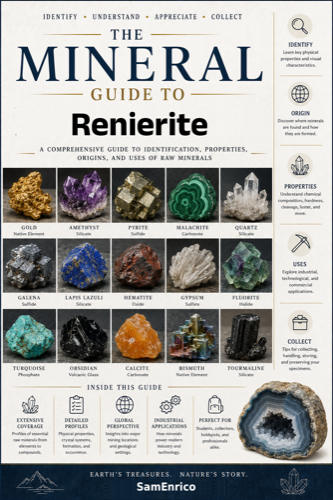 The Mineral Guide to RenieriteMcallister Jarrett$11.99
You may also like
 The Abuse Survivor ForgivenessRandolph Marry$11.99
 Nightmare Processing For Survivors Of Abuse WorkbookFrost Duncan$11.99
 Verbal Abuse Cessation PlanHooper Hong$11.99
 Self Esteem And Abusive RelationshipsHays Jenice$11.99
 Childhood Abuse Nightmare WorkBlackman Cathern$11.99
 Assertiveness For Survivors Of Abuse WorkbookCulpepper Jeniffer$11.99
 Forgiving an Abuser GuidePaz Myriam$11.99
 Self Worth After Abuse RecoveryKingsley Breanna$11.99
 Processing Abuse NightmaresBrandy Chantal$11.99
 NVC For Abuse SurvivorsAnderson Brianna$11.99
 Metta for Abusers PastAlberty Reginia$11.99
 Binge Eating After Abuse RecoveryCopeland Penny$11.99