
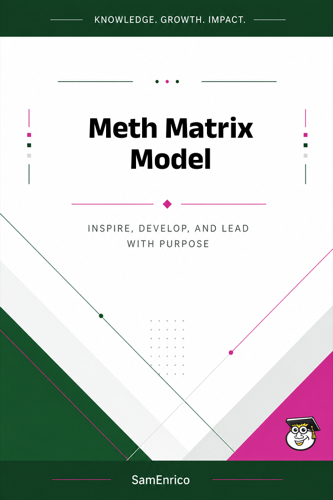
Free sample
Chapter 1: The Burned-Out Firework Launcher--–- The first time I watched a patient try to explain why he couldn't stop using methamphetamine, he sat in my office with shaking hands and tears streaming down his face. He had lost his children, his house, his career as a welder, and most of his teeth. He had been to rehab three times. He had attended over two hundred Narcotics Anonymous meetings. He had prayed, begged, and bargained with a God he wasn't sure existed anymore.
And yet, forty-eight hours before sitting in my chair, he had driven two hours to a known trap house, handed over his last seventy dollars, and smoked meth until his heart felt like it would burst through his ribs."I don't want to die," he told me. "But I can't stop. There's something wrong with my brain."He was right. There was something wrong with his brain. And for years, the addiction treatment industry had been telling him—and millions like him—that the problem was his character, his willpower, his connection to a higher power, or his willingness to "work the steps." They told him he wasn't ready.
They told him he hadn't hit bottom. They told him he was in denial.They were wrong.This book is about a different truth. It is a truth that has been validated by three decades of clinical research, thousands of patients, and the National Institute on Drug Abuse. It is the truth that methamphetamine addiction is not a moral failure. It is not a spiritual deficiency.
It is not a lack of willpower. It is a neurological disease that physically alters the structure and function of the human brain. And because it is a brain disease, it requires a different kind of treatment—not confrontation, not shame, not abstract spiritual principles, but a structured, science-based, skill-building approach called the Matrix Model.This chapter lays the foundation for everything that follows. It will take you inside the methamphetamine epidemic, explain exactly how this drug hijacks and destroys the brain's reward system, and demonstrate why the rigid, non-confrontational structure of the Matrix Model is not just helpful but medically necessary. By the end of this chapter, you will understand why willpower fails, why traditional rehab often fails for stimulant users, and why a sixteen-week outpatient program with random urine tests, contingency management, and cognitive behavioral therapy offers the best chance at recovery.The Global Epidemic You Haven't Heard About While the opioid crisis has dominated headlines for the past decade—and rightfully so, given the tens of thousands of overdose deaths from fentanyl and prescription painkillers—a quieter epidemic has been spreading across the United States and around the world.
Methamphetamine use has been rising steadily, and its consequences are devastating in ways that are distinct from opioids.According to the United Nations Office on Drugs and Crime, approximately 27 million people worldwide use amphetamine-type stimulants, with methamphetamine comprising the vast majority. In the United States, the National Survey on Drug Use and Health reported that over 2.5 million people used methamphetamine in the past year, and nearly 1.5 million met the criteria for a methamphetamine use disorder. But these numbers tell only part of the story. The more alarming statistic is this: between 2015 and 2020, the number of methamphetamine overdose deaths in the United States increased by more than 300 percent.Unlike opioid overdoses, which can be rapidly reversed with naloxone (Narcan), there is no equivalent medication for methamphetamine. When a patient overdoses on meth—typically from hyperthermia, cardiac arrest, or stroke—emergency room doctors can only provide supportive care.
They cannot administer a reversal agent. They cannot block the meth from destroying more brain cells. They can only watch and wait.But the mortality statistics, horrifying as they are, do not capture the full scope of the methamphetamine crisis. Meth destroys lives in slower, more insidious ways. It hollows out communities.
It fills psychiatric wards with patients suffering from meth-induced psychosis—paranoid delusions that often persist for months or years after the drug is cleared from the system. It spreads infectious diseases through needle sharing and high-risk sexual behavior. It tears children from parents and parents from children. It fills jails and prisons with people whose crimes—theft, assault, child neglect—were committed not out of malice but out of a neurochemically driven compulsion they could not control.The opioid crisis has medications. Methadone, buprenorphine, and naltrexone give opioid users a fighting chance.
The methamphetamine crisis has no medication. It has no pill that reduces cravings, no shot that blocks the high, no implant that provides sustained protection. What it has—what it has always had—is the Matrix Model. And for twenty years, the Matrix Model has been the single most effective behavioral intervention for methamphetamine use disorder.The Brain Disease Model of Addiction Before we can understand why the Matrix Model works, we must first understand what addiction actually is. For most of human history, addiction was understood as a moral failing.
The addict was weak-willed, sinful, or simply unwilling to change. This view persists today in popular culture, in many twelve-step programs, and even in the policies of some treatment centers. It is also demonstrably false.In the 1990s, advances in neuroimaging technology allowed scientists to look inside the living brains of addicted individuals. What they found was astonishing. The brains of people with severe substance use disorders were physically different from the brains of non-users.
These differences were not subtle. They were visible on MRI scans. They were measurable in PET scans. They were quantifiable in post-mortem tissue samples.The National Institute on Drug Abuse codified these findings into what is now called the brain disease model of addiction. According to this model, addiction is a chronic, relapsing brain disease characterized by compulsive substance use despite harmful consequences.
The key word here is "disease." Addiction meets the same medical criteria as diabetes, hypertension, and asthma. It has a biological basis. It has a predictable course. It can be managed with evidence-based treatment. And it can go into remission.This is not a metaphor.
This is not a rhetorical device to make addicts feel better about themselves. This is a statement of biological fact. The brain of a person with methamphetamine use disorder is not functioning normally. Specific neural circuits—particularly those involving the neurotransmitter dopamine—have been hijacked, damaged, and in some cases destroyed.The brain disease model of addiction has profound implications for treatment. If addiction is a moral failing, the solution is punishment, shaming, or religious conversion.
If addiction is a brain disease, the solution is medical and behavioral intervention. The Matrix Model is built entirely on the latter assumption. It treats meth users not as sinners who need to be broken down, but as patients who need to be taught new skills while their brains slowly heal.Methamphetamine Versus Cocaine: A Crucial Distinction One of the most common misconceptions in addiction treatment is that all stimulants are essentially the same. Cocaine and methamphetamine are both stimulants. They both increase dopamine levels.
They both produce euphoria, increased energy, and decreased appetite. But at the molecular level, they could not be more different. And understanding this difference is…
This is the end of the free sample. Get the eBook to keep going. Buy now
About this book
Details
- Author
- Kidwell Gudrun
- Publisher
- SamEnrico
- Language
- English
- Genre
- Non-Fiction, Health & Wellness / Matrix
- Released
- 2026-06-06
- Pages (approx.)
- 155
- Available as
- eBook, Audiobook

Read better in the ZLOADR app
Your eBooks on your phone or tablet. Sign in with your SamEnrico account and start reading.
More by Kidwell Gudrun
 Self Empathy NVC WorkbookKidwell Gudrun$11.99
 Missing KayakersKidwell Gudrun$11.99
 Franchising Your Local Brand Across Borders Remote ManagementKidwell Gudrun$11.99
 Small Talk for the Modern WorkplaceKidwell Gudrun$11.99
 Retirement Housing Decision MatrixKidwell Gudrun$11.99
 Smoking Cessation GuideKidwell Gudrun$11.99
 Note Taking For MemoryKidwell Gudrun$11.99
 Wayfinding with Maui: The Navigator Who Tamed the SunKidwell Gudrun$11.99
 The Siege of Vukovar: The Fall of a Symbol (1991)Kidwell Gudrun$11.99
 A Collector's Handbook to the Datsun 260zKidwell Gudrun$11.99
 Mastering The Art of Brazilian Jiu-jitsu/gracie Jiu-jitsuKidwell Gudrun$11.99
 How to Produce General Grass and Weed Control ProductsKidwell Gudrun$11.99