
Non-FictionSelf-HelpMetaphor Therapy
Metaphor Scripting Guide eBook
Use healing stories and analogies in your hypnosis
by Whelan Magen
Use healing stories and analogies in your hypnosis sessions.
Formats
Free sample
Chapter 1: The Backdoor Language...–- In a quiet consultation room, a client sits across from you, shoulders tight, jaw clenched. You could say, "Relax your shoulders and unclench your jaw." That is a direct command. It will work for some people, some of the time. But for many—especially the highly analytical, the deeply traumatized, or the chronically anxious—that command will land like an order. And the human brain, wired for autonomy, instinctively resists orders.But suppose you said this instead: "And as you sit there, noticing the weight of your feet on the floor, you might also notice how a cat, settling into a warm patch of sunlight, first stretches, then slowly, one muscle at a time, lets go.
And perhaps, without any effort at all, something in your own shoulders begins to soften, just a little, in its own time."That is not a command. It is a story about a cat. And yet, the client's shoulders soften.This is the central mystery and the central power of therapeutic metaphor. A story about a cat, a leaf, a mountain stream, or a clumsy dolphin can accomplish what a direct order cannot. It bypasses the brain's built-in resistance, speaks directly to the subconscious, and invites change rather than demanding it.
This chapter is about why that works—not as a matter of opinion or clinical lore, but as a matter of neurobiology.We will explore the Reticular Activating System (RAS), the brain's gatekeeper, and why it treats commands as threats while welcoming stories as neutral data. We will examine the difference between explicit and implicit suggestion, and why the latter is exponentially more powerful for lasting change. We will look at f MRI studies showing that hearing a metaphor activates the same neural regions as living the experience—a phenomenon called neural coupling. And we will equip you with practical tools, including the Opening Statement Check (a pre-session tool to ensure your metaphor bypasses resistance) and a three-question checklist for evaluating any metaphor's likely effectiveness.By the end of this chapter, you will understand not just that stories work, but why they work—at the level of neurons, synapses, and evolutionary biology. And that understanding will transform you from a script-reciter into a metaphor-craftsman.The Reticular Activating System: The Brain's Gatekeeper Deep within the brainstem, no larger than your little finger, lies a bundle of neurons called the Reticular Activating System (RAS).
Its job is deceptively simple: filter every piece of sensory information entering the brain and decide what reaches conscious awareness. Every second, millions of bits of data—sights, sounds, smells, tactile sensations, internal body signals—compete for your attention. The RAS is the bouncer at the nightclub of your consciousness. It lets in only a tiny fraction.What determines what gets in? Relevance, threat, and novelty.If you hear your name spoken across a noisy room, the RAS lets it through because it is relevant.
If you smell smoke while reading a book, the RAS interrupts your reading because smoke signals potential threat. If a loud crash occurs outside, the RAS prioritizes it because it is novel and potentially dangerous. These are survival mechanisms, honed over millions of years of evolution.Now consider the direct command: "Relax your shoulders."The RAS receives this as a piece of linguistic data. But it is not just any data. It carries the emotional and social weight of a demand.
The RAS, ever vigilant, asks: "Is this a threat? Is this someone trying to control me? Do I need to resist?" For many clients—especially those with a history of being controlled, criticized, or traumatized—the answer is yes. The RAS flags the command as a potential threat and routes it to the prefrontal cortex for conscious evaluation. And the prefrontal cortex, that hyper-analytical part of the brain, may well respond: "I don't want to relax on command.
Who is this person to tell me what to do?" Resistance is born.Now consider the metaphor: "And as a cat settles into a warm patch of sunlight, stretching slowly, letting go, perhaps you notice something in your own shoulders softening."The RAS receives this as sensory-neutral data. It is a description of a cat. There is no command. There is no demand. There is no threat.
The RAS, having no reason to flag it, lets it pass through to the subconscious without conscious evaluation. The subconscious, which does not process negatives or resist suggestions in the same way, simply accepts the sensory imagery. It imagines a cat. It imagines stretching. It imagines softening.
And because the subconscious does not fully distinguish between imagining an action and performing an action, the shoulders soften.This is the backdoor language. The RAS is the door. Metaphor is the key that turns without squeaking.Explicit vs. Implicit Suggestion: The Battle for the Subconscious Hypnotic suggestion comes in two forms: explicit and implicit. Understanding the difference is foundational to everything that follows in this book.Explicit suggestion is direct, clear, and unambiguous.
"You will feel calm." "Your eyes are closing." "The pain is fading." These suggestions have the advantage of clarity. The subconscious knows exactly what is being requested. But they have a profound disadvantage: they trigger the RAS and the conscious mind's resistance. Explicit suggestions are easily rejected, especially by highly intelligent, highly analytical, or highly defended clients. The more a client tries to "cooperate" with an explicit suggestion, the more they often fail, because trying itself is a form of resistance.Implicit suggestion is indirect, embedded, and often hidden within neutral description.
"And as you sit here, you might notice how calmness has its own timing, arriving like a guest who knocks softly rather than breaking down the door." The subconscious receives the idea of calmness without ever being commanded to feel calm. Implicit suggestions bypass the RAS, avoid triggering resistance, and are accepted more readily because they are never presented as demands.Consider the following pairs:Explicit Implicit"You will go into a deep trance now.""And many people, sitting in a chair like this, find that their eyes want to close in their own time, when the moment is right.""Forget the trauma.""And you can place that memory on a screen across the room, watching it as if it happened to someone else, someone you care about.""Stop biting your nails.""And you might notice how your hands, which have done so many things well today, can rest comfortably at your sides, fingers softly curled."Notice what the implicit suggestions do not do. They do not command. They do not demand. They do not set up a battle of wills.
Instead, they invite, suggest, describe, and allow. The subconscious is not ordered to change; it is simply shown a possibility. And possibility, unlike command, is almost impossible to resist.Throughout this book, every script, every tool, every technique will lean heavily on implicit suggestion. The explicit approach is sometimes useful—for certain clients, in certain contexts, at certain moments—but the implicit approach is the engine of therapeutic metaphor. Master this, and you master the art.Neural Coupling: Why Your Brain Lives the Story In 2006, a team of neuroscientists led by Uri Hasson at…
This is the end of the free sample. Get the eBook to keep going. Buy now
About this book
Details
- Author
- Whelan Magen
- Publisher
- SamEnrico
- Language
- English
- Genre
- Non-Fiction, Self-Help, Metaphor Therapy
- Released
- 2026-06-07
- Pages (approx.)
- 145
- Available as
- eBook, Audiobook

Read better in the ZLOADR app
Your eBooks on your phone or tablet. Sign in with your SamEnrico account and start reading.
More by Whelan Magen
 Research Proposal Secondary Data AnalysisWhelan Magen$11.99
 Assignment Deadline Pressure PlanWhelan Magen$11.99
 Tax Accountant April Stress GuideWhelan Magen$11.99
 Panic Phobia ComorbidityWhelan Magen$11.99
 Normal vs Inferior GoodsWhelan Magen$11.99
 Surfing Wave Reading HypnosisWhelan Magen$11.99
 JoJo Siwa BowWhelan Magen$11.99
 The Silent Revolution: How a 12-Year-Old Girl Sparked a Global MovementWhelan Magen$11.99
 The Sky Serpents of Baalbek: The First Aerial Onslaught (1200 BC)Whelan Magen$11.99
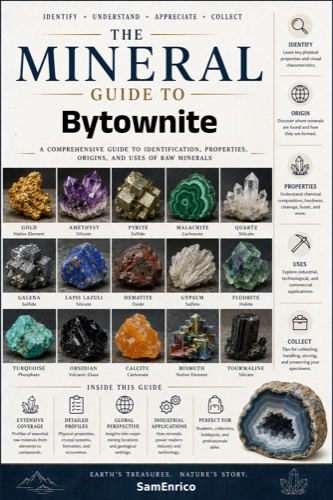 The Mineral Guide to BytowniteWhelan Magen$11.99
 Growing DipeltaWhelan Magen$11.99
 Digital Billboard AdvertisingWhelan Magen$11.99
You may also like
 Hong Kong Handover 1997Dunn Johnnie$11.99
 Zumba For Postnatal Recovery CourseNeal Christian$11.99
 Zumba for BeginnersLadner Nikia$11.99
 YouTube Comment Mining GuideHumes Pandora$12.99
 Worry Box MeditationCarlin Rudy$11.99
 Workplace Stress MeditationNguyen Lynn$11.99
 Workplace Stress and Sleep RepairHawley Ivory$11.99
 Workplace Perfectionism CureDelaney Jeffry$11.99
 Workplace Injustice Anger GuideWallen Isabelle$11.99
 Work Addiction and Burnout LinkGreenwood Ester$11.99
 Women in Yoga and WellnessBeattie Galina$11.99
 Women in Stand Up ComedyChun Evangeline$11.99