
Non-FictionBiographyUnusual Hobbies
Messner Mushroom Foraging eBook
Discover Messner's surprising second career as a m
Discover Messner's surprising second career as a mushroom expert and his books on mycology.
Formats
Free sample
Chapter 1: The Vertical Forest...–- The first time I died among mushrooms, I was not climbing a mountain. I was kneeling beside one.The year was 1987. I had just descended from a solo ascent of the north face of the Eiger, a climb that had taken three days and had left me with two frozen fingertips and a silence in my chest that I could not name. I had summited. I had survived.
And I felt nothing. The valley below Grindelwald was wet with spring melt, and the meadows were still brown from winter, and I was walking without purpose along a creek I did not bother to name when I saw them: a cluster of pale gold caps pushing through a mat of dead grass beside a downed birch. They were Kuehneromyces mutabilis, though I did not know that then. I only knew that they were beautiful – fragile, patient, unannounced. I knelt.
I touched one. And for the first time in weeks, I felt something other than the cold arithmetic of survival.I did not eat that mushroom. I did not pick it. I sat beside the log for an hour, watching the way afternoon light moved through the gills, the way the caps seemed to breathe with the wind. When I stood to leave, I understood something I had never understood from any summit: the mountain does not end at the treeline.
It continues downward, into the soil, into the roots, into the mycelium that holds the entire slope together. The peak is only the bone. The forest – the vertical forest, from valley floor to alpine meadow – is the living body.That was my first lesson. This book contains the rest.The Overlooked Kingdom Every year, thirty thousand people in the United States alone will eat a wild mushroom that makes them sick. Every year, a handful will die.
Almost all of those poisonings could have been prevented by a single question asked before cooking: Do I actually know what this is, or do I only think I know?I have spent forty years climbing the world's highest peaks – Everest without oxygen, the solo traverse of Antarctica, the first ascent of the Rupal Face on Nanga Parbat. I have been buried by avalanches, stranded by whiteouts, and once, on Gasherbrum I, I watched a man die because he trusted his memory instead of his rope. Mountaineering teaches a brutal lesson: your memory is a liar. The route you climbed five years ago is not the route you will climb today. The snow bridge that held last season will collapse beneath you now.
The same principle applies to mushrooms. The chanterelle you harvested last autumn in the Oregon rainforest is not the same species you will find this spring in the Swiss Alps. The morel you ate as a child in your grandmother's backyard is not the morel fruiting above treeline in the Dolomites. Assume nothing. Verify everything.
And when in doubt, throw it out.This chapter is about why mushrooms matter – not as a curiosity, not as a free meal, but as a foundation of the alpine and montane ecosystems that climbers, hikers, and foragers move through every day. Understanding fungi is not a hobby. It is a survival skill.The Anatomy of the Vertical Forest When most people imagine a forest, they imagine trees. Trunks and branches, leaves and needles, a green cathedral rising toward the sky. This is a mistake.
A forest is not its trees. A forest is its soil – and the soil is alive with a network so vast and so ancient that it dwarfs everything above ground.Beneath every step you take in a healthy forest lies the mycelium: a web of thread-like fungal cells that can stretch for miles in a single square meter of soil. These threads, called hyphae, penetrate every crumb of organic matter, every root tip, every decomposing leaf. They are the digestive system of the forest, breaking down dead wood and fallen needles into nutrients that trees can use. They are the circulatory system, moving water and minerals from rich soil to poor soil, from dying tree to living one.
And they are the communication network – a mycorrhizal internet through which trees exchange carbon, warn each other of insect attacks, and even recognize their own offspring.The mycologist Paul Stamets once calculated that a single cubic inch of forest soil can contain eight miles of mycelium. Let that sink in. Eight miles of living, breathing, feeding fungal tissue in the space beneath your boot. The trees you see are the tip of an iceberg whose base is the fungus.This is what I call the vertical forest: the living column of life that runs from the valley floor, through the montane zone, past the treeline, and into the alpine meadows where only dwarf willows and cushion plants can survive. Each elevation band hosts a different fungal community, adapted to different temperatures, different host plants, and different seasons.
A bolete that fruits at 800 meters will not fruit at 2,000 meters. A chanterelle that partners with oak in the lowlands will partner with pine in the high country. And a deadly Amanita – one of the Destroying Angels – can appear at any elevation, from sea level to subalpine, looking deceptively like the edible mushrooms you thought you knew.Why Climbers and Hikers Need Mycology I have been asked, more times than I can count, why a mountaineer would write a book about mushrooms. The answer is simple: because mountaineers and hikers are already foraging, whether they know it or not.Every time you step off a trail to relieve yourself, you are interacting with fungi. Every time you drink from a mountain stream, you are drinking water filtered through mycelium.
Every time you look at a patch of green on a north-facing slope and decide it looks stable enough to cross, you are reading a landscape shaped by decades of fungal decomposition. The fungi are always there, working beneath the surface, determining which plants thrive and which die, which soils hold water and which erode, which slopes are solid and which are ready to slide.For the forager – the person who intentionally seeks out wild mushrooms for the table – this knowledge becomes even more critical. The alpine zone, above treeline, is one of the most productive and least-known fungal habitats in the world. The short growing season, the intense solar radiation, the thin soils, and the specialized plant communities create conditions found nowhere else. Mushrooms that fruit above treeline are often smaller, paler, and more intensely flavored than their lowland cousins.
They are also harder to identify, more vulnerable to over-harvesting, and – in some cases – more toxic.I learned this lesson the hard way in 1994, on a solo traverse of the Ortler Alps in northern Italy. I had been walking for six days, resupplied only by what I could carry, and I was hungry. Not starving – a mountaineer knows the difference between hunger and starvation – but hungry enough that when I found a cluster of brown-capped mushrooms growing from a decaying pine stump at 1,800 meters, I did not hesitate. I recognized them as honey fungus (Armillaria mellea)…
This is the end of the free sample. Get the eBook to keep going. Buy now
About this book
Details
- Author
- Cheek Jarrett
- Publisher
- SamEnrico
- Language
- English
- Genre
- Non-Fiction, Biography, Unusual Hobbies
- Released
- 2026-06-09
- Pages (approx.)
- 128
- Available as
- eBook, Audiobook

Read better in the ZLOADR app
Your eBooks on your phone or tablet. Sign in with your SamEnrico account and start reading.
More by Cheek Jarrett
 Workaholism in Law FirmsCheek Jarrett$11.99
 Waco Survivor AccountsCheek Jarrett$11.99
 NVC For Step Families GuideCheek Jarrett$11.99
 Francis and the SultanCheek Jarrett$11.99
 Volcano Eruption SurvivorCheek Jarrett$11.99
 Zeev Jabotinsky Revisionist ZionismCheek Jarrett$11.99
 Frozen Echoes: The Last Transmission of the Byrd ExpeditionCheek Jarrett$11.99
 Frostbite and Fire: The Ballad of the Troll KingCheek Jarrett$11.99
 The Marauders of the Middle Passage: Africa's Unsung NavigatorsCheek Jarrett$11.99
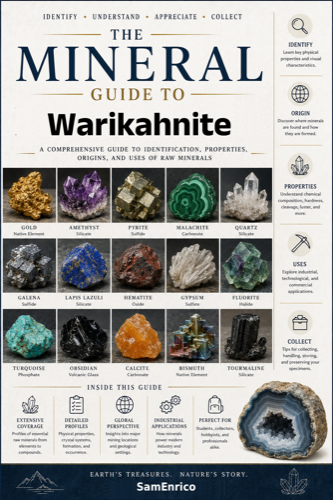 The Mineral Guide to WarikahniteCheek Jarrett$11.99
 CFC Rules Impact On Foreign LLC OwnersCheek Jarrett$12.99
 Chinese Supplier Negotiation SimulationCheek Jarrett$12.99
You may also like
 Hong Kong Handover 1997Dunn Johnnie$11.99
 Zumba For Postnatal Recovery CourseNeal Christian$11.99
 Zumba for BeginnersLadner Nikia$11.99
 YouTube Comment Mining GuideHumes Pandora$12.99
 Worry Box MeditationCarlin Rudy$11.99
 Workplace Stress MeditationNguyen Lynn$11.99
 Workplace Stress and Sleep RepairHawley Ivory$11.99
 Workplace Perfectionism CureDelaney Jeffry$11.99
 Workplace Injustice Anger GuideWallen Isabelle$11.99
 Work Addiction and Burnout LinkGreenwood Ester$11.99
 Women in Yoga and WellnessBeattie Galina$11.99
 Women in Stand Up ComedyChun Evangeline$11.99