
Non-FictionFirst 30 DaysPay It Forward
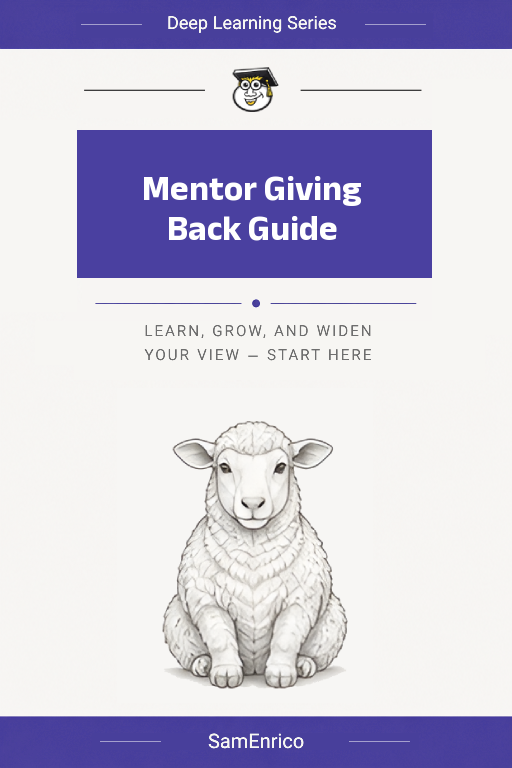
Mentor Giving Back Guide eBook
Become a mentor yourself after finding success. Ho
Become a mentor yourself after finding success. How to pay it forward and build your own mentees.
Formats
Free sample
Chapter 1: The Success Trap--–- The email arrived at 11:47 PM on a Tuesday. Sarah had just closed her laptop after reviewing the final quarter earnings—another record year. Her bonus alone would exceed what most of her junior staff earned annually. She had the corner office, the industry awards, the speaking invitations, and the Linked In recommendations that read like poetry. By every external metric, Sarah had won.–- And yet, as she sat in the dark of her home office, the silence felt heavier than any pressure she had ever faced climbing the corporate ladder.
The thought that surfaced was not one of pride or celebration. It was a quiet, unwelcome whisper: Is this really all there is?–- This chapter is for everyone who has ever asked that question after achieving exactly what they set out to achieve. It is for the senior executive who feels restless despite their success. It is for the entrepreneur who sold their company and woke up the next morning wondering what to do with the rest of their life. It is for the mid-career professional who has checked every box on their ambition list and discovered, to their surprise, that the boxes themselves were never the point.–- The Success Trap is not failure.
It is the opposite of failure. It is the disorienting experience of reaching the summit and realizing that the view is not what you expected. More dangerously, it is the silent erosion of purpose that convinces successful people that they have nothing left to learn, nothing left to give, and nothing left to do except coast toward retirement while pretending to be satisfied.–- This book exists because that feeling—the emptiness beneath achievement—is not a sign that something is wrong with you. It is a sign that you are ready for the next stage of mastery. And that next stage has nothing to do with your own ladder and everything to do with how many others you help climb theirs.The Loneliest Rung on the Ladder–- In my research and interviews with over two hundred successful professionals—C-suite executives, founders, partners in law and consulting firms, award-winning educators, and celebrated physicians—one theme emerged with startling consistency: the higher they climbed, the lonelier they felt.
But here is what surprised me. The loneliness was not, as most assumed, a function of having fewer peers or working longer hours. It was a function of having no one left to teach.–- Consider the trajectory of most high-achieving careers. You spend your twenties and thirties learning. You are the apprentice, the junior associate, the new hire soaking up knowledge from anyone willing to share it.
Your energy goes into acquisition—skills, credentials, relationships, reputation. In your forties and fifties, you shift into application. You lead teams, close deals, launch products, and drive results. You are the expert, the decision-maker, the person others come to for answers.–- But then something unexpected happens. You run out of new problems to solve.
The challenges that once excited you begin to feel repetitive. The promotions lose their thrill after the third one. The money, beyond a certain point, stops changing how you feel on a Tuesday night. You have completed the curriculum of your own career, and no one gave you a syllabus for what comes next.–- This is the Success Trap. It is not burnout, though it can feel like it.
It is not depression, though it can mimic its symptoms. It is a crisis of generativity—a term coined by psychologist Erik Erikson to describe the human need to contribute to the next generation. Erikson argued that mid-to-late adulthood is defined by the tension between generativity (building something that outlasts you) and stagnation (repeating the same patterns without growth). The people who fare best in this stage are not those who accumulate more. They are those who give more.The Myth of the Solo Success Story–- We are raised on a diet of heroic individualism.
The founder who built their company from a garage. The executive who turned around a failing division through sheer force of will. The artist who struggled in obscurity before being discovered. These stories share a common structure: one person, extraordinary effort, triumphant outcome. What these stories leave out is the network of mentors, sponsors, and supporters who made that solo success possible.–- I want you to pause here and perform a small exercise.
Think back to the single most important career breakthrough you have experienced. It could be a promotion, a successful project, a difficult decision you navigated well, or a skill you finally mastered. Now ask yourself: Who helped me get there? Not just the obvious names—your boss, your partner, your team. Who gave you advice that changed your trajectory?
Who opened a door you could not have opened yourself? Who believed in you before you believed in yourself?–- I have asked this question of hundreds of successful people, and the answer is always the same. No one achieved their breakthrough alone. There was always a teacher, a sponsor, a critic who cared enough to be honest, or a peer who modeled what was possible. The myth of the solo success story is not just inaccurate.
It is dangerous. It convinces us that we owe nothing to anyone, that our success is entirely self-generated, and therefore that we have no obligation to help others replicate it.–- The "Give First" philosophy, championed by venture capitalist Brad Feld, directly challenges this myth. Feld argues that the most successful people in any ecosystem are not the ones who hoard their knowledge and connections. They are the ones who give generously—advice, introductions, feedback, encouragement—without keeping score. What makes this philosophy radical is not the altruism.
It is the self-interest. People who give first build deeper relationships, attract better talent, and create the kind of loyalty that compound returns over decades.–- In other words, giving back is not charity. It is the smartest career move you never considered.The Three Signals That You Are Ready to Mentor–- How do you know if you are in the Success Trap? More importantly, how do you know if you are ready to climb out by becoming a mentor? Over years of studying this transition, I have identified three reliable signals.
If any of these resonate with you, you are not just qualified to mentor. You are psychologically primed for it.Signal One: You Are Bored by Problems That Once Excited You–- Remember the version of yourself who stayed up late researching a new market, learning a technical skill, or preparing for a difficult negotiation? That version was driven by the thrill of the unknown. When you are still growing, every problem is an adventure. But after you have solved the same type of problem twenty or thirty times, the adventure fades into administration.–- Boredom is not a sign that you have lost your edge.
It is a sign that you have outgrown your current challenges. The solution is not to find harder problems—though that can work temporarily. The solution is to shift from solving problems yourself to helping…
This is the end of the free sample. Get the eBook to keep going. Buy now
About this book
Details
- Author
- Dupont Georgie
- Publisher
- SamEnrico
- Language
- English
- Genre
- Non-Fiction, First 30 Days, Pay It Forward
- Released
- 2026-06-01
- Pages (approx.)
- 142
- Available as
- eBook, Audiobook

Read better in the ZLOADR app
Your eBooks on your phone or tablet. Sign in with your SamEnrico account and start reading.
More by Dupont Georgie
 Loci for Morning RoutineDupont Georgie$11.99
 Flirting Nonverbal Signals HandbookDupont Georgie$11.99
 Remote Review Freelance PlatformsDupont Georgie$11.99
 Conner Peterson Unborn VictimDupont Georgie$11.99
 Smart Grid Investment OutlookDupont Georgie$11.99
 The Last Empress: Exile in ParadiseDupont Georgie$11.99
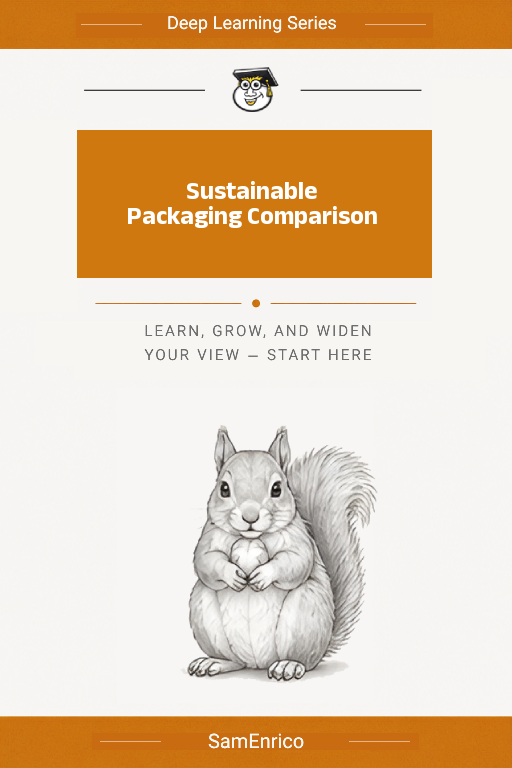 Sustainable Packaging ComparisonDupont Georgie$12.99
 Understanding Parsonage-turner SyndromeDupont Georgie$17.99
 Hypersthene MiningDupont Georgie$11.99
 How to Start a Packing Made of Woven Asbestos Business (Beginners Guide)Dupont Georgie$11.99
You may also like
 Hong Kong Handover 1997Dunn Johnnie$11.99
 Zumba For Postnatal Recovery CourseNeal Christian$11.99
 Zumba for BeginnersLadner Nikia$11.99
 YouTube Comment Mining GuideHumes Pandora$12.99
 Worry Box MeditationCarlin Rudy$11.99
 Workplace Stress MeditationNguyen Lynn$11.99
 Workplace Stress and Sleep RepairHawley Ivory$11.99
 Workplace Perfectionism CureDelaney Jeffry$11.99
 Workplace Injustice Anger GuideWallen Isabelle$11.99
 Work Addiction and Burnout LinkGreenwood Ester$11.99
 Women in Yoga and WellnessBeattie Galina$11.99
 Women in Stand Up ComedyChun Evangeline$11.99