
Non-FictionHealth & WellnessPCOSMetabolic
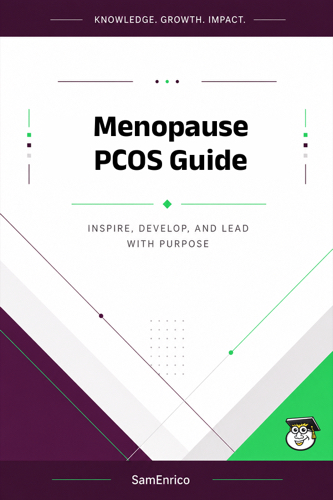
Menopause PCOS Guide eBook
Navigate perimenopause with polycystic ovary syndr
by Rife Lolita
Navigate perimenopause with polycystic ovary syndrome and metabolic challenges.
Formats
Free sample
Chapter 1: The Thirty-Year Secret--For nearly four decades, you have been told a story about your body that is simply not true. You have been told that polycystic ovary syndrome is a fertility problem, a reproductive disorder, a condition that begins with your first irregular period and ends with your last. You have been told that once you reach menopause, once the bleeding stops and the pregnancy tests become a relic of your past, that PCOS will finally release its grip. You have been waiting for that day, sometimes patiently, sometimes desperately, believing that your fifties would bring the freedom that your twenties and thirties and forties never could.Here is the truth that no doctor has told you: PCOS does not end at menopause. It changes, certainly.
It evolves. But the fundamental machinery of this condition—the insulin resistance that has been silently rewiring your metabolism since adolescence, the chronic inflammation that has been simmering beneath the surface of every symptom, the androgen excess that has shaped everything from your hairline to your waist circumference—does not simply vanish because your ovaries have stopped releasing eggs. If anything, the transition into perimenopause and beyond acts as an amplifier, taking every metabolic challenge you have already been managing and turning up the volume.This chapter is called The Thirty-Year Secret because for too long, the medical establishment has kept a secret from you, whether through ignorance or neglect. The secret is this: your PCOS diagnosis was never just about your ovaries. It was always, from the very beginning, a whole-body metabolic condition.
And the name for what you have been living with is finally catching up to the science.The Name That Changes Everything In 2024, an international panel of endocrinologists, reproductive specialists, and metabolic researchers proposed something that should have happened decades ago. They suggested renaming polycystic ovary syndrome to something that more accurately reflects what this condition actually is: Polyendocrine Metabolic Ovarian Syndrome, or PMOS.Let us pause here, because this is not simply academic jargon. Names matter. When you call something a syndrome of the ovaries, you direct attention downward, toward the pelvis, toward reproduction. You signal to patients and doctors alike that this is a gynecological problem, best managed by reproductive endocrinologists or obstetrician-gynecologists, best treated with birth control pills or fertility medications.
You create an entire infrastructure of care that is oriented around the uterus, around the menstrual cycle, around the ability or inability to conceive.But when you call something Polyendocrine Metabolic Ovarian Syndrome, you shift the entire frame. You acknowledge that this condition involves multiple endocrine systems (polyendocrine) functioning together in an abnormal way. You foreground the metabolic dimension, recognizing that disordered metabolism is not a side effect of PCOS but rather the engine that drives it. You keep the ovaries in the name—they are still affected—but you demote them from the starring role to a supporting one, which is exactly where they belong in a woman who is approaching or has already passed menopause.Throughout this book, you will see the term PMOS used. This is not an affectation or a marketing gimmick.
It is a deliberate choice to help you think about your body differently. Every time you see PMOS, you can translate it silently to yourself: my body has a lifelong metabolic pattern that affects multiple hormone systems, and my ovaries are just one of the places where that pattern shows up.For women in perimenopause and beyond, this reframing is not just intellectually satisfying. It is clinically essential. Because if you continue to think of your condition as an ovarian problem, you will spend the next twenty years chasing the wrong symptoms with the wrong treatments. You will wonder why your hot flashes do not respond to the same HRT protocol that helped your best friend.
You will be confused when your weight continues to climb despite following the standard low-fat, high-carbohydrate dietary advice that works for other menopausal women. You will feel like a failure when your energy levels flatline and your brain fog persists, all while the medical system tells you that your labs are "normal" and your symptoms are just part of aging.None of that is your fault. You have been working with a map that was drawn incorrectly from the start. This chapter begins the process of redrawing that map.The Fertility Trap: How PCOS Became Misunderstood To understand why you have been misled for so long, you need to understand the history of how PCOS came to be defined. The condition was first described in 1935 by American gynecologists Irving Stein and Michael Leventhal, who identified a cluster of symptoms in seven women: irregular periods, enlarged ovaries with multiple small cysts, and signs of excess male hormones such as hirsutism and acne.
From the very beginning, the lens through which PCOS was viewed was gynecological. These were women of reproductive age. Their primary complaint, in most cases, was infertility or menstrual irregularity. The cysts on their ovaries were visible on surgical examination, which made them a tangible, concrete finding that doctors could point to as the cause of the problem.This historical accident—that the most visible feature of the condition was on the ovaries, and that the most distressing symptom for many patients was the inability to conceive—locked PCOS into a reproductive framework for nearly a century. Medical training programs taught generations of doctors that PCOS was diagnosed using the Rotterdam criteria, which required two of three findings: irregular ovulation, signs of excess androgens (either clinical or biochemical), and polycystic ovaries on ultrasound.
Notice what is missing from those criteria: any mention of metabolism. Any mention of insulin. Any mention of inflammation.The result is that countless women have been diagnosed with PCOS based on ovarian ultrasound findings and irregular periods, prescribed oral contraceptives to regulate their cycles, offered clomiphene or letrozole when they wanted to become pregnant, and then essentially discharged from care once they either achieved pregnancy or aged out of their reproductive years. The implicit message is that PCOS is a problem with a shelf life. Once you no longer need your ovaries for reproduction, once menopause has rendered their dysfunction moot, the condition is essentially over.This could not be further from the truth.What Actually Happens When PMOS Ages Let us follow the metabolic trajectory of a woman with undiagnosed or undertreated PMOS from adolescence through midlife, because understanding this arc is the single most important thing you can do to prepare for the decades ahead.In adolescence and early adulthood, the most noticeable features of PMOS are often the ones that affect appearance and menstrual function.
Acne that does not respond to standard treatments. Hair growth on the face, chest, and abdomen that feels humiliating and unfeminine. Thinning hair on the scalp that mirrors male pattern baldness. Periods that come unpredictably, sometimes every few weeks and sometimes every few months, often with heavy bleeding when they finally arrive. Weight gain that seems to happen almost overnight, settling stubbornly around the abdomen.Beneath these visible symptoms, however, something more fundamental is already at work.
The cells of a woman with PMOS are less responsive to insulin than they should be. This insulin resistance means…
This is the end of the free sample. Get the eBook to keep going. Buy now
About this book
Details
- Author
- Rife Lolita
- Publisher
- SamEnrico
- Language
- English
- Genre
- Non-Fiction, Health & Wellness, PCOS, Metabolic
- Released
- 2026-06-08
- Pages (approx.)
- 143
- Available as
- eBook, Audiobook

Read better in the ZLOADR app
Your eBooks on your phone or tablet. Sign in with your SamEnrico account and start reading.
More by Rife Lolita
 Workplace Esteem ChallengeRife Lolita$11.99
 Gustavo Kuerten GugaRife Lolita$11.99
 Equifax Congress Testimony DramaRife Lolita$11.99
 Self Esteem Childhood Trauma GuideRife Lolita$11.99
 The Silent Duchess: How Maria Fitzherbert Outwitted the KingRife Lolita$11.99
 The Riemann Hypothesis: The Unsolved Riddle of Prime NumbersRife Lolita$11.99
 How to Start a Primary Education Business (Beginners Guide)Rife Lolita$11.99
 Usability Testing Certification HandbookRife Lolita$12.99
 Solo Travel Spending GuideRife Lolita$12.99
 Understanding Genée-wiedemann SyndromeRife Lolita$17.99
 EHS ManagerRife Lolita$11.99
You may also like
 Hong Kong Handover 1997Dunn Johnnie$11.99
 Zumba For Postnatal Recovery CourseNeal Christian$11.99
 Zumba for BeginnersLadner Nikia$11.99
 YouTube Comment Mining GuideHumes Pandora$12.99
 Worry Box MeditationCarlin Rudy$11.99
 Workplace Stress MeditationNguyen Lynn$11.99
 Workplace Stress and Sleep RepairHawley Ivory$11.99
 Workplace Perfectionism CureDelaney Jeffry$11.99
 Workplace Injustice Anger GuideWallen Isabelle$11.99
 Work Addiction and Burnout LinkGreenwood Ester$11.99
 Women in Yoga and WellnessBeattie Galina$11.99
 Women in Stand Up ComedyChun Evangeline$11.99