
Non-FictionHealth & WellnessRelationshipsPartner Support
Menopause Partner Support Guide eBook
Help your spouse or partner understand and support
Help your spouse or partner understand and support you through hormonal changes.
Formats
Free sample
Chapter 1: The Unseen Storm--–- The first time you watched your partner cry over a burned piece of toast, you probably thought something else was wrong. Maybe you asked, “Are you okay?” Maybe you silently wondered if she was upset with you. Maybe you made a joke to lighten the mood, and watched in horror as she burst into real, heaving sobs. You weren't prepared for that. Neither was she.
That moment—confusing, raw, and seemingly disproportionate—is the doorway into one of the most misunderstood transitions in human life. It is not a sign that your marriage is failing. It is not a sign that she is “losing it.” It is a sign that her hormones have begun a decade-long renegotiation with every system in her body, and neither of you received a user manual.This chapter is not a biology textbook. It is a field guide to the invisible war happening inside her—a war that affects her sleep, her temper, her memory, her joints, her heart, and her desire for you. You cannot fight this war for her.
But you can stop fighting against her. The single most important sentence you will read in this entire book is this: What is happening to her is not about you. Her sudden rage, her midnight panic, her decision to sleep in another room, her forgetting your anniversary for the first time in twenty years—these are neurochemical events, not marital verdicts. Once you truly internalize that distinction, everything else becomes possible.Most partners enter perimenopause with no warning. Doctors often dismiss early symptoms as stress or depression.
Women themselves are surprised when their bodies rebel. By the time you are reading this book, you have likely already lived through several confusing fights, sleepless nights, or moments of silent distance. This chapter will give you the biological foundation to understand what is happening, why it is not her fault, and why your role is neither “fixer” nor “avoider” but something far more powerful: witness.The Three Faces of Menopause: Perimenopause, Menopause, and Post-Menopause Let us begin with the timeline, because most people get it wrong. They think menopause is a single event, like a switch flipping. It is not.
Menopause is one day—specifically, the day that marks twelve consecutive months without a menstrual period. Everything before that day is perimenopause. Everything after is post-menopause.Perimenopause is the long, chaotic, often maddening transition that typically begins in a woman’s forties, though some women enter it as early as their mid-thirties. It lasts anywhere from four to ten years. During this time, her ovaries do not simply shut down in an orderly fashion.
Instead, they become erratic. Some months they release too much estrogen. Other months, almost none. Progesterone, the hormone that provides a natural calming effect, drops sharply and unpredictably. Think of perimenopause not as a sunset but as a malfunctioning strobe light.
One week she feels fine. The next week she cannot sleep, cannot think, and cries at a car commercial. This unpredictability is the single hardest part for partners to tolerate because you cannot plan around it. You cannot say, “Tuesday is a bad day, so I will be extra gentle.” The bad days arrive without warning.Menopause itself is a single day on a calendar. Most people use the word incorrectly, but you now know better.
When she reaches that twelve-month mark, she is officially menopausal. For many women, this day passes without fanfare because the most intense symptoms often ease in post-menopause. That is not to say she returns to her thirty-year-old self. She will not. But the rollercoaster typically calms.Post-menopause is the rest of her life.
Hormone levels settle at a new baseline—much lower than before, but stable. Vasomotor symptoms like hot flashes often improve. Mood typically stabilizes. Sleep may return to something resembling normal. However, some challenges persist: vaginal atrophy (thinning and drying of vaginal tissue) continues, libido often remains lower than in her youth, and the metabolic changes of menopause (slower metabolism, increased abdominal fat, higher cardiovascular risk) require ongoing management.
Understanding this arc—chaos, then a day, then a new normal—helps you avoid the trap of waiting for her to “go back to the way she was.” She will not. But she will become someone new, and that someone can be wonderful if you navigate the transition together.The Hormone Trio: Estrogen, Progesterone, and Testosterone To understand the storm, you must understand the three main actors. None of them are “good” or “bad.” They are simply chemical messengers that have been running her body for decades. When their levels change, everything changes.Estrogen: The Master Regulator Estrogen is not a “female” hormone in the way popular culture imagines. Men produce estrogen too, just in smaller amounts.
Estrogen is a master regulator that affects over three hundred different tissues in the female body. Think of it as the conductor of an orchestra. When estrogen levels are stable, the orchestra plays beautifully. When estrogen fluctuates or drops, every section plays out of tune.Here is what estrogen does, and therefore what suffers when estrogen declines:Brain function: Estrogen helps brain cells use glucose for energy. Without sufficient estrogen, her brain runs on low fuel.
This causes brain fog, word-finding difficulty, and memory lapses. She is not being careless. Her brain is literally starving for energy.Mood regulation: Estrogen influences serotonin production and receptor sensitivity. Dropping estrogen can cause irritability, anxiety, and depression. This is not a psychological weakness.
It is biochemistry.Sleep architecture: Estrogen supports deep, restorative sleep. When estrogen drops, she enters lighter sleep stages and wakes more easily. Then night sweats interrupt what little sleep she gets.Joint and connective tissue health: Estrogen maintains joint fluid and tendon elasticity. Dropping estrogen causes joint pain, frozen shoulder, and increased injury risk. If she complains that her knees hurt “for no reason,” believe her.Vaginal and urinary tract health: Estrogen keeps vaginal tissue thick, elastic, and lubricated.
It also maintains the health of the urethra and bladder lining. Without estrogen, vaginal tissue becomes thin and fragile (atrophy), leading to painful sex, recurrent urinary tract infections, and urinary urgency.Heart and blood vessels: Estrogen has a protective effect on blood vessel walls. Dropping estrogen increases cardiovascular risk and can cause heart palpitations, racing heart, and blood pressure fluctuations.When you understand this list, the “random” symptoms begin to make sense. The joint pain, the palpitations, the insomnia, the rage, the UTIs—these are not separate problems. They are all downstream of one change.Progesterone: The Calming Brake Progesterone is often called the “calming hormone” because it binds to GABA receptors in the brain—the same receptors targeted by anti-anxiety medications like benzodiazepines.
Progesterone is the brake pedal on her amygdala, the brain’s fear and anger center. When progesterone is high and stable, her amygdala is calm. Minor frustrations do not trigger major explosions.During perimenopause, progesterone drops dramatically and unpredictably. The brake pedal disappears. Suddenly, her amygdala is hypersensitive.
A mildly annoying comment from you registers as a personal attack. A child leaving a wet towel on the floor feels like a deliberate betrayal. A minor traffic delay triggers a…
This is the end of the free sample. Get the eBook to keep going. Buy now
About this book
Details
- Author
- Julian Elvina
- Publisher
- SamEnrico
- Language
- English
- Genre
- Non-Fiction, Health & Wellness, Relationships, Partner Support
- Released
- 2026-06-09
- Pages (approx.)
- 139
- Available as
- eBook, Audiobook

Read better in the ZLOADR app
Your eBooks on your phone or tablet. Sign in with your SamEnrico account and start reading.
More by Julian Elvina
 The Caregiver Substance Use GuideJulian Elvina$11.99
 Carson Penguin Books Publishing StoryJulian Elvina$11.99
 Failure Fear in CaregivingJulian Elvina$11.99
 Curcumin Brain Anti Inflammatory GuideJulian Elvina$11.99
 The Last Letter: A Family’s Secret Across OceansJulian Elvina$11.99
 Odysseus Unbroken: The Cunning King's Last LessonJulian Elvina$11.99
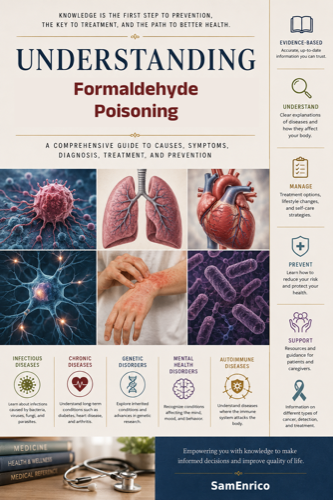 Understanding Formaldehyde PoisoningJulian Elvina$17.99
 AI Accounts Receivable GuideJulian Elvina$12.99
 Technical Co Founder Sourcing GuideJulian Elvina$12.99
 Visual AssociateJulian Elvina$11.99
 Ultimate Handbook Guide to Weinan : (China) Travel GuideJulian Elvina$11.99
You may also like
 Hong Kong Handover 1997Dunn Johnnie$11.99
 Zumba For Postnatal Recovery CourseNeal Christian$11.99
 Zumba for BeginnersLadner Nikia$11.99
 YouTube Comment Mining GuideHumes Pandora$12.99
 Worry Box MeditationCarlin Rudy$11.99
 Workplace Stress MeditationNguyen Lynn$11.99
 Workplace Stress and Sleep RepairHawley Ivory$11.99
 Workplace Perfectionism CureDelaney Jeffry$11.99
 Workplace Injustice Anger GuideWallen Isabelle$11.99
 Work Addiction and Burnout LinkGreenwood Ester$11.99
 Women in Yoga and WellnessBeattie Galina$11.99
 Women in Stand Up ComedyChun Evangeline$11.99