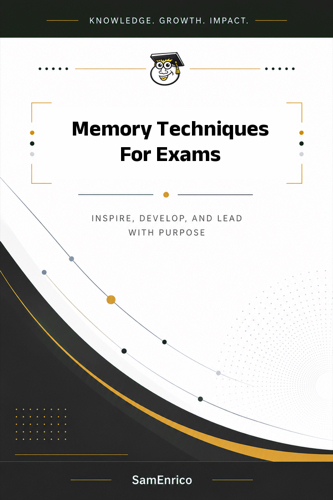
Memory Techniques For Exams Audiobook
Uses mnemonics and spaced repetition.
Uses mnemonics and spaced repetition.
Formats
Free sample
Chapter 1: The Learning Lie--–- Every exam season, millions of students around the world will sit down at their desks, open a textbook, and proceed to do something that feels like studying but is, in fact, almost completely useless. They will read the same paragraph three times. They will highlight entire pages in cheerful yellow. They will copy definitions into a notebook, word for word. Then they will close the book, convinced that they have prepared for their exam.
Twenty-four hours later, they will remember almost nothing. And they will conclude, with absolute certainty, that they were born with a bad memory.This chapter exists to tell you that conclusion is wrong. Not slightly inaccurate. Not a minor exaggeration. But categorically, demonstrably, scientifically false.
The difference between students who remember and students who forget is not the quality of their memory. It is the quality of their strategy. And the first step toward building a better strategy is recognizing that almost everything you think you know about studying is built on a foundation of well-intentioned but disastrously misleading advice.The Most Dangerous Sentence in Education Let me begin with a confession. For the first eighteen years of my life, I was a terrible student. Not because I was lazy—I spent countless hours at my desk.
Not because I lacked motivation—I desperately wanted good grades. I was a terrible student because I believed that learning was a form of exposure. I thought that if I read something enough times, it would eventually stick. I thought that highlighting was the same as understanding. I thought that re-reading was the same as remembering.I was wrong.
And the sentence that kept me trapped in this cycle of ineffective studying is the same sentence that traps millions of students every year. Here it is: “I’ll just read it one more time.”This sentence is dangerous because it feels productive. When you re-read a chapter, you experience a sensation of fluency. The words seem familiar. The concepts seem clear.
Your brain sends you a signal that says, “I know this.” But familiarity is not the same as recall. Recognizing a concept when it is in front of you is fundamentally different from being able to produce that concept from memory when the book is closed. The first is passive. The second is active. And only the second predicts exam performance.The research on…
This is the end of the free sample. Get the Audiobook to keep going. Buy now
About this book
Details
- Author
- Stovall Karlyn
- Publisher
- SamEnrico
- Language
- English
- Genre
- Non-Fiction, Student's Shortcut, Memory
- Released
- 2026-06-05
- Pages (approx.)
- 147
- Available as
- eBook, Audiobook

Listen in the VoxFlicks app
Audiobooks and audio dramas wherever you go. Sign in with your SamEnrico account and press play.
More by Stovall Karlyn
 Sick Child Family Role HealingStovall Karlyn$11.99
 Cell Phone Dead ZonesStovall Karlyn$11.99
 Cooking Safety Memory AgingStovall Karlyn$11.99
 Negative Inquiry TechniqueStovall Karlyn$11.99
 Small Talk for Professionals CourseStovall Karlyn$11.99
 Heart Disease and GamblingStovall Karlyn$11.99
 Riders of the Red River: The Untold Story of the Black Cowboys Who Built the WestStovall Karlyn$11.99
 The Quantum Pioneers: Black Genius in the Realm of Nobel ScienceStovall Karlyn$11.99
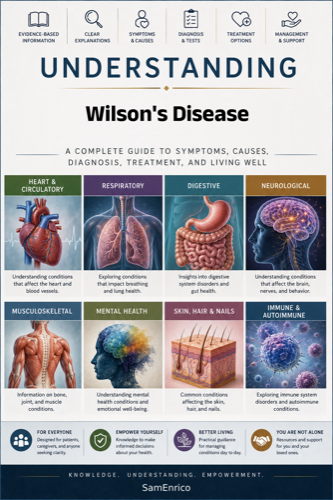 Understanding Wilson's DiseaseStovall Karlyn$11.99
 How to Produce Graduated CylindersStovall Karlyn$11.99
 Interest Rate Cap Strategies for BorrowersStovall Karlyn$12.99
 Freemium Tiers for Data PlansStovall Karlyn$12.99