
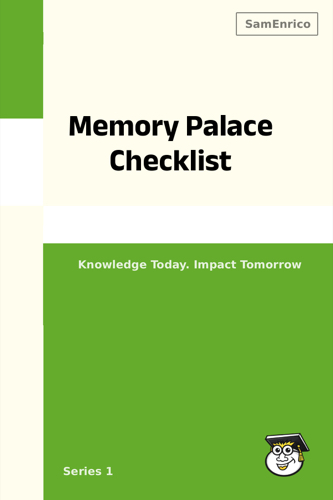
Free sample
Chapter 1: The Forgetting Epidemic--–- You are standing in your kitchen, having walked there with a clear purpose. Something you needed. Something important. The refrigerator hums. The sink is empty.
The countertops are clean. You turn in a slow circle, hoping the physical motion will jog something loose. Nothing. You walk back to the living room, and the moment you cross the threshold, the memory returns like a slap: you needed your phone charger. It is plugged into the wall behind the couch.
You have just experienced the doorway effect—a documented neurological phenomenon where crossing a physical boundary resets your working memory. This happens to everyone, every day, multiple times. But here is the question that haunts the millions of people who will read this book: Is this normal forgetfulness, or is your memory actually getting worse?The multi-billion dollar memory supplement industry wants you to believe the latter. Brain-training apps with their cheerful animations and dubious science want your monthly subscription. Pharmaceutical companies are racing to develop the first "memory pill" for a generation terrified of cognitive decline.
They all share a common business model: convince you that your memory is broken, then sell you the fix. But what if the fix was never a product? What if the most powerful memory system ever invented is already inside your head, waiting for nothing more than a set of instructions you were never given?This chapter dismantles the three great myths that keep people trapped in forgetfulness. The first myth: that memory is a fixed, genetic trait like eye color. The second myth: that some people have "photographic memory" and the rest of us do not.
The third myth: that forgetting is a disease rather than a feature of how healthy brains work. By the time you finish this chapter, you will understand why every single person who has ever mastered their memory—from ancient Greek orators to modern memory champions—started exactly where you are now. And you will take the first step on a journey that will change how you think about your own mind forever.The Day the Journalist Became the Story In 2005, Joshua Foer was a young science journalist assigned to cover the U.S. Memory Championship. He expected to find freaks.
He imagined contestants with genetically superior brains, perhaps unusual neural structures visible only on MRI scans. He planned to write a cynical piece about how some people win the genetic lottery while the rest of us struggle to remember where we parked the car.What he found instead changed the trajectory of his life and launched a bestselling book that has sold over two million copies.The contestants at the memory championship were not geniuses. They were not neuroscientists. They were not even particularly young—one of the top competitors was a sixty-four-year-old retired civil servant. They were, by every measurable metric, ordinary people who had learned an extraordinary technique.
They memorized the order of shuffled decks of cards in under two minutes. They recalled hundreds of random digits after a single viewing. They remembered the names of seventy strangers they had met only once, ninety minutes earlier.Foer did what any good journalist would do. He asked the winner how he did it. The answer was simple, almost disappointing: "I use a memory palace.
You could learn it in a weekend."Skeptical but intrigued, Foer decided to test the claim. He found a memory coach named Ed Cooke—a young British eccentric who could memorize a deck of cards in under thirty seconds—and asked for a year of training. The agreement was simple: Foer would document the process for his book, and Cooke would attempt to turn a journalist with an entirely average memory into a national champion.The results were nothing short of astonishing. After just one year of training, Joshua Foer returned to the U.S. Memory Championship—not as a journalist, but as a competitor.
And he won.Let that land for a moment. A man with no genetic advantage, no childhood training, no unusual neural anatomy, went from covering the competition to winning it in twelve months. The only thing that changed was his method. Not his brain. Not his age.
Not his innate capacity. His method.This story is not an anomaly. It is the rule. Every single person who has ever competed in a memory championship, from its origins in 1991 to the present day, started as an ordinary person with an ordinary memory. The champions are not born.
They are made. And the tool they use to remake themselves is the same tool you are about to learn.Myth Number One: The Fixed Memory Fallacy The belief that memory is a fixed, unchangeable trait is one of the most pervasive and damaging misconceptions in modern psychology. It is also completely wrong.This myth persists because it feels true. When you struggle to remember a name, it feels like a failure of your essential self. When you blank on a fact during a conversation, it feels like evidence of a fundamental limitation.
The feeling is so immediate and so visceral that we mistake it for proof. But feelings are not facts.The scientific literature on neuroplasticity—the brain's ability to reorganize itself by forming new neural connections throughout life—has demolished the fixed memory fallacy. Study after study has shown that memory is not a trait but a skill. And like any skill—playing the piano, speaking a foreign language, hitting a golf ball—it improves dramatically with the right kind of practice.Consider the famous study of London taxi drivers conducted by neuroscientist Eleanor Maguire at University College London. To become licensed, London taxi drivers must pass "The Knowledge," a grueling exam requiring memorization of 25,000 streets and 20,000 landmarks within a six-mile radius of Charing Cross.
The test takes two to four years of study to pass, and the failure rate is over fifty percent.Maguire scanned the brains of taxi drivers who had passed The Knowledge and compared them to control subjects. The results were dramatic. The taxi drivers had significantly larger posterior hippocampi—the region of the brain associated with spatial memory—than the control group. Moreover, the longer a driver had been on the job, the larger his hippocampus.Critically, Maguire found no pre-existing differences between the brains of those who became taxi drivers and those who did not. The brain changed in response to training.
The skill built the brain. The brain did not pre-determine the skill.The same principle applies to memory techniques. When you learn the Method of Loci—the formal name for the memory palace technique—you are not discovering a hidden talent. You are building a skill. And like any skill, it follows a predictable curve: awkward at first, then increasingly fluid, then eventually automatic.
The people who succeed are not the ones with "good memory genes." They are the ones who persist through the awkward phase.This has profound implications for how you approach this book. If you have ever said to yourself, "I just have a bad memory," or "I've never been good at remembering names," or "My brain doesn't work that way," you have been lying…
This is the end of the free sample. Get the eBook to keep going. Buy now
About this book
Details
- Author
- Castaneda Latoria
- Publisher
- SamEnrico
- Language
- English
- Genre
- Non-Fiction, Self-Help / Reference
- Released
- 2026-06-10
- Pages (approx.)
- 146
- Available as
- eBook, Audiobook

Read better in the ZLOADR app
Your eBooks on your phone or tablet. Sign in with your SamEnrico account and start reading.
More by Castaneda Latoria
 Parent Guide to Teen DrugsCastaneda Latoria$11.99
 The Loci AcceleratorCastaneda Latoria$11.99
 First Responder NightmaresCastaneda Latoria$11.99
 Depression EQ Coping HandbookCastaneda Latoria$11.99
 Zion Narrows Slot CanyonsCastaneda Latoria$11.99
 Postpartum Stress Couples GuideCastaneda Latoria$11.99
 The Architecture Studio StressCastaneda Latoria$11.99
 Loving Kindness For FearCastaneda Latoria$11.99
 The System: How Larry Nassar Abused Gymnastics' GreatestCastaneda Latoria$11.99
 The Phoenix Conspiracy: How a 19th-Century Fire Forensic Breakthrough Changed the WorldCastaneda Latoria$11.99
 The Lost Tapes of the Apollo 11 MoonwalkCastaneda Latoria$11.99
 The Mineral Guide to CronstedtiteCastaneda Latoria$11.99
You may also like
 Hong Kong Handover 1997Dunn Johnnie$11.99
 Zumba For Postnatal Recovery CourseNeal Christian$11.99
 Zumba for BeginnersLadner Nikia$11.99
 YouTube Comment Mining GuideHumes Pandora$12.99
 Worry Box MeditationCarlin Rudy$11.99
 Workplace Stress MeditationNguyen Lynn$11.99
 Workplace Stress and Sleep RepairHawley Ivory$11.99
 Workplace Perfectionism CureDelaney Jeffry$11.99
 Workplace Injustice Anger GuideWallen Isabelle$11.99
 Work Addiction and Burnout LinkGreenwood Ester$11.99
 Women in Yoga and WellnessBeattie Galina$11.99
 Women in Stand Up ComedyChun Evangeline$11.99