
Non-FictionBusiness BriefResearch
Meeting Duration Study eBook
Research shows shorter gatherings produce same out
by Jewett Devon
Research shows shorter gatherings produce same outcomes.
Formats
Free sample
Chapter 1: The Cult of the Hour--–- The one-hour meeting is an artifact of nothing more than calendar software defaults, not human cognitive limits or organizational necessity. Let that sink in for a moment. Every Monday morning at 10:00 AM, millions of professionals around the world file into meetings that last exactly sixty minutes not because sixty minutes is the right amount of time for the discussion at hand, but because when someone created the meeting invitation, they clicked the button that said “60 minutes” without a second thought. This is the Cult of the Hour, and it has been silently stealing your time, your energy, and your organization’s competitive advantage for decades.The problem is not that meetings are evil. Meetings are essential.
Humans coordinate, decide, and align through conversation. The problem is that the default container for that conversation—the one-hour block—has never been questioned. It sits in our calendars like a piece of furniture no one remembers buying but no one dares move. This chapter will tear that furniture apart, examine its rotting frame, and reveal why shorter gatherings consistently produce the same or better outcomes as their hour-long counterparts. By the end, you will never look at a sixty-minute meeting invitation the same way again.The Arbitrary History of the One-Hour Meeting Where did the one-hour meeting come from?
The answer is surprisingly mundane. In the mid-20th century, as corporate America formalized its office culture, the dominant scheduling unit was the hour. Clocks were round. Timesheets were filled in hourly increments. Secretaries booked conference rooms in blocks of sixty minutes because that was the smallest unit that felt “serious.” A fifteen-minute meeting seemed frivolous.
A thirty-minute meeting seemed rushed. An hour seemed just right—long enough to cover multiple topics, short enough to fit before lunch.But here is the uncomfortable truth that no one admitted at the time: there was no research behind that decision. No organizational psychologist studied optimal meeting duration and concluded that sixty minutes was the magic number. No cognitive scientist measured attention spans and recommended a one-hour cap. The one-hour meeting was invented by convenience, not science.
And because humans are creatures of habit, we have been replicating that convenience ever since, passing it down through generations of managers like a family recipe that no one actually likes but everyone pretends to enjoy.Calendar software cemented this default in the digital age. When Outlook, Google Calendar, and i Cal were designed, developers needed a default meeting length. They chose sixty minutes. Why? Because it was familiar.
Because it was what people expected. Because no one stopped to ask whether it was right. And so, every time you click “New Event,” the software silently suggests that your meeting should last an hour. The interface itself is a piece of persuasive technology, nudging you toward inefficiency with every click.This is what behavioral economists call a “default effect.” People stick with default options not because they are optimal, but because changing them requires cognitive effort. Most meeting organizers never adjust the duration field.
They see “60 minutes” and think, “That seems fine.” It is not fine. It is a trap.Parkinson’s Law and the Phantom Work of Long Meetings In 1955, British historian Cyril Northcote Parkinson published a satirical essay in The Economist that contained a now-famous observation: “Work expands so as to fill the time available for its completion.” Parkinson had been studying the British civil service and noticed that bureaucracies grew in size and complexity regardless of the actual workload. Employees invented tasks to justify their existence. Committees scheduled longer meetings than necessary because the time was available, not because the agenda required it.This principle, now known as Parkinson’s Law, is the single most powerful explanation for why hour-long meetings waste so much time. When you give a group of people sixty minutes to discuss a topic that could be resolved in twenty, they will not finish early and graciously return the extra forty minutes to everyone’s schedules.
They will instead stretch the discussion to fill the container. They will repeat points already made. They will go on tangents about unrelated projects. They will ask questions that do not need answers. They will sit in polite silence, waiting for someone else to speak.
They will do anything except end early, because ending early feels like admitting that the meeting was unnecessary in the first place.The evidence for this is not merely anecdotal. In a study published in the Journal of Organizational Behavior, researchers tracked meeting durations across a large technology firm and found that meetings scheduled for thirty minutes achieved the same number of decisions and the same level of participant satisfaction as meetings scheduled for sixty minutes. The only difference was the amount of “fill” content. Thirty-minute meetings cut straight to the point. Sixty-minute meetings wandered.Another study examined meeting agendas and found that the majority of hour-long meetings contained no more than fifteen to twenty minutes of genuinely productive discussion.
The remaining forty minutes were consumed by late starts (seven minutes on average, according to a survey of 1,200 professionals), technical difficulties, off-topic conversations, and the phenomenon of “polite silence”—those awkward pauses where no one wants to be the first to say, “I think we’re done here.”This is what Steven Rogelberg, author of The Surprising Science of Meetings, calls “phantom work.” It is the busyness that feels productive but isn’t. It is the hour you spend in a meeting that could have been an email, or better yet, a fifteen-minute standup. Phantom work is dangerous because it masks inefficiency. Your calendar looks full, so you feel important. But full calendars are not the same as productive ones.The Seven-Minute Theft: How Late Starts Kill Creativity Let us talk about the seven minutes.
Data from a survey of over 1,200 knowledge workers, synthesized by the organizational research firm Doodle, revealed that the average meeting starts seven minutes late. The reasons are predictable: the previous meeting ran over, someone needed a coffee refill, the conference room had to be located, the video conferencing link did not work, the host was double-booked. Seven minutes does not sound like much. But multiply it by the number of meetings the average professional attends each week (six to ten, according to the same survey), and you lose an hour or more every week just to waiting.The true cost, however, is not the seven minutes themselves. It is what happens to the human brain during those seven minutes.
Psychologists call this “anticipatory cognitive load.” When you arrive at a meeting on time but the meeting does not start, you do not simply wait. You monitor. You wonder if you are in the wrong room. You check your email with one eye while keeping the other on the door. You rehearse what you are going to say.
You become irritated. All of this mental activity consumes cognitive resources that should be devoted to the meeting’s actual purpose.Then the meeting finally starts, but now you are already partially depleted. And because the meeting started late, it will almost certainly end late, cutting into the buffer you had scheduled between meetings. This…
This is the end of the free sample. Get the eBook to keep going. Buy now
About this book
Details
- Author
- Jewett Devon
- Publisher
- SamEnrico
- Language
- English
- Genre
- Non-Fiction, Business Brief, Research
- Released
- 2026-06-07
- Pages (approx.)
- 147
- Available as
- eBook, Audiobook

Read better in the ZLOADR app
Your eBooks on your phone or tablet. Sign in with your SamEnrico account and start reading.
More by Jewett Devon
 The Remote Work Morning PagesJewett Devon$11.99
 Ramirez Police Interrogation TapesJewett Devon$11.99
 Herbert Hoover Great DepressionJewett Devon$11.99
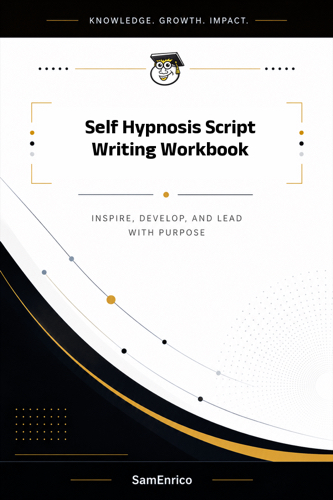 Self Hypnosis Script Writing WorkbookJewett Devon$11.99
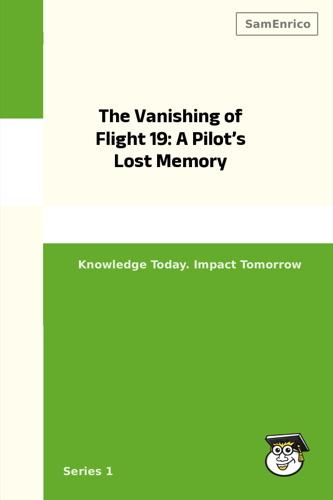 The Vanishing of Flight 19: A Pilot’s Lost MemoryJewett Devon$11.99
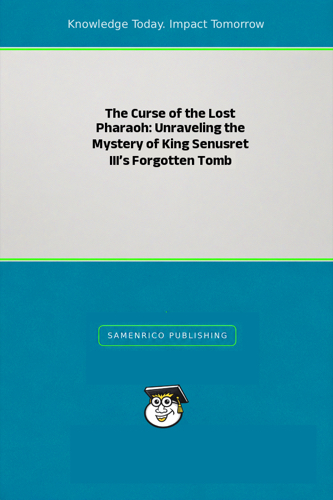 The Curse of the Lost Pharaoh: Unraveling the Mystery of King Senusret III’s Forgotten TombJewett Devon$11.99
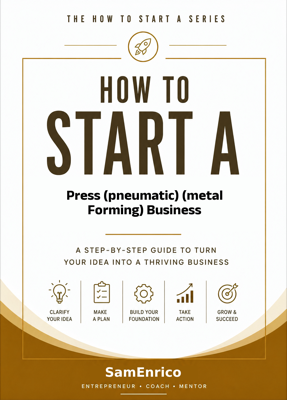 How to Start a Press (pneumatic) (metal Forming) Business (Beginners Guide)Jewett Devon$11.99
 Local Marketing One PagerJewett Devon$12.99
 Alternative Fuel Refueling CreditJewett Devon$12.99
 Understanding Cyanide PoisoningJewett Devon$17.99
 Bioprocess TechnicianJewett Devon$11.99
You may also like
 Hong Kong Handover 1997Dunn Johnnie$11.99
 Zumba For Postnatal Recovery CourseNeal Christian$11.99
 Zumba for BeginnersLadner Nikia$11.99
 YouTube Comment Mining GuideHumes Pandora$12.99
 Worry Box MeditationCarlin Rudy$11.99
 Workplace Stress MeditationNguyen Lynn$11.99
 Workplace Stress and Sleep RepairHawley Ivory$11.99
 Workplace Perfectionism CureDelaney Jeffry$11.99
 Workplace Injustice Anger GuideWallen Isabelle$11.99
 Work Addiction and Burnout LinkGreenwood Ester$11.99
 Women in Yoga and WellnessBeattie Galina$11.99
 Women in Stand Up ComedyChun Evangeline$11.99