
Non-FictionSelf-HelpMedications
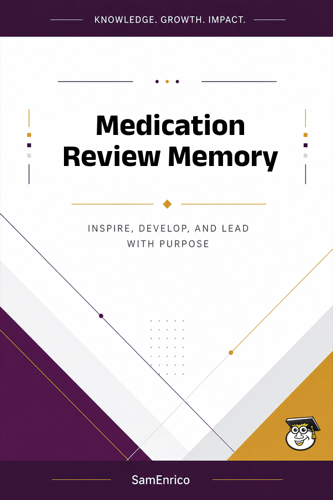
Medication Review Memory
Anticholinergic drugs and cognitive side effects.
Anticholinergic drugs and cognitive side effects.
Formats
About this book
Free sample
Chapter 1: The Silent Epidemic...--–- The emergency department chart read like a thousand others: "82-year-old female, confusion, unable to care for self, possible urinary tract infection." Margaret had been found by her daughter wandering the hallway of her assisted living facility at 3:00 AM, wearing only a nightgown, unsure of her own name. The overnight physician ordered the standard battery—urinalysis, complete blood count, basic metabolic panel, chest x-ray, head CT. The urinalysis showed bacteria. The diagnosis was obvious: delirium secondary to urinary tract infection. Intravenous antibiotics and fluids were started.
By morning, Margaret was marginally better but still confused. The hospitalist recommended a skilled nursing facility for "transitional care" and noted in the discharge summary: "Dementia likely, follow up with neurology."No one asked about her medications.When Margaret's daughter, a nurse by training but exhausted by caregiving, finally pulled the brown bag from her mother's apartment, she found six bottles. Among them: Oxybutynin (for overactive bladder, prescribed by a urologist four years earlier), Amitriptyline (for "nerve pain" in her feet, prescribed by a podiatrist seven years earlier), and Diphenhydramine (for sleep, purchased over the counter and taken nightly for at least a decade). The daughter, having recently attended a continuing education lecture on anticholinergic burden, added up the ACB scores: Oxybutynin (3), Amitriptyline (3), Diphenhydramine (3). Total ACB score: 9.She asked the hospitalist: "Could it be her medications?"The hospitalist shrugged.
"Maybe. But she's 82. She probably has Alzheimer's too."The daughter requested a trial of deprescribing. Over eight weeks, under the supervision of a clinical pharmacist, all three anticholinergic drugs were tapered and stopped. Margaret experienced transient nausea and insomnia during weeks one and two—cholinergic rebound, managed with ondansetron and reassurance.
By week four, she was sleeping through the night without medication. By week eight, she was attending bingo and remembering the names of the other residents. By week twelve, her Montreal Cognitive Assessment score had improved from 15 to 24—out of the dementia range entirely.Margaret did not have Alzheimer's disease. She had drug-induced cognitive impairment, misdiagnosed, mistreated, and nearly placed in long-term care because no one—not the urologist, not…
This is the end of the free sample. Get the eBook to keep going. Buy now
Contents
- Chapter 1
- Chapter 2
- Chapter 3
- Chapter 4
- Chapter 5
- Chapter 6
- Chapter 7
- Chapter 8
- Chapter 9
- Chapter 10
- Chapter 11
- Chapter 12
Details
- Author
- Reinhardt Johnette
- Publisher
- SamEnrico
- Language
- English
- Genre
- Non-Fiction, Self-Help, Medications
- Released
- 2026-06-11
- Pages (approx.)
- 160
- Available as
- eBook, Audiobook

Read better in the ZLOADR app
Your eBooks on your phone or tablet. Sign in with your SamEnrico account and start reading.
More by Reinhardt Johnette
 Nightmare Rescripting For Sexual AssaultReinhardt Johnette$11.99
 Color Peg System WorkbookReinhardt Johnette$11.99
 Keto Plateaus BreakerReinhardt Johnette$11.99
 Joshua Tree VanishedReinhardt Johnette$11.99
 Elderly Witness AccuracyReinhardt Johnette$11.99
 Quit Smoking for PTSD GuideReinhardt Johnette$11.99
 Cost Of Living For StudentsReinhardt Johnette$11.99
 The Architect of Marid: A Djinn’s Tower of Glass and SandReinhardt Johnette$11.99
 Understanding Split-brainReinhardt Johnette$11.99
 Us Government Use Domain GuideReinhardt Johnette$12.99
 Buy Sell Agreement Tax UpdatesReinhardt Johnette$12.99
 How to Produce Gloves and MittensReinhardt Johnette$11.99
You may also like
 Hong Kong Handover 1997Dunn Johnnie$11.99
 Zumba For Postnatal Recovery CourseNeal Christian$11.99
 Zumba for BeginnersLadner Nikia$11.99
 YouTube Comment Mining GuideHumes Pandora$12.99
 Worry Box MeditationCarlin Rudy$11.99
 Workplace Stress MeditationNguyen Lynn$11.99
 Workplace Stress and Sleep RepairHawley Ivory$11.99
 Workplace Perfectionism CureDelaney Jeffry$11.99
 Workplace Injustice Anger GuideWallen Isabelle$11.99
 Work Addiction and Burnout LinkGreenwood Ester$11.99
 Women in Yoga and WellnessBeattie Galina$11.99
 Women in Stand Up ComedyChun Evangeline$11.99