
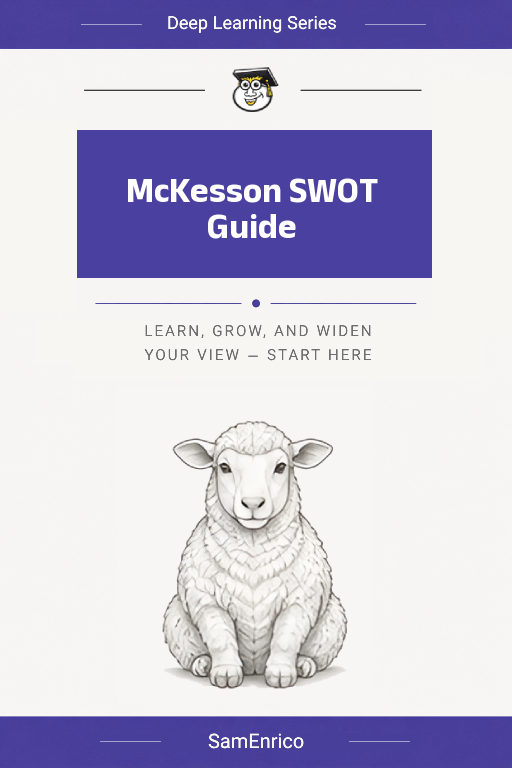
Non-FictionStrategic AtlasDrug Distribution
McKesson SWOT Guide eBook
Assess pharmaceutical distribution, medical suppli
Assess pharmaceutical distribution, medical supplies, oncology services, and generics sourcing challenges.
Formats
Free sample
Chapter 1: The $200 Billion Handshake...--–- The 3AM phone call that changed everything came on a Tuesday. Not from a competitor, not from a regulator, but from a pharmacist in rural Kansas named Doug Harriman. Doug had run Harriman's Pharmacy in Hayes, Kansas—population 13,000—for thirty-one years. He knew every customer by name. He knew which elderly patients needed their coumadin pills crushed because they had trouble swallowing.
He knew which family had just lost a father to lung cancer and needed sympathy along with their oxycodone refill. What Doug did not know, on that Tuesday morning in March 2024, was that his entire business model was about to become illegal.Not illegal in the criminal sense. Doug had never filled a fraudulent prescription in his life. But the Drug Supply Chain Security Act of 2013—the DSCSA, a piece of legislation so dense that most pharmacists had ignored it for a decade—was finally going into full effect. And Doug's small-town pharmacy, which bought generics from three different wholesalers depending on who had the best price that week, was about to be cut off.
He could not afford the $200,000 software upgrade required to track every pill from manufacturer to patient. He could not hire a compliance officer. He could not build the electronic "pedigree" system that the law now demanded. Doug was not a criminal. He was simply obsolete.The person who answered Doug's call at 3AM was not a Mc Kesson executive.
It was a regional sales representative named Maria Chen, who had been driving through Kansas the week before and stopped to introduce herself. Maria had left a box of pens and a pamphlet about Mc Kesson's new "compliance-as-a-service" offering. Doug had thrown the pamphlet away. But he kept the pens. And when his other wholesalers—the ones who had been underbidding Mc Kesson by 2% for years—told him they could not help with the DSCSA, Doug remembered Maria's phone number.By 6AM that same morning, Maria had looped in Mc Kesson's regulatory team in Dallas.
By noon, a temporary solution was in place: Mc Kesson would handle all of Doug's DSCSA reporting for a flat monthly fee, less than the cost of one employee. By Friday, Doug had moved 80% of his purchasing to Mc Kesson. He would never leave. Not because Mc Kesson was the cheapest—it never was—but because Mc Kesson was the only wholesaler that could keep him in business.This is the story that Wall Street analysts miss when they look at Mc Kesson's 2026 stock surge and ask: why is this old-school drug distributor trading like a tech company? The answer is not found in spreadsheets or P/E multiples alone.
It is found in the quiet, unglamorous, impossibly complex reality of the U.S. pharmaceutical supply chain—a system that moves 20 million prescriptions per day, touches every hospital and pharmacy in America, and is held together by three companies that almost no one outside the industry has heard of.This book is about those three companies, but mostly about the largest one: Mc Kesson. It is about how a 194-year-old distributor of pills and potions transformed itself into a healthcare technology and services behemoth—or at least, how it is trying to. And it is about the four existential challenges that will determine whether that transformation succeeds or fails: pharmaceutical distribution, medical supplies, oncology services, and generics sourcing. These are not just business units.
They are battlefields.The Invisible Giant Mc Kesson is the kind of company that makes billion-dollar decisions in buildings that look like insurance offices. Its headquarters in Irving, Texas, is a nondescript glass tower off Interstate 635, surrounded by parking garages and chain restaurants. There is no logo on the lawn. No lobby display celebrating the company's founding in 1833 as a drug importer in New York City. If you walked past it, you would assume it housed a regional bank or a law firm.This anonymity is strategic.
Mc Kesson makes its money by being invisible—by ensuring that when a cancer patient walks into an oncologist's office in Tulsa, the chemotherapy drugs are already in the refrigerator, the insurance prior authorization has been processed through an automated system, and the electronic medical record is ready to document the infusion. If Mc Kesson does its job perfectly, no one thanks it. If Mc Kesson fails, people die.That last part is not hyperbole. In 2012, a Mc Kesson computer system glitch caused thousands of cancer patients to receive diluted doses of chemotherapy. The company settled for 190million.In2017,Mc Kessonwaspartofthe"Big Three"distributors(alongwith Amerisource Bergen,now Cencora,and Cardinal Health)thatagreedtopay190 million.
In 2017, Mc Kesson was part of the "Big Three" distributors (along with Amerisource Bergen, now Cencora, and Cardinal Health) that agreed to pay 190million.In2017,Mc Kessonwaspartofthe"Big Three"distributors(alongwith Amerisource Bergen,now Cencora,and Cardinal Health)thatagreedtopay21 billion to settle opioid lawsuits, with Mc Kesson's share at 7.9billion.In2023,oneof Mc Kesson′slargestcustomers,Rite Aid,filedforbankruptcy,leavinga7.9 billion. In 2023, one of Mc Kesson's largest customers, Rite Aid, filed for bankruptcy, leaving a 7.9billion.In2023,oneof Mc Kesson′slargestcustomers,Rite Aid,filedforbankruptcy,leavinga725 million bad debt hole in Mc Kesson's balance sheet.These failures are not anomalies. They are the price of operating at a scale that is almost incomprehensible. Mc Kesson delivers to one-third of North American pharmacies and hospitals. It handles 30% of all cancer drugs in the United States.
It processes 1.5 billion prior authorizations annually through its Cover My Meds platform. Its revenue in fiscal 2025 was $309 billion—more than the GDP of Finland, Portugal, or New Zealand.To understand Mc Kesson is to understand a paradox: a company that is simultaneously too big to fail and perpetually on the brink of disruption. A company that has survived for nearly two centuries by adapting, but whose core business—moving physical pills from factories to pharmacies—is under assault from every direction: Amazon, inflation, regulation, and the very nature of healthcare itself.The Four Pillars (And Why They Matter)Mc Kesson's business is often described as "pharmaceutical distribution," but that is like describing Amazon as a bookstore. The modern Mc Kesson has four strategic pillars, each with its own economics, competitors, and existential risks.Pillar One: Pharmaceutical Distribution.This is the legacy business that still generates 70% of revenue—but only 40% of profit. Mc Kesson buys drugs from manufacturers (Pfizer, Merck, Novartis) and sells them to pharmacies (CVS, Walgreens, independents) and hospitals (HCA, Tenet, Kaiser).
The economics are brutal: gross margins average 3-5%, and net margins (after operating costs) are often below 1%. Mc Kesson makes money on volume, not margin. This is why the company's stock price was flat for most of the 2010s. Investors saw a low-margin logistics business with unlimited liability (opioids) and minimal pricing power.But the distribution business is also Mc Kesson's moat—or at least part of it. The infrastructure required to move temperature-sensitive drugs across 50 states, comply with 50 different state pharmacy boards, and maintain relationships with 40,000 customers cannot be replicated overnight.
It took Mc Kesson 190 years to build this network. Amazon could not replicate it in a decade.Pillar Two: Medical-Surgical Supplies.This is the forgotten child of the Mc Kesson portfolio. The…
This is the end of the free sample. Get the eBook to keep going. Buy now
About this book
Details
- Author
- Hatley Ruthanne
- Publisher
- SamEnrico
- Language
- English
- Genre
- Non-Fiction, Strategic Atlas, Drug Distribution
- Released
- 2026-05-30
- Pages (approx.)
- 154
- Available as
- eBook, Audiobook

Read better in the ZLOADR app
Your eBooks on your phone or tablet. Sign in with your SamEnrico account and start reading.
More by Hatley Ruthanne
 Pomodoro Goal Breakdown MethodHatley Ruthanne$11.99
 Affirmations For EntrepreneurshipHatley Ruthanne$11.99
 Fertility and Blood ClottingHatley Ruthanne$11.99
 Caregiver Burnout In Sickle CellHatley Ruthanne$11.99
 The Pet Death Nightmare RescriptHatley Ruthanne$11.99
 The Hydaspes Gambit: Alexander’s Last Great TriumphHatley Ruthanne$11.99
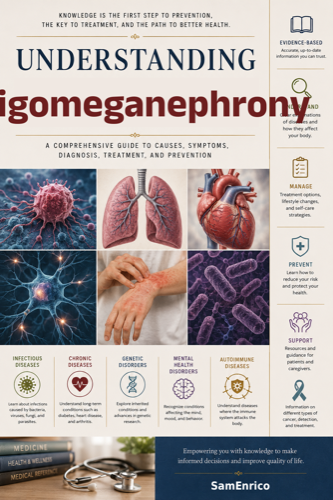 Understanding OligomeganephronyHatley Ruthanne$17.99
 Director of Information SecurityHatley Ruthanne$11.99
 PayPal Remote Internship SecretsHatley Ruthanne$12.99
 How to Start a Personnel Provision (temporary Employment Agency) Business (Beginners Guide)Hatley Ruthanne$11.99
You may also like
 Hong Kong Handover 1997Dunn Johnnie$11.99
 Zumba For Postnatal Recovery CourseNeal Christian$11.99
 Zumba for BeginnersLadner Nikia$11.99
 YouTube Comment Mining GuideHumes Pandora$12.99
 Worry Box MeditationCarlin Rudy$11.99
 Workplace Stress MeditationNguyen Lynn$11.99
 Workplace Stress and Sleep RepairHawley Ivory$11.99
 Workplace Perfectionism CureDelaney Jeffry$11.99
 Workplace Injustice Anger GuideWallen Isabelle$11.99
 Work Addiction and Burnout LinkGreenwood Ester$11.99
 Women in Yoga and WellnessBeattie Galina$11.99
 Women in Stand Up ComedyChun Evangeline$11.99