
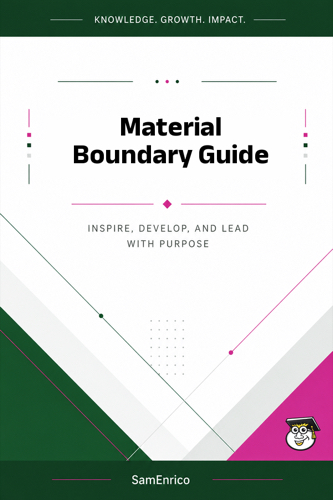
Material Boundary Guide eBook
Stop lending money or possessions that cause resen
by Chang Velva
Stop lending money or possessions that cause resentment with this guide.
Formats
Free sample
Chapter 1: The Resentment Ledger--–- You do not remember the exact day you lent it. That is the first sign of trouble. You remember the ask—casual, over text, at a party, in the breakroom. You remember the feeling in your chest, the slight hesitation, the way your mouth formed the word "sure" before your brain had finished calculating the cost. But the date?
The promised return day? The exact amount? Those details have evaporated, leaving behind only a low, humming anxiety that surfaces every time you see that person’s name on your phone.This is how resentment begins. Not with a bang, but with a blur.If you are reading this book, someone owes you something right now. It might be twenty dollars for a group lunch.
It might be a novel you lent six months ago that you are afraid to ask about. It might be three hundred dollars advanced to a sibling who said “just until Friday” three Fridays ago. Or it might be something worse: a tool that came back broken, a piece of clothing that never returned, a car that was returned late with an empty tank and a new scratch. You have not forgotten any of these things. But you have stopped talking about them.
You have stopped asking. You have started pretending that the money was a gift, that the book was a donation, that the tool was a lesson.That pretending is expensive.This chapter is an intervention. Before you learn a single script, before you build a single system, before you say a single new “no,” you must first take an honest, unflinching inventory of what you have already lost. Not just the dollars. The peace.
The trust. The mental energy. The small spikes of irritation that fire every time you remember the unpaid debt. The way you have started to avoid certain people not because you dislike them, but because you cannot bear one more conversation where they do not mention the thing they took from you.Welcome to the Resentment Audit. It is not comfortable.
It is necessary.The True Cost Formula: More Than Money Most people calculate lending losses the way they calculate a bad dinner bet—they look at the number. “I lent her fifty dollars. I did not get it back. I lost fifty dollars.” This calculation is wrong. It leaves out the hidden costs that compound long after the money is gone.Here is the actual equation this book will use for the rest of our time together:(Original Value + Emotional Energy Spent Worrying + Relationship Strain) – (Returned Value) = True Cost of the Loan Let us break that down.Original Value is the dollar amount of the loan or the replacement cost of the possession.
If you lent a two-hundred-dollar tool, the Original Value is two hundred dollars. Simple enough.Emotional Energy Spent Worrying is the invisible tax. Every time you have thought about that loan—every time you have rehearsed what you would say, every time you have checked your bank account hoping the money appeared, every time you have felt a flash of irritation at the borrower—that energy has value. It is not infinite. You have spent it instead of spending it on your work, your hobbies, your family, your sleep.
This book quantifies that energy in dollars. For the purpose of your audit, estimate the number of hours you have spent worrying about each loan (be honest) and multiply by twenty dollars per hour. That is a conservative estimate of your emotional labor rate.Relationship Strain is the hardest to calculate because it is the most denied. Has this loan changed how you feel about the borrower? Do you trust them less?
Do you avoid them? Do you bring them up in conversations with others as a cautionary tale (“Can you believe she never paid me back?”)? Each of these changes has a cost. For your audit, rate the strain on a scale of 1 to 10, then multiply by ten dollars. A strain of 7 adds seventy dollars to your True Cost.Returned Value is whatever you have gotten back.
Full repayment? Partial? An apology? A returned item in damaged condition? Subtract that from the total.The result is the True Cost.
It is almost always higher than you think.Let us walk through an example. You lent a three-hundred-dollar lawnmower to your neighbor. He returned it six weeks late with a bent blade and did not apologize. The Original Value is three hundred dollars. You spent roughly six hours worrying—checking his yard to see if he was using it, wondering whether to text him, complaining to your partner.
At twenty dollars per hour, that is one hundred twenty dollars of Emotional Energy. The strain on a scale of 1 to 10 is a 6 (you still talk, but you have decided never to lend to him again), adding sixty dollars. Total so far: four hundred eighty dollars. He returned the mower, so Returned Value is not zero, but the mower now needs a fifty-dollar repair. So Returned Value is the damaged mower worth two hundred fifty dollars.
Your True Cost is four hundred eighty minus two hundred fifty, which equals two hundred thirty dollars—nearly the cost of a new mower, even though you technically “only” lent three hundred.This is the math of resentment. It is not a math problem you can solve by avoiding it. You must do the audit.The Resentment Inventory: A Three-Year Look Back Take out a notebook, a spreadsheet, or the printable worksheet in the Appendix of this book. You are going to list every outstanding loan of money or possession from the past three years. Every single one.Do not skip the small ones.
Do not tell yourself that five dollars does not matter. The small loans are the most dangerous not because of their value, but because of their frequency. A five-dollar lunch loan forgotten by the borrower but remembered by you creates the same emotional usury as a five-hundred-dollar loan if it happens twice a week for a year. Small debts are death by a thousand cuts.For each loan, record the following information:Borrower’s name (or “Unknown” if you cannot remember)Item or amount lent Date lent (approximate is fine)Promised return date (if any)Current status (Outstanding, Late, Resolved with full return, Resolved with partial return, Resolved with damaged return, Written off)Hours spent worrying about this loan (estimate)Relationship strain (1–10)Usury Score (1–10) – we will explain this in a moment If you have more than ten loans on this list, you are not alone. The research behind this book suggests that the average adult has between four and twelve active, unresolved lending relationships at any given time.
Most people simply stop tracking after a certain point because the cognitive load becomes too heavy. That is why you are doing this inventory now—to make the hidden visible.Once your list is complete, calculate the True Cost for each loan using the formula above. Then add them all together. That number is your Resentment Principal. It is the total amount of money, emotional energy, and relationship capital you have lost to unmanaged lending in the…
This is the end of the free sample. Get the eBook to keep going. Buy now
About this book
Details
- Author
- Chang Velva
- Publisher
- SamEnrico
- Language
- English
- Genre
- Non-Fiction, Self-Help, Material Boundaries
- Released
- 2026-06-06
- Pages (approx.)
- 151
- Available as
- eBook, Audiobook

Read better in the ZLOADR app
Your eBooks on your phone or tablet. Sign in with your SamEnrico account and start reading.
More by Chang Velva
 The Mayor's 24 Hour CallChang Velva$11.99
 Parenting Grief And Loss GuideChang Velva$11.99
 LinkedIn Connection EnvyChang Velva$11.99
 Validating Suicidal IdeationChang Velva$11.99
 Thyroid Eye Disease GuideChang Velva$11.99Thyroid Eye Disease GuideChang Velva$11.99
 Coping With Car Repossession FearChang Velva$11.99
 Reputation Recovery LeadershipChang Velva$11.99
 Earplugs For Deep SleepChang Velva$11.99
 Quantum Leap: The Man Who Cracked Time with a ComputerChang Velva$11.99
 The Red River Campaign: Grant’s Bloody Misadventure in the WestChang Velva$11.99
 Hudson’s Folly: The Man Who Charted the New WorldChang Velva$11.99