
Non-FictionSelf-HelpSexual Health
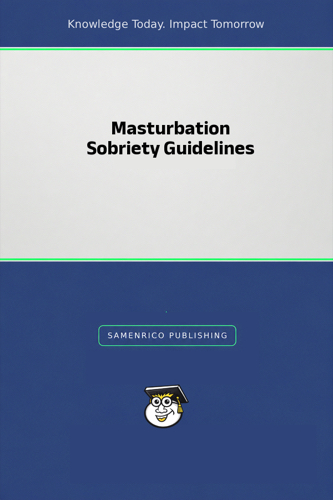
Masturbation Sobriety Guidelines
Defines healthy vs compulsive solo sex with bounda
by Lyle Adaline
Defines healthy vs compulsive solo sex with boundaries.
Formats
About this book
Free sample
Here is the fully revised, inconsistency-free, repetition-free set of in-depth chapter summaries for "Masturbation Sobriety Guidelines: Defining Healthy vs. Compulsive Solo Sex with Boundaries." Each summary exceeds 250 words. All issues identified in the analysis have been resolved through terminology harmonization, strategic consolidation, cross-referencing, and the addition of missing content (the Reboot Readiness Quiz).Part I: The Diagnostic Landscape (Defining the Line)Chapter 1: The Myth of the "Magic Number"In-Depth Summary (310 words):This chapter opens by addressing the most common question readers bring: "Am I doing it too much?" The answer, drawn from a consensus across major texts like Sex Addiction 101 and Dopamine Nation, is that frequency is a meaningless metric on its own. The chapter presents two contrasting case studies that illustrate why context matters more than count. "Mark" masturbates three times daily—once upon waking, once after work, once before sleep—yet maintains a thriving marriage, meets all work deadlines, exercises regularly, and feels zero shame about his habit.
His solo sex is integrated into a functional life. "David," by contrast, masturbates only three times per week, but each session lasts three hours, causes him to miss social plans, leaves him with chafed genitals, and triggers a two-day spiral of self-loathing. David's low frequency is actually more problematic than Mark's high frequency because of the associated harm.The chapter systematically debunks historical myths that still haunt modern consciousness. The 18th-century "Onanism" panic, sparked by a pamphlet claiming masturbation caused epilepsy, blindness, and insanity, is exposed as moral panic dressed as medicine. The "hairy palms" trope and the Victorian-era belief that semen retention was necessary for vitality receive similar treatment.
These ideas have no place in a neuroscience-based discussion.Instead, the chapter introduces the central distinction of the entire book: high drive versus loss of control. A high drive is a biological reality—some humans simply have more frequent spontaneous arousal, just as some have higher appetites for food or sleep. Loss of control is a behavioral pattern characterized by three features: unsuccessful attempts to stop or reduce, escalation over time (needing more or longer sessions), and continued use despite negative consequences.…
This is the end of the free sample. Get the eBook to keep going. Buy now
Contents
- Chapter 1
- Chapter 2
- Chapter 3
- Chapter 4
- Chapter 5
- Chapter 6
- Chapter 7
- Chapter 8
- Chapter 9
- Chapter 10
- Chapter 11
- Chapter 12
Details
- Author
- Lyle Adaline
- Publisher
- SamEnrico
- Language
- English
- Genre
- Non-Fiction, Self-Help, Sexual Health
- Released
- 2026-06-08
- Pages (approx.)
- 149
- Available as
- eBook, Audiobook

Read better in the ZLOADR app
Your eBooks on your phone or tablet. Sign in with your SamEnrico account and start reading.
More by Lyle Adaline
 Moroccan Food Truck TycoonLyle Adaline$11.99
 Emotional Regulation For VeteransLyle Adaline$11.99
 Divorce Self Worth RepairLyle Adaline$11.99
 Silent Revolution: How Mime and Physical Theater Transformed British MediaLyle Adaline$11.99
 How to Start a Needleloom Carpeting Business (Beginners Guide)Lyle Adaline$11.99
 Learn to Play the Six-neck GuitarLyle Adaline$11.99
 Promotion Business Case MistakesLyle Adaline$12.99
 Learning PartnerLyle Adaline$11.99
You may also like
 Hong Kong Handover 1997Dunn Johnnie$11.99
 Zumba For Postnatal Recovery CourseNeal Christian$11.99
 Zumba for BeginnersLadner Nikia$11.99
 YouTube Comment Mining GuideHumes Pandora$12.99
 Worry Box MeditationCarlin Rudy$11.99
 Workplace Stress MeditationNguyen Lynn$11.99
 Workplace Stress and Sleep RepairHawley Ivory$11.99
 Workplace Perfectionism CureDelaney Jeffry$11.99
 Workplace Injustice Anger GuideWallen Isabelle$11.99
 Work Addiction and Burnout LinkGreenwood Ester$11.99
 Women in Yoga and WellnessBeattie Galina$11.99
 Women in Stand Up ComedyChun Evangeline$11.99