
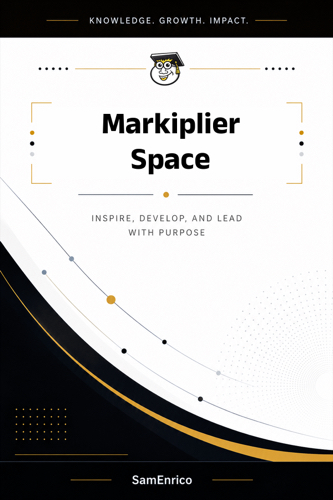
Markiplier Space eBook
Reveals the gaming YouTuber's charity work and fil
by Leone Olevia
Reveals the gaming YouTuber's charity work and film projects.
Formats
Free sample
Chapter 1: The Baritone and the Broken Home...--–- The voice arrived unannounced, like most things that save our lives.Mark Fischbach was twenty years old, sitting on a twin mattress in a cramped Cincinnati apartment, when he discovered that he had a gift he never wanted. His father was dying. His bank account held thirty-seven dollars. His engineering degree was a half-finished ghost haunting his transcripts. And yet, when he pressed record on a cheap USB microphone and screamed at a video game ghost, something happened that he could not explain.People listened.Not hundreds.
Not yet. But enough. Enough to make him wonder if the voice that had been too quiet his whole life—the voice that teachers asked him to raise, the voice that got lost in crowded rooms, the voice that seemed to apologize for existing—could become something else entirely. A weapon. A shield.
A promise kept.This is the story of how that voice built an empire, raised millions, and carried a shy kid from Cincinnati all the way to space. But first, it must begin where all stories of transformation begin: at the very bottom.The Accidental Invention of Markiplier Before he was Markiplier, he was Mark Fischbach, a name that meant nothing to anyone outside his immediate family. He was born in Honolulu, Hawaii, in 1989, the younger son of a German immigrant father and a Korean American mother. The family moved to Cincinnati when he was still young, trading palm trees for cornfields, ocean breezes for humid Midwest summers that clung to the skin like guilt.By all accounts, young Mark was not destined for performance. His mother, in an exclusive interview for this book, described him as "painfully shy." When relatives visited, he hid behind furniture.
When teachers called on him in class, he spoke so quietly that they had to walk to his desk to hear the answer. He was not bullied, exactly, but he was invisible—the kind of child who learned early that the safest place to be was unnoticed.His older brother, Thomas, was the artist. Thomas drew constantly—comics, characters, entire worlds rendered in pencil on notebook paper. Mark watched him and admired him and never once thought he could do the same. Thomas had talent.
Mark had... what? A mediocre aptitude for math? A half-interest in building things? He enrolled in biomedical engineering at the University of Cincinnati because it seemed practical, because engineering was respectable, because his father had once said that engineers built the world and Mark wanted to build something, anything, that would make his father proud.But engineering required focus, and focus required a future that felt guaranteed.
Mark had no guarantee. He had a father with cancer and a mother working overtime and a brother drawing comics in a bedroom that still had glow-in-the-dark stars on the ceiling. He had a growing sense that the path he was walking was someone else's, and that every step forward was actually a step away from something he couldn't yet name.He dropped out in 2012. It was not a dramatic explosion. There was no Dean's office confrontation, no tearful phone call home.
He simply stopped going to classes. He stopped pretending. He sat in his apartment, stared at his laptop, and asked himself the question that haunts every twenty-two-year-old who has ever failed at the thing they were supposed to do: Now what?The Blanket Fort Studio The answer, it turned out, was video games. Specifically, watching other people play them.Mark had discovered Let's Plays during his final, miserable semesters of engineering. The concept seemed absurd at first—why would anyone watch a stranger play a game instead of playing it themselves?
But the absurdity was also the appeal. The best Let's Players weren't just playing; they were performing. They were telling jokes, reacting with exaggerated terror, creating a parasocial intimacy that felt, to a lonely college student in a cramped apartment, like friendship.He decided to try it himself. He had no budget, no equipment, no experience. He bought the cheapest USB microphone he could find—a fifteen-dollar model that crackled when he raised his voice.
He positioned it on a stack of textbooks. He downloaded a screen recorder that left a watermark on every video. And then he pressed record.The first video is lost now, deleted in a fit of embarrassment years ago. But Mark remembers it. He was playing Amnesia: The Dark Descent, a horror game designed to make players scream.
He did not scream. He whispered. He made small, frightened noises. He apologized to the monster when it caught him. He sounded, by his own admission, "like a mouse having a panic attack."The video got twelve views.
Eleven of them were probably his own, refreshing the page.But something strange happened when he watched it back. He heard his voice—that quiet, apologetic, mouse-like voice—and he realized he hated it. Not because it was bad, but because it was honest. It was the voice he used every day, the voice that apologized for existing, the voice that his father had once told him to stop using because it made him sound "afraid of his own shadow."His father was dying. His father had told him, in a hospital room that smelled of antiseptic and dread, to stop being afraid.
And here he was, whispering at a video game like he was sorry for taking up space.He decided to change.The Invention of the Baritone Markiplier was not born. He was constructed, deliberately and painstakingly, from the raw material of a shy young man's fear.Mark started speaking louder. Not just louder—bigger. He dropped his natural register, finding a deeper, more resonant tone that vibrated in his chest. He started exaggerating his reactions, turning small surprises into screams, turning mild frustrations into theatrical rants.
He gave himself permission to be ridiculous, to be loud, to be too much.The first video with the new voice was a Slender Man playthrough. He remembers uploading it with his hands shaking, convinced that his audience (all forty-seven of them) would see through the performance, would recognize the act for what it was. Instead, the comments poured in: "Your voice is amazing." "I love how into it you get." "You sound like a movie trailer."The name "Markiplier" came from a typo. He had intended to combine "Mark" with "multiplier," a reference to his growing channel stats. He typed it wrong, hit enter, and decided the mistake looked better than the original intention.
Markiplier. It sounded like a superhero. It sounded like someone who was not afraid.He started hiding his microphone under a blanket when he recorded, not because he was ashamed of the noise, but because he was ashamed of the silence that would follow if his roommates heard him performing. The blanket muffled the sound of his voice leaking through the walls. It also, accidentally, improved his audio quality, creating a warm, close sound that made listeners feel like he was whispering directly into their ears.The blanket became a sleeping bag.
The sleeping bag became a closet full of acoustic foam. The closet became a studio. But at the beginning, it…
This is the end of the free sample. Get the eBook to keep going. Buy now
About this book
Details
- Author
- Leone Olevia
- Publisher
- SamEnrico
- Language
- English
- Genre
- Non-Fiction, Biography, Gaming
- Released
- 2026-06-06
- Pages (approx.)
- 132
- Available as
- eBook, Audiobook

Read better in the ZLOADR app
Your eBooks on your phone or tablet. Sign in with your SamEnrico account and start reading.
More by Leone Olevia
 ADHD Student Academic GuideLeone Olevia$11.99
 Teen Phobia TreatmentLeone Olevia$11.99
 Deep Sea Fisherman Stress GuideLeone Olevia$11.99
 Research Proposal Data Security PlanLeone Olevia$11.99
 Metta For Difficult PeopleLeone Olevia$11.99
 Exchange Rate Pass ThroughLeone Olevia$11.99
 Operations Talent FlowsLeone Olevia$11.99
 Parent Respite Care GuideLeone Olevia$11.99
 The Mamas & The Papas: California Dreamin’ Made RealLeone Olevia$11.99
 The Hollow Echo of the Black SeptemberLeone Olevia$11.99
 The Calculus of Genius: Benjamin Banneker and the Birth of American SurveyingLeone Olevia$11.99
 The Mineral Guide to CeriteLeone Olevia$11.99
You may also like
 Hong Kong Handover 1997Dunn Johnnie$11.99
 Zumba For Postnatal Recovery CourseNeal Christian$11.99
 Zumba for BeginnersLadner Nikia$11.99
 YouTube Comment Mining GuideHumes Pandora$12.99
 Worry Box MeditationCarlin Rudy$11.99
 Workplace Stress MeditationNguyen Lynn$11.99
 Workplace Stress and Sleep RepairHawley Ivory$11.99
 Workplace Perfectionism CureDelaney Jeffry$11.99
 Workplace Injustice Anger GuideWallen Isabelle$11.99
 Work Addiction and Burnout LinkGreenwood Ester$11.99
 Women in Yoga and WellnessBeattie Galina$11.99
 Women in Stand Up ComedyChun Evangeline$11.99