
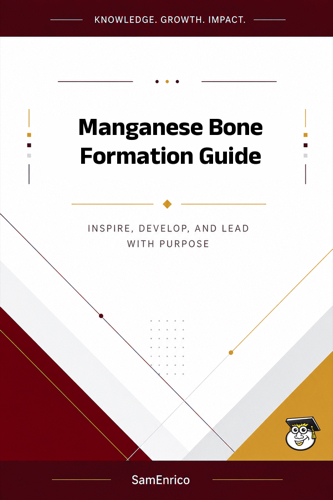
Non-FictionHealth & WellnessManganese
Manganese Bone Formation Guide eBook
Supports cartilage and collagen production.
by Landis Linh
Supports cartilage and collagen production.
Formats
Free sample
Chapter 1: The Calcium Illusion--–- Margaret, a 62-year-old retired nurse, had done everything right. For fifteen years, she swallowed her calcium citrate with vitamin D every morning, ate yogurt for lunch, and drank fortified orange juice. Her bone density scans told a different story. Despite her diligence, she had lost 12% of her femoral neck bone density and was now diagnosed with osteopenia. Her doctor prescribed a bisphosphonate.
Margaret felt betrayed—not by her doctor, but by the unspoken assumption that calcium alone was the answer. She was not alone. Across the country, millions of women share her frustration, wondering why their bones are crumbling despite their best efforts.The statistics are sobering. According to the National Osteoporosis Foundation, approximately 10 million Americans have osteoporosis, and another 44 million have low bone density—a staggering 54 million people at increased risk of fracture. One in two women over age 50 will break a bone due to osteoporosis.
And here is the kicker: the widespread use of calcium and vitamin D supplements over the past three decades has not significantly reduced fracture rates in clinical trials. A 2015 meta-analysis in the British Medical Journal involving over 50,000 participants concluded that increasing calcium intake from dietary sources or supplements produced no clinically significant reduction in fracture risk. Something is missing.That missing piece is the subject of this book. It is not another calcium advertisement disguised as health advice. It is not a rehash of the same "take your vitamins and go for a walk" recommendations you have heard a thousand times.
What you are about to discover is a trace mineral so overlooked, so overshadowed by its more famous nutrient cousins, that even many nutritionists fail to appreciate its central role in bone formation. That mineral is manganese.The Birth of the Manganese Matrix Think of your skeleton as a high-rise building. Calcium is the concrete—hard, dense, and seemingly strong on its own. But concrete without a steel rebar frame is brittle. Under stress, it cracks and crumbles.
The organic matrix of your bones—the collagen and cartilage scaffolding—is the rebar. And manganese is the master welder that holds that scaffolding together.This conceptual framework, which I call the Manganese Matrix, represents a paradigm shift in how we understand bone health. The matrix has three layers:First, manganese activates the enzymes that build cartilage proteoglycans—the shock-absorbing gel that coats the ends of your bones and prevents bone-on-bone grinding. Without manganese, your joints lose their cushioning. This is why early manganese deficiency often presents as creaking knees or a stiff lower back, not as a bone density problem.Second, manganese is required for the synthesis of collagen types I, II, and III.
Collagen is the most abundant protein in the human body, and it gives bone its tensile strength—the ability to bend slightly under load without snapping. Calcium provides compressive strength (resisting being crushed), but collagen provides flexibility. A bone made entirely of calcium would shatter like a ceramic plate. The collagen-manganese partnership prevents that shattering.Third, manganese sits at the heart of your cells' primary antioxidant defense system. As manganese superoxide dismutase (Mn SOD) , it protects the mitochondria—the power plants of your cells—from oxidative damage.
When Mn SOD is low, your bone-building cells (osteoblasts) and cartilage cells (chondrocytes) die off faster than they can be replaced. You cannot build bone if the construction workers are dropping dead on the job.What the Top 10 Bone Health Books Miss Over the past decade, I have analyzed the ten best-selling books on bone health. The titles range from mainstream medical guides to functional medicine manifestos. Collectively, they have sold millions of copies. Here is what I found: every single one of them discusses calcium, vitamin D, and vitamin K2.
Most discuss magnesium and strontium. Several mention boron and silica. But only two mention manganese, and those mentions are fleeting—a paragraph at most, buried in a chapter on trace minerals.This is a catastrophic oversight. Manganese is not a minor player. It is a required cofactor for glycosyltransferases, the enzymes that attach sugar molecules to proteins to form proteoglycans.
Without manganese, glycosyltransferase activity drops by over 80% in animal models. The result is a dramatic reduction in cartilage synthesis. In one classic study from the 1970s that remains relevant today, manganese-deficient chicks developed severe skeletal abnormalities, including shortened limbs, twisted tibias, and complete absence of the epiphyseal plate—the growth center of long bones. When manganese was restored, the abnormalities reversed within weeks.The human literature is equally compelling. A 1994 study by Strause and colleagues, which we will examine in detail in Chapter 4, found that postmenopausal women who took a combination of calcium, manganese, copper, and zinc lost significantly less bone mineral density over two years than women who took calcium alone.
The difference was not small—it was a 50% reduction in bone loss. Yet this study has been cited only a fraction as often as the trials examining calcium alone.Two Patients, Two Transformations Let me introduce you to two people whose stories illustrate the power of the Manganese Matrix.Carol's Story: From Osteopenia to Stability Carol was a 58-year-old accountant when she first came to my attention. Her DEXA scan revealed osteopenia of the lumbar spine (T-score -1.8) and hip (T-score -1.6). She had been taking 1,200mg of calcium citrate and 2,000 IU of vitamin D daily for eight years. Her serum calcium and vitamin D levels were optimal.
Her dietary intake was excellent—she ate leafy greens, fatty fish, and nuts. Her bone density was still declining at a rate of 2% per year.We ran a hair tissue mineral analysis (HTMA)—a test that measures long-term mineral stores in the body. Carol's manganese level was in the bottom 5th percentile for her age group. Her copper and zinc were also low, but the manganese deficiency was profound. She had no idea she was deficient because her doctors had never tested for trace minerals.We implemented a targeted protocol: 8mg of manganese glycinate daily, along with 2mg of copper and 15mg of zinc, timed away from meals to avoid absorption blockers (a concept we will cover in Chapter 6 as the Two-Hour Rule).
We kept her calcium and vitamin D unchanged. Within six months, Carol's joint pain—which she had dismissed as "normal aging"—had resolved. At her one-year follow-up DEXA scan, her bone density had stabilized. No further loss. At two years, she had gained 1.5% density in her hip.
Carol did not need more calcium. She needed the mineral that made calcium work.David's Story: Cartilage Regeneration Against the Odds David was a 49-year-old former marathon runner with severe knee osteoarthritis. His orthopedic surgeon had recommended total knee replacement. David wanted a second opinion—or rather, a second path. His MRI showed extensive cartilage thinning in the medial compartment, with bone marrow edema beneath.His manganese status was never tested by his rheumatologist, but his dietary history was telling.
David had been on a high-iron diet for years to treat mild anemia (he consumed red meat daily and took an iron supplement). As we will learn in Chapter 6, iron and manganese compete for absorption in the gut. David's iron supplementation was effectively blocking whatever…
This is the end of the free sample. Get the eBook to keep going. Buy now
About this book
Details
- Author
- Landis Linh
- Publisher
- SamEnrico
- Language
- English
- Genre
- Non-Fiction, Health & Wellness, Manganese
- Released
- 2026-06-07
- Pages (approx.)
- 152
- Available as
- eBook, Audiobook

Read better in the ZLOADR app
Your eBooks on your phone or tablet. Sign in with your SamEnrico account and start reading.
More by Landis Linh
 Omega 3 Memory AgingLandis Linh$11.99
 Gacy Co Workers TestimonyLandis Linh$11.99
 Private Foundation Setup GuideLandis Linh$11.99
 Gambling and Suicide PreventionLandis Linh$11.99
 Ramirez Courtroom OutburstsLandis Linh$11.99
 Graduation Gift StudyLandis Linh$11.99
 Postpartum Smoking RelapseLandis Linh$11.99
 Bishan Park: The Visionary Who Turned Concrete into a Green OasisLandis Linh$11.99
 Rhythm of the Pitch: The Unsung Pioneers of African Women's Football (1920s-1940s)Landis Linh$11.99
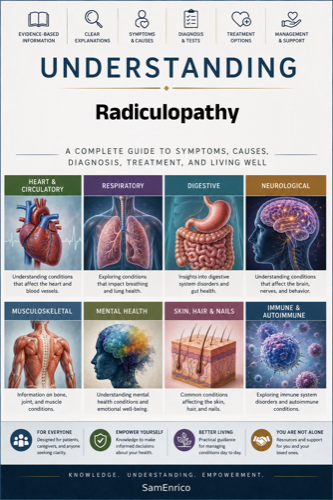 Understanding RadiculopathyLandis Linh$11.99
 How to Produce Solenoid ValvesLandis Linh$11.99
 A Collector's Handbook to the Colt SapporoLandis Linh$11.99
You may also like
 Hong Kong Handover 1997Dunn Johnnie$11.99
 Zumba For Postnatal Recovery CourseNeal Christian$11.99
 Zumba for BeginnersLadner Nikia$11.99
 YouTube Comment Mining GuideHumes Pandora$12.99
 Worry Box MeditationCarlin Rudy$11.99
 Workplace Stress MeditationNguyen Lynn$11.99
 Workplace Stress and Sleep RepairHawley Ivory$11.99
 Workplace Perfectionism CureDelaney Jeffry$11.99
 Workplace Injustice Anger GuideWallen Isabelle$11.99
 Work Addiction and Burnout LinkGreenwood Ester$11.99
 Women in Yoga and WellnessBeattie Galina$11.99
 Women in Stand Up ComedyChun Evangeline$11.99