
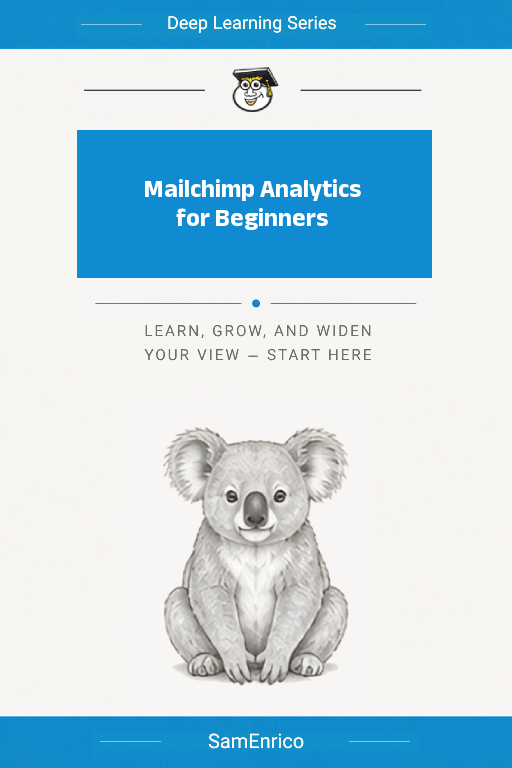
Mailchimp Analytics for Beginners eBook
Interpret open rates, click-through rates, and uns
by Darby Nancie
Interpret open rates, click-through rates, and unsubscribes to improve your next campaign.
Formats
Free sample
Chapter 1: The Open Rate Lie--–- The first time I celebrated a 52% open rate, I had just made forty-seven dollars in revenue. Not forty-seven thousand. Not forty-seven hundred. Forty-seven dollars. My email had gone out to fourteen thousand subscribers.
The open rate was beautiful. The subject line was clever. The design was flawless. And after all that work, I had earned less than the cost of a nice dinner for two.That was the moment I realized something was deeply wrong with how beginners learn email analytics.We are taught to chase open rates. We obsess over subject lines.
We celebrate when the little green graph goes up. But a high open rate does not pay your rent. It does not buy inventory. It does not keep your boss off your back. It is what experts call a vanity metric—a number that feels good but means almost nothing by itself.This chapter is going to hurt your feelings.
That is the point. By the time you finish reading, you will never look at an open rate the same way again. More importantly, you will finally understand what actually matters: the feedback loop that turns confusing numbers into clear, profitable actions.The Day the Numbers Lied to Me Let me tell you the full story because it explains why this book exists.Several years ago, I was running email for a small e-commerce brand that sold specialty coffee. We had a decent list—about fourteen thousand subscribers who had signed up through our website, events, and in-store promotions. One week, I spent hours crafting what I thought was the perfect promotional email.
The subject line was a pun about caffeine. The preview text was clever. The design featured gorgeous photography of freshly roasted beans.I hit send at 10:00 AM on a Tuesday, which every blog post had told me was the optimal time.Twenty-four hours later, I opened Mailchimp and saw the number: 52% open rate. I literally smiled. I called my coworker over to look at it.
We high-fived. This was going to be huge.Then I checked the revenue report.Forty-seven dollars.Forty-seven dollars from an email sent to fourteen thousand people. That meant my average revenue per subscriber for that campaign was one-third of one cent. The open rate had been beautiful. The result had been a disaster.What happened?
Had the email been ugly? No. Had the offer been bad? Actually, the offer was the same 20% discount we always used. The problem was much deeper and much more common than I wanted to admit.
I had confused activity with results. I had celebrated a proxy metric as if it were the real thing. And I had no system for diagnosing why a campaign with great opens had produced zero sales.This book is the system I wish I had back then.Why Your Open Rate Is Probably Fake (Starting Now)Before we go any further, we need to talk about something that has changed the entire email analytics game. If you are reading this book in 2026 or later, you are operating in a world where open rates have been fundamentally broken.In 2021, Apple released Mail Privacy Protection (MPP). This feature, enabled by default on i Phones and i Pads, preloads emails in the background before you actually open them.
It downloads tracking pixels automatically. The result is devastating for analytics: Mailchimp now registers an "open" for millions of emails that no human being has ever looked at.How bad is the problem? Industry studies suggest that MPP can inflate open rates by anywhere from 15% to 40%, depending on your audience. If half your subscribers use Apple devices—and most do—your open rate is no longer a measure of human curiosity. It is a measure of Apple's background loading protocols.This does not mean open rates are useless.
It means you have to treat them as directional signals, not absolute truths. The gap between your reported open rate and your actual human read rate is wider than ever. The beginner who does not understand this will make terrible decisions based on beautiful lies.The solution is simple but most beginners ignore it: focus on the click-to-open rate instead. More on that in Chapter 4. For now, just know that when you see a 40% open rate, the real number might be 25%.
And when you see 25%, the real number might be 15%. Always assume your open rate is inflated by 20-30% unless you have done the work to filter out bot and preload activity.The Vanity Metric Trap Vanity metrics are numbers that make you feel good but do not help you make better decisions. Open rates are the classic example. Here are a few others that beginners obsess over:Total subscribers (a large list of unengaged people is worse than a small list of buyers)Total emails sent (sending more email to people who don't care just hurts your reputation)Social shares (shares feel great but rarely drive revenue unless you are a publisher)Forward rates (nice to have but almost impossible to optimize for meaningfully)The problem with vanity metrics is not that they are wrong. The problem is that they are incomplete.
A high open rate could mean your subject line was excellent. Or it could mean you emailed at a lucky time. Or it could mean Apple's privacy features are lying to you. Or it could mean your list is full of bots. Without additional context, you simply do not know.Worse, vanity metrics encourage lazy optimization.
When beginners celebrate open rates, they start optimizing for opens exclusively. They write clickbait subject lines that have nothing to do with their actual product. They promise things in the preview text that the email does not deliver. They game the system to produce a number that feels good while the actual business results stay flat or decline.I have seen this pattern dozens of times. A marketer inherits an email program with a 15% open rate.
They run a few subject line tests and get it to 22%. They celebrate. Their boss celebrates. But revenue has not changed. Why?
Because the people who were opening before were already interested. The new opens are coming from people who were tricked by a subject line but have no intention of buying. You have not grown your business. You have just learned to lie more effectively to your own audience.This book is about escaping that trap.The Feedback Loop: Your New Operating System The single most important concept in this entire book is the feedback loop. You will see it referenced in every chapter because it is the engine that turns raw data into continuous improvement.Here is the feedback loop in five steps:1.
Send. You create and launch a campaign. This could be a promotional email, a newsletter, a welcome sequence, or any other message.2. Measure. You wait for enough data to be statistically meaningful.
For most small businesses, this means 24 to 48 hours after send. You look at the key metrics: delivery rate, open rate, click-to-open rate, unsubscribe rate, and revenue (if trackable).3. Interpret. This is where most beginners fail. Interpretation means asking why the numbers look the way they do.
Was the subject line truly great, or did a holiday weekend depress engagement? Did a technical issue affect delivery? Did…
This is the end of the free sample. Get the eBook to keep going. Buy now
About this book
Details
- Author
- Darby Nancie
- Publisher
- SamEnrico
- Language
- English
- Genre
- Non-Fiction, First 30 Days, Analytics
- Released
- 2026-05-30
- Pages (approx.)
- 141
- Available as
- eBook, Audiobook

Read better in the ZLOADR app
Your eBooks on your phone or tablet. Sign in with your SamEnrico account and start reading.
More by Darby Nancie
 Twelve Step Cooperation with Professional CommunityDarby Nancie$11.99
 Weekly Goal Review MethodDarby Nancie$11.99
 Addressing Passive AggressionDarby Nancie$11.99
 Recording Ego StrengtheningDarby Nancie$11.99
 Suicide Loss Grief Recovery GuideDarby Nancie$11.99
 Parent Suicide Grief GuideDarby Nancie$11.99
 Gore Vidal BiographyDarby Nancie$11.99
 Class Action Lawsuit Against YahooDarby Nancie$11.99
 The Night Dancers of the Congo: A Cult of Blood and BeliefDarby Nancie$11.99
 Love and Torpedoes: The USS Houston's Last StandDarby Nancie$11.99
 How to Produce Metal ScrapDarby Nancie$11.99
 Growing Amarcrinum (Hybrid Genus)Darby Nancie$11.99
You may also like
 Mailchimp Google AnalyticsRoller Lyman$12.99
 Shopify Analytics Free GuideHouston Samuel$12.99
 Mailchimp Reporting DashboardEasterling Kathlyn$12.99
 Launching A Youtube Channel For Your Brand SuccessMclean Zenaida$12.99
 Facebook Ads Reporting First GuideDuff Yuriko$12.99
 Digital Product Analytics SetupMontero Warner$12.99
 Launching A Youtube Channel For Your Brand AnalyticsRicker Helaine$12.99
 Digital Product Analytics DashboardWoodall Alana$12.99