
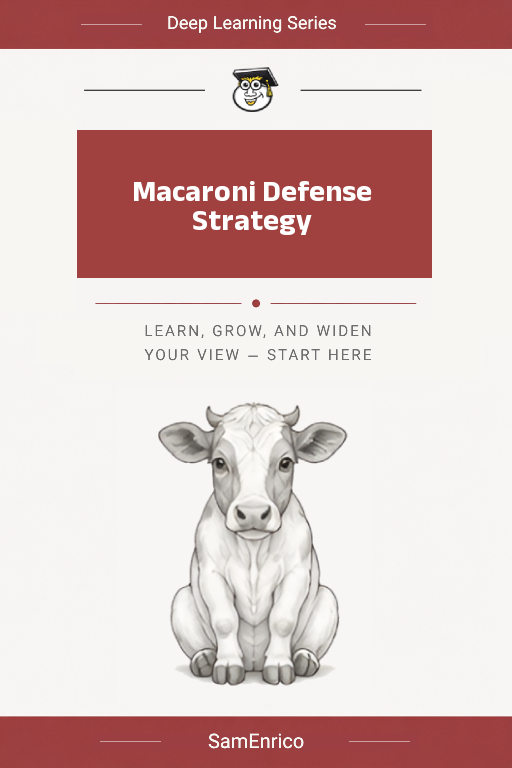
Non-FictionCrisis ManagementBonds
Macaroni Defense Strategy eBook
Issue bonds that must be redeemed at high prices i
Issue bonds that must be redeemed at high prices if control changes, making takeover expensive.
Formats
Free sample
Chapter 1: The Raider’s Clock...--–- The phone rang at 11:47 PM on a Tuesday. David Chen, CFO of a mid-sized medical device manufacturer, had been asleep for just under an hour. On the other end was his CEO, voice tight and strange. “David, get to the office. We have a problem.” By the time David arrived forty minutes later, the problem had a name and a face: a well-known activist hedge fund had just filed a 13D disclosure with the SEC, revealing that it had accumulated 9.8% of the company’s shares and was preparing a tender offer at $42 per share—a 22% premium to the previous day’s closing price.
The offer was unsolicited, unfriendly, and structured to expire in twenty days.David did what any competent CFO would do. He pulled up the company’s debt covenants, scanned the shareholder rights plan, and called the company’s investment banker. The banker listened, then asked a question that would haunt David for the next six months: “Do you have a Macaroni Defense?” David had never heard the term. He asked for clarification. The banker sighed.
“Poison Put bonds. Event-risk covenants. Anything that forces the acquirer to buy back debt at a premium if control changes?” David’s silence was answer enough. The banker delivered the verdict: “Then you have about three weeks to negotiate a sale, because you have no leverage.”This book is written so that no CFO ever has to hear those words again.The Macaroni Defense is one of the most powerful, misunderstood, and underutilized weapons in the corporate anti-takeover arsenal. Unlike the famous Poison Pill, which dilutes shareholders and often ends in litigation, the Macaroni Defense is clean, mechanical, and brutally financial.
It does not require shareholder votes. It does not trigger proxy fights. It simply makes the math of a hostile takeover stop working. When deployed correctly, it transforms a company’s balance sheet from a liability into a moat. When deployed poorly, it can bankrupt the company that deploys it.
And when not deployed at all, it leaves the company naked in front of a predator with a clock and a checkbook.This chapter establishes the battlefield. It explains why hostile takeovers happen, who the raiders are, and why the fear of overpaying is their single greatest vulnerability. It introduces the timeline of a typical unsolicited offer—what the academics call the “Raider’s Clock”—and shows exactly why a CFO has so little time to react. Finally, it previews the historical moment that changed everything: the leveraged buyout boom of the 1980s, when event-risk protection was born out of blood and bond defaults. By the end of this chapter, you will understand not just that the Macaroni Defense matters, but why it exists in the first place.The Friendly Merger vs.
The Hostile Tender To understand the Macaroni Defense, one must first understand the difference between a friendly transaction and a hostile one. In a friendly merger, two companies agree to combine. Their CEOs have dinner. Their boards bless the deal. Their bankers shake hands.
Shareholders are presented with a single, unified recommendation to vote in favor. The process is measured, cooperative, and—at least in theory—designed to maximize value for both parties.A hostile tender offer is the opposite of all those things.In a hostile tender offer, the acquirer bypasses management entirely and appeals directly to the company’s shareholders. The acquirer says, in effect: “Your management team does not want to sell, but I am offering you a premium for your shares. Tender them to me, and I will pay you cash. Ignore your board’s recommendation.
The decision is yours.” The offer comes with a clock—typically twenty to forty days—and a condition: the acquirer will only buy the shares if a certain percentage of shareholders (often a majority) tender.The legal framework for this process is established by the Williams Act of 1968, which was passed in response to a wave of cash tender offers in the 1960s that left target shareholders with no time to decide. The Williams Act requires any acquirer crossing 5% ownership to file a Schedule 13D disclosure within ten days. It also requires tender offers to remain open for at least twenty business days. These rules were designed to protect shareholders, but they also create the Raider’s Clock—a finite window during which the target company must respond.This clock is the CFO’s nightmare. Twenty days is not enough time to hire a banker, run a valuation, contact alternative bidders, and mount a defense.
If the company has not prepared a Macaroni Defense before the clock starts running, it will almost certainly not have time to issue new bonds with event-risk covenants after the fact. Bond issuances take weeks of due diligence, roadshows, and SEC filings. By the time the bonds could price, the tender offer would already have expired. This is why the Macaroni Defense is a pre-emptive strategy, not a reactive one. You build the moat before the siege begins, not after the battering ram has hit the gate.The Psychology of the Corporate Raider Who are these people who launch hostile tender offers?
The popular imagination conjures figures like Carl Icahn, T. Boone Pickens, or Nelson Peltz—men in dark suits, speaking in clipped sentences, surrounded by lawyers and spreadsheets. That image is not entirely wrong, but it misses the most important psychological truth about corporate raiders: they are terrified of overpaying.Every hostile tender offer has a ceiling. That ceiling is not determined by the acquirer’s available cash, nor by the target’s intrinsic value, nor even by the potential synergies of the combination. The ceiling is determined by the acquirer’s required rate of return.
A private equity firm, for example, typically needs to achieve a 20% to 25% internal rate of return (IRR) on its invested capital. If a tender offer would produce an IRR below that threshold, the deal does not get done. A strategic acquirer—another operating company—might accept a lower return (10% to 15%) because of long-term strategic benefits, but even they have a floor beneath which they will not go.The raider’s fear of overpaying is not just psychological; it is structural. Most hostile tender offers are financed with a significant amount of debt. The acquirer borrows money from banks or issues high-yield bonds to fund the purchase.
That debt comes with covenants and interest payments that must be serviced. If the acquirer overpays, the debt burden becomes unsustainable, and the entire acquisition can spiral into bankruptcy. The history of hostile takeovers is littered with acquirers who won the battle but lost the war because they paid too much.This is the vulnerability that the Macaroni Defense exploits. The defense does not block the takeover outright. It does not make the company illegal to acquire.
It simply adds a large, unexpected cost to the transaction—the redemption premium on the target’s bonds. If that additional cost pushes the total acquisition price above the raider’s ceiling, the deal dies. The raider walks away. The company survives.To understand why this works, consider a simplified example. A raider values a target at 100persharebasedonitsstandalonecashflowsandprojectedsynergies.Theraider’sceiling—themaximumpricethatstilldeliverstherequiredreturn—is100 per share based…
This is the end of the free sample. Get the eBook to keep going. Buy now
About this book
Details
- Author
- Mcfarland Corine
- Publisher
- SamEnrico
- Language
- English
- Genre
- Non-Fiction, Crisis Management, Bonds
- Released
- 2026-05-30
- Pages (approx.)
- 148
- Available as
- eBook, Audiobook

Read better in the ZLOADR app
Your eBooks on your phone or tablet. Sign in with your SamEnrico account and start reading.
More by Mcfarland Corine
 Letting Go Breath PracticeMcfarland Corine$11.99
 Dream Location JournalMcfarland Corine$11.99
 The Boundary SettingMcfarland Corine$11.99
 Joyful Retirement Planning GuideMcfarland Corine$11.99
 Stress and Betrayal RecoveryMcfarland Corine$11.99
 Listening In Crisis ManagementMcfarland Corine$11.99
 Trauma Focused Therapy GuideMcfarland Corine$11.99
 The Geocache TreasureMcfarland Corine$11.99
 Magic Johnson HIVMcfarland Corine$11.99
 The Ice Palace Massacre: The Red Terror in YekaterinburgMcfarland Corine$11.99
 The Crown’s Last Stand: How a Queen’s Resignation Shook a NationMcfarland Corine$11.99
 The Clockwork Alchemist: How a 19th-Century Outcast Invented Time ItselfMcfarland Corine$11.99
You may also like
 Hong Kong Handover 1997Dunn Johnnie$11.99
 Zumba For Postnatal Recovery CourseNeal Christian$11.99
 Zumba for BeginnersLadner Nikia$11.99
 YouTube Comment Mining GuideHumes Pandora$12.99
 Worry Box MeditationCarlin Rudy$11.99
 Workplace Stress MeditationNguyen Lynn$11.99
 Workplace Stress and Sleep RepairHawley Ivory$11.99
 Workplace Perfectionism CureDelaney Jeffry$11.99
 Workplace Injustice Anger GuideWallen Isabelle$11.99
 Work Addiction and Burnout LinkGreenwood Ester$11.99
 Women in Yoga and WellnessBeattie Galina$11.99
 Women in Stand Up ComedyChun Evangeline$11.99