
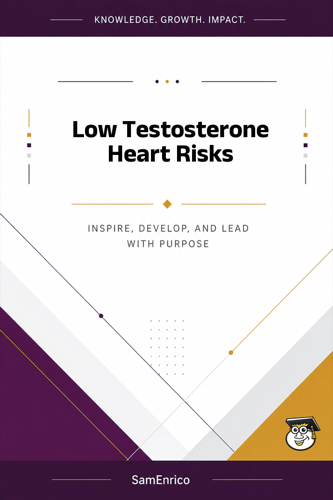
Non-FictionHealth & WellnessCardiology
Low Testosterone Heart Risks eBook
Balance T therapy benefits against cardiovascular
by Leroy Robbi
Balance T therapy benefits against cardiovascular concerns in older men.
Formats
Free sample
Chapter 1: The Silent Threshold...--–- The morning of his 59th birthday, Robert poured himself a cup of black coffee and stared at the treadmill in his basement—a machine he had purchased three years earlier with genuine intentions that now served primarily as an expensive coat rack. He was not obese by any stretch. At five-foot-ten and 190 pounds, he carried what his doctor politely called "middle-age spread," a modest but stubborn belly that had appeared sometime in his mid-fifties and refused to leave despite his half-hearted attempts at weekend jogging. What worried Robert more than the belly was the fatigue—a bone-deep, soul-crushing exhaustion that no amount of sleep seemed to remedy. He had been promoted to regional manager two years ago, a position he had worked two decades to earn, yet now he found himself nodding off during afternoon conference calls and avoiding the golf course because walking eighteen holes felt like a death march.–- His wife had noticed the changes first.
The irritability. The loss of interest in weekend projects. The way he would fall asleep on the couch by 8:30 PM. She gently suggested he see their family doctor, a suggestion Robert initially dismissed as overbearing. But when his annual physical rolled around, he mentioned the fatigue almost as an afterthought.
The doctor ran the standard panel: complete blood count, metabolic profile, lipid panel, and—almost as an afterthought—a total testosterone level. The results came back two days later via a patient portal notification that Robert read while waiting for his morning coffee to brew. His total testosterone was 287 ng/d L. The reference range printed next to it read 250–1100 ng/d L. "Normal," the portal declared in green letters.
Robert closed the app and went back to his day, relieved that nothing was seriously wrong.–– What Robert did not know—what thousands of men his age are not told—is that being "normal" by laboratory standards is not the same as being healthy. The reference range used by most commercial labs includes men from age 20 to 80, many of whom are sedentary, overweight, or already suffering from chronic disease. A testosterone level of 287 ng/d L might be statistically "normal" for the population tested, but for a 59-year-old man with fatigue, reduced libido, and rising blood pressure, it is anything but normal for him. This gap between statistical normalcy and clinical significance is the silent threshold—the invisible line that millions of aging men cross each year without any warning sign except the gradual erosion of their vitality.–– This chapter establishes the scope of a hidden epidemic: the simultaneous decline in testosterone and cardiovascular health that affects nearly one in three men over the age of 50, yet remains systematically underdiagnosed and undertreated. The central argument is straightforward but counterintuitive: most doctors treat low testosterone and heart disease as separate conditions requiring separate specialists, separate medications, and separate follow-up schedules.
In reality, they are two expressions of the same underlying metabolic dysfunction. Understanding this connection is the first step toward breaking the cycle of fatigue, weight gain, and rising cardiac risk that traps so many men in a slow decline they mistake for inevitable aging.The Prevalence Problem: How Common Is Low Testosterone?–- According to data from the Massachusetts Male Aging Study, one of the largest and longest-running investigations of male hormonal health, total testosterone declines by approximately 1 to 2 percent per year beginning around age 30. By age 50, roughly 20 percent of men have levels below 300 ng/d L. By age 60, that figure rises to 30 percent. By age 70, nearly half of all men meet biochemical criteria for hypogonadism.
These are not obscure statistics; they represent tens of millions of American men alone. Yet the same study found that fewer than 10 percent of men with symptomatic low testosterone receive any form of treatment.–- The reasons for this treatment gap are multiple. Some men, like Robert, are told their levels are "normal" based on flawed reference ranges. Others never have their testosterone checked at all because their primary care doctors do not consider it relevant to their chief complaints of fatigue, weight gain, or mild depression. Still others are actively discouraged from pursuing therapy because of lingering fears—largely debunked by recent research—that testosterone replacement might increase their risk of heart attack or prostate cancer.–- The consequences of this undertreatment extend far beyond low libido or reduced gym performance.
Longitudinal studies following men with untreated hypogonadism over ten to fifteen years have documented higher rates of type 2 diabetes, osteoporosis, frailty, and all-cause mortality compared to age-matched men with normal testosterone levels. In other words, low testosterone is not merely a quality-of-life issue; it is a longevity issue. And nowhere is this more apparent than in the relationship between testosterone and the cardiovascular system.The Chicken or the Egg: Untangling Cause and Effect–- For decades, researchers have debated a deceptively simple question: does low testosterone cause heart disease, or does heart disease cause low testosterone? The answer, as is often the case in medicine, is both. But understanding the direction of this bidirectional relationship is essential for any man considering testosterone therapy.–- The argument that low testosterone causes heart disease rests on several lines of evidence.
First, testosterone receptors are present on vascular smooth muscle cells, endothelial cells, and cardiomyocytes—the very tissues that determine how well blood vessels dilate, how stiff the arterial walls become, and how efficiently the heart pumps. When testosterone levels fall, these tissues receive less hormonal signaling, leading to impaired endothelial function, increased arterial stiffness, and reduced cardiac contractility. Second, observational studies have consistently shown that men with the lowest testosterone levels have the highest rates of heart attack, stroke, and cardiovascular death, even after adjusting for traditional risk factors like obesity, smoking, and high cholesterol.–- The counterargument—that heart disease causes low testosterone—is equally compelling. Chronic illness of any kind suppresses the hypothalamic-pituitary-gonadal axis, the hormonal feedback loop that regulates testosterone production. Inflammation, which is elevated in men with coronary artery disease, directly inhibits Leydig cells in the testes from producing testosterone.
Moreover, the medications commonly used to treat heart disease, including beta-blockers and statins, have been shown to modestly reduce testosterone levels in some men. In this model, low testosterone is not the driver of heart disease but rather a marker of underlying systemic illness.–- A landmark 2017 study published in the Journal of the American College of Cardiology attempted to resolve this debate using a technique called Mendelian randomization, which leverages genetic variants to determine causal direction. The researchers analyzed data from over 185,000 men and found that genetic variants associated with lower testosterone were independently linked to higher rates of heart attack and stroke, even after accounting for obesity and other confounders. This suggests that low testosterone does indeed have a direct causal role in cardiovascular disease, not merely an associative one. However—and this is crucial—the effect size was modest.
Low testosterone explained only a small fraction of overall cardiovascular risk, far less than smoking, hypertension, or diabetes.–- The practical takeaway for the reader is this: low testosterone and heart disease are bidirectional accelerants of a shared metabolic fire. Each worsens the other.…
This is the end of the free sample. Get the eBook to keep going. Buy now
About this book
Details
- Author
- Leroy Robbi
- Publisher
- SamEnrico
- Language
- English
- Genre
- Non-Fiction, Health & Wellness, Cardiology
- Released
- 2026-06-08
- Pages (approx.)
- 151
- Available as
- eBook, Audiobook

Read better in the ZLOADR app
Your eBooks on your phone or tablet. Sign in with your SamEnrico account and start reading.
More by Leroy Robbi
 Cape Town PropTech Startup GuideLeroy Robbi$11.99
 Pain Joy Inclusion PracticeLeroy Robbi$11.99
 Emotional Labor Recovery for HelpersLeroy Robbi$11.99
 The Body Scan for KidsLeroy Robbi$11.99
 The Vanishing of Flight 19: A Haunting in the Bermuda TriangleLeroy Robbi$11.99
 The Last Broadcast: Titanic’s Forgotten Wireless OperatorsLeroy Robbi$11.99
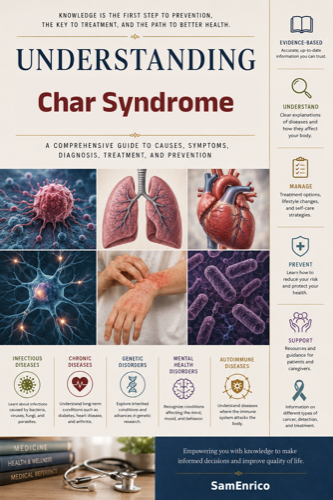 Understanding Char SyndromeLeroy Robbi$17.99
 Proposal for Policy ResearchLeroy Robbi$12.99
 Expression Of Interest GuideLeroy Robbi$12.99
 How to Start a Residential Property Managers BusinessLeroy Robbi$11.99
 Digital Product Creation and SalesLeroy Robbi$11.99
You may also like
 Hong Kong Handover 1997Dunn Johnnie$11.99
 Zumba For Postnatal Recovery CourseNeal Christian$11.99
 Zumba for BeginnersLadner Nikia$11.99
 YouTube Comment Mining GuideHumes Pandora$12.99
 Worry Box MeditationCarlin Rudy$11.99
 Workplace Stress MeditationNguyen Lynn$11.99
 Workplace Stress and Sleep RepairHawley Ivory$11.99
 Workplace Perfectionism CureDelaney Jeffry$11.99
 Workplace Injustice Anger GuideWallen Isabelle$11.99
 Work Addiction and Burnout LinkGreenwood Ester$11.99
 Women in Yoga and WellnessBeattie Galina$11.99
 Women in Stand Up ComedyChun Evangeline$11.99