
Non-FictionHealth & WellnessDigestive Health
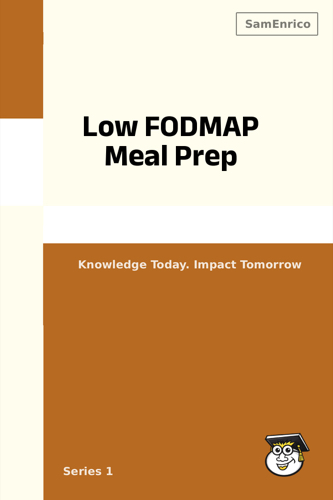
Low FODMAP Meal Prep eBook
Manage IBS with pre planned gut friendly meals.
by Roberge Codi
Manage IBS with pre planned gut friendly meals.
Formats
Free sample
Chapter 1: The Gut Betrayal--Most people remember exactly where they were the first time their body turned against them.For Priya, a 34-year-old emergency room nurse, it happened during a code blue. She was compressing a patient’s chest when a cramp ripped through her lower abdomen so violently that her knees buckled. She finished her shift, drove home shaking, and spent the next three hours in the bathroom, canceling dinner plans she had been looking forward to for weeks. The meal that caused it? A healthy salad.
Kale, chickpeas, raw broccoli, and a generous drizzle of honey-mustard dressing. On paper, it was a model of nutritional virtue. In her body, it was a biological weapon.Marcus, a 28-year-old software developer, had a different origin story. His happened in a conference room, mid-presentation to his company’s CEO. He felt his stomach inflate like a balloon being filled from a fire hose—silent, painful, and utterly inescapable.
By the time he finished his pitch, he looked six months pregnant. He excused himself, locked himself in a bathroom stall, and googled “why do I look pregnant after eating” for the hundredth time. The answer he found? “Probably just stress.” He accepted that answer because he did not know what else to do.Elena, a 52-year-old teacher and perimenopausal mother of two teenagers, had been suffering for twenty-three years. She had undergone three colonoscopies, two endoscopies, a gallbladder removal, and a course of antidepressants prescribed specifically “for her stomach.” Nothing worked.
She had memorized the locations of every public restroom within a five-mile radius of her school. She carried a “go bag” with extra underwear, wet wipes, and a change of clothes. She had stopped going to concerts, sporting events, and even her own son’s high school graduation because the fear of needing a bathroom with no access had become more powerful than her desire to show up for her life.These three people are not real. But their stories are composites of thousands of real patients who have one thing in common: they have Irritable Bowel Syndrome, or IBS, and they have been failed by the conventional medical system’s best answer—“it is probably just stress, try eating more fiber.”Here is the truth that will change everything for you, and it is so simple that most doctors miss it entirely:Your gut is not broken. Your gut is reacting predictably and appropriately to specific types of carbohydrates that your small intestine cannot absorb.This is not a psychological problem.
This is not “all in your head,” though your brain is certainly involved. This is a physiological, mechanical, biochemical reality. And once you understand the mechanism, you can stop guessing, stop fearing food, and start eating with confidence again.The Mechanism: Why Your Digestive System Is Not Failing You Let us begin with a simple question: What actually happens when you eat?You chew, and you swallow, and food travels down your esophagus into your stomach, where strong acids begin breaking proteins into smaller pieces. From there, the partially digested food moves into your small intestine—a twenty-two-foot-long tube where the majority of nutrient absorption occurs. Your small intestine is lined with finger-like projections called villi, which increase its surface area to roughly the size of a tennis court.
This is where your body extracts vitamins, minerals, amino acids, and sugars from the food you eat.Here is where things go wrong for people with IBS.Your small intestine is designed to absorb three types of nutrients: simple sugars, amino acids, and fatty acids. But there is a fourth category of molecules that your small intestine was never designed to handle efficiently—short-chain carbohydrates called FODMAPs. The name is an acronym, and learning it will give you more power over your symptoms than any medication you have ever tried.FODMAP stands for Fermentable Oligosaccharides, Disaccharides, Monosaccharides, And Polyols.That is a mouthful, so let us break it down into human language.Oligosaccharides are chains of sugar molecules linked together. The most common oligosaccharides in the human diet are fructans, found in wheat, onions, garlic, and artichokes, and galacto-oligosaccharides, or GOS, found in legumes like beans, lentils, and chickpeas. Your small intestine lacks the enzyme needed to break these chains apart, so they pass through undigested.Disaccharides are two sugar molecules linked together.
The most common disaccharide is lactose, the sugar in milk and dairy products. Some people produce an enzyme called lactase that breaks lactose into absorbable pieces. But many adults—up to sixty-five percent of the global population—stop producing enough lactase after childhood. That undigested lactose then travels to the large intestine.Monosaccharides are single sugar molecules that are normally easy to absorb. The most problematic monosaccharide is fructose, which is found in honey, apples, pears, mangoes, and high-fructose corn syrup.
Here is the catch: fructose is absorbed most efficiently when it is paired with an equal amount of glucose, the sugar in table sugar. When fructose exceeds glucose—as it does in honey, apples, and pears—the excess fructose remains unabsorbed.Polyols are sugar alcohols found naturally in some fruits like apples, pears, and stone fruits such as cherries and plums, and added artificially to sugar-free products like gum, mints, and protein bars. Common polyols include sorbitol, mannitol, xylitol, and maltitol. Your small intestine cannot absorb polyols at all.So here is what happens to these unabsorbed FODMAPs. They travel from your small intestine into your large intestine, also called your colon, exactly as they entered—intact, unchanged, and undigested.
And when they arrive, your gut bacteria—the trillions of microorganisms that live in your colon—throw a party.These bacteria are designed to ferment carbohydrates. It is their primary food source. When you feed them FODMAPs, they ferment them rapidly, producing gases as a byproduct—hydrogen, methane, and carbon dioxide. These gases have nowhere to go except to expand your intestinal walls like a balloon. That expansion stretches the nerves in your gut, which sends pain signals to your brain.
That is the bloating. That is the cramping. That is the sensation that you have swallowed a bowling ball.But gas is only half of the problem.FODMAPs are also osmotically active. That means they pull water into your intestine through a process called osmosis. Imagine placing a dry sponge in a bowl of water—the water is drawn into the sponge.
FODMAPs do the same thing inside your gut. They draw water from your bloodstream and tissues into your intestinal lumen, the hollow space inside your intestines. That extra water makes your stool loose, urgent, and frequent. That is the diarrhea.In some people, the gas slows down transit instead of speeding it up, leading to constipation. In others, it causes a painful mix of both.This is not random.
This is not mysterious. This is physics and biology working exactly as they should. Your body is not betraying you. Your body is responding to inputs it was never designed to handle efficiently.The Five FODMAP Groups: Your Personal Trigger Fingerprint Now that you understand the mechanism, let us meet the five FODMAP groups individually. Each group behaves differently in the gut, and each person has…
This is the end of the free sample. Get the eBook to keep going. Buy now
About this book
Details
- Author
- Roberge Codi
- Publisher
- SamEnrico
- Language
- English
- Genre
- Non-Fiction, Health & Wellness, Digestive Health
- Released
- 2026-06-09
- Pages (approx.)
- 150
- Available as
- eBook, Audiobook

Read better in the ZLOADR app
Your eBooks on your phone or tablet. Sign in with your SamEnrico account and start reading.
More by Roberge Codi
 Tuscan Vineyard RelaxationRoberge Codi$11.99
 Support Groups for ApathyRoberge Codi$11.99
 The Immigrant HealthTech PioneerRoberge Codi$11.99
 5 AM Club SummaryRoberge Codi$11.99
 Menopause And Swollen AnklesRoberge Codi$11.99
 Power of Attorney GuideRoberge Codi$11.99
 Resilience for Healthcare WorkersRoberge Codi$11.99
 Yggdrasil’s Shadow: The Norn’s Yokai CurseRoberge Codi$11.99
 The Silk Road Swing: How Cricket United an Ancient EmpireRoberge Codi$11.99
 A Collector's Handbook to the Marendaz 100Roberge Codi$11.99
 Service Providers Guide to Dance InstructorsRoberge Codi$11.99
 How to Produce Latch and Locker HooksRoberge Codi$11.99
You may also like
 Hong Kong Handover 1997Dunn Johnnie$11.99
 Zumba For Postnatal Recovery CourseNeal Christian$11.99
 Zumba for BeginnersLadner Nikia$11.99
 YouTube Comment Mining GuideHumes Pandora$12.99
 Worry Box MeditationCarlin Rudy$11.99
 Workplace Stress MeditationNguyen Lynn$11.99
 Workplace Stress and Sleep RepairHawley Ivory$11.99
 Workplace Perfectionism CureDelaney Jeffry$11.99
 Workplace Injustice Anger GuideWallen Isabelle$11.99
 Work Addiction and Burnout LinkGreenwood Ester$11.99
 Women in Yoga and WellnessBeattie Galina$11.99
 Women in Stand Up ComedyChun Evangeline$11.99