
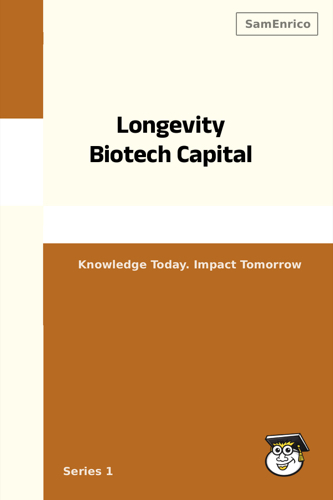
Longevity Biotech Capital
Allocate across aging research, senolytics, and li
Allocate across aging research, senolytics, and lifespan extension therapies.
Formats
About this book
Free sample
Chapter 1: The Demographic Imperative--–- The global population over sixty years old will reach 2.1 billion by 2050. That is not a forecast. It is a mathematical certainty. The people who will turn sixty in 2050 are already alive today—they are currently in their thirties and forties, and they are having children, buying homes, and planning retirements in a world that has not yet confronted the economic reality of their longevity. Every healthcare system on earth is built on the assumption that most people die relatively soon after they stop working.
That assumption is about to shatter.For institutional investors, family offices, and venture capitalists, this demographic shift represents both the greatest threat to sovereign balance sheets and the greatest opportunity in the history of biotechnology. The thesis of this book is simple but profound: the transition of longevity from speculative science to commercial reality has created a distinct asset class. Longevity biotech is not a sector within traditional biotech, just as software was not a sector within traditional manufacturing. It is a new category entirely, with its own scientific foundations, regulatory pathways, clinical trial designs, capital structures, and exit strategies.This chapter establishes the macroeconomic and demographic case for treating longevity biotech as a distinct asset class. It explains why traditional biotech—developing drugs for single age-related diseases one at a time—is financially and medically inefficient.
It introduces the concept of healthspan economics, moving beyond the hype of anti-aging consumer products to the rigorous science of geroscience. And it provides actionable advice for investors on where to look for leading indicators of this market’s maturation.The Numbers That Changed Everything The demographic transformation now underway is without precedent in human history. In 1950, the global population over sixty was approximately 200 million, representing just eight percent of humanity. By 2020, that number had grown to 1.1 billion, or fourteen percent of the global population. By 2050, the United Nations projects 2.1 billion people aged sixty and older—more than twenty percent of all humans on earth.But the headline number obscures the real story.
The fastest-growing segment of the population is not the young-old (sixty to seventy-five) but the oldest-old (eighty-five and older). This…
This is the end of the free sample. Get the eBook to keep going. Buy now
Contents
- Chapter 1
- Chapter 2
- Chapter 3
- Chapter 4
- Chapter 5
- Chapter 6
- Chapter 7
- Chapter 8
- Chapter 9
- Chapter 10
- Chapter 11
- Chapter 12
Details
- Author
- Judge Jacquetta
- Publisher
- SamEnrico
- Language
- English
- Genre
- Non-Fiction, Forecast & Outlook, Longevity
- Released
- 2026-06-08
- Pages (approx.)
- 142
- Available as
- eBook, Audiobook

Read better in the ZLOADR app
Your eBooks on your phone or tablet. Sign in with your SamEnrico account and start reading.
More by Judge Jacquetta
 Sarcopenia Companion AnimalJudge Jacquetta$11.99
 Roommate Conflict AngerJudge Jacquetta$11.99
 MBSR for College StudentsJudge Jacquetta$11.99
 Workplace Performance TriggersJudge Jacquetta$11.99
 Postpartum Financial Planning GuideJudge Jacquetta$11.99
 The IBS Dinner Out GuideJudge Jacquetta$11.99
 Tension Headache Relief GuideJudge Jacquetta$11.99
 Newsom GavinJudge Jacquetta$11.99
 The Silent Storm: The Forgotten Hero of the Battle of BritainJudge Jacquetta$11.99
 The Cyclone Hunters: Chasing the Monsoons of the Indian Ocean (1908-1912)Judge Jacquetta$11.99
 The Silk Road of the South: The Merchant Princes of the Swahili CoastJudge Jacquetta$11.99
 Mastering GrantsJudge Jacquetta$11.99