
Non-FictionInformativeEducational
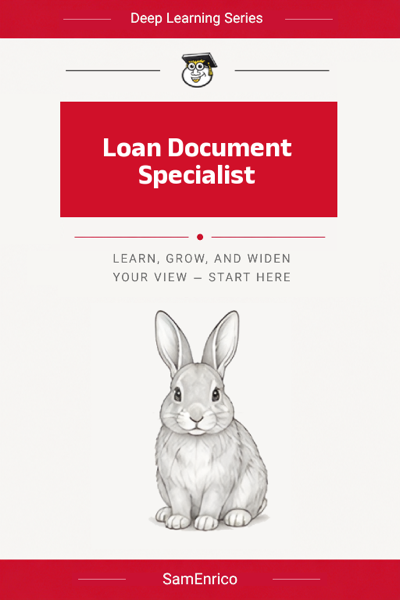
Loan Document Specialist eBook
A Coursebook on Loan Document Specialist
A Coursebook on Loan Document Specialist
Formats
Free sample
Chapter 1: The Enforceability Gap--–- The conference room on the 14th floor of First Meridian Bank smelled of stale coffee and burnt toast. It was 4:47 on a Friday afternoon in late March, and the loan committee had been arguing for three hours about a $12 million commercial real estate loan to a regional grocery chain called Harvest Foods. The deal was, by all accounts, routine. The borrower had been a customer for eleven years. The collateral was a portfolio of seven free-standing stores in growing suburbs.
The guarantor, a third-generation grocer named Frank Vallone, had a net worth north of $40 million. Every box was checked. Every ratio was met. The committee voted unanimously to approve the loan.–- Eighteen months later, Harvest Foods filed for Chapter 11 bankruptcy. The bank’s loan documentation team pulled the file and discovered something that would cost First Meridian $3.7 million.
The signature on the guaranty? It was there. The notarization? Present. The date?
Correct. But buried in the fine print of the security agreement, a single clause had been modified during the final round of negotiations. Someone—either the borrower’s attorney or an exhausted loan officer—had changed the definition of “eligible collateral” from “all inventory, now existing or hereafter acquired” to “all inventory located at the borrower’s primary distribution center.” The distribution center was leased. The landlord had a first-priority lien on everything inside it. The bank’s lien was worthless.
The $12 million loan was secured by air.–- The loan document specialist who reviewed the file before closing had missed the change. She had been responsible for thirty-seven loans that week, working sixty hours, and the redline comparing the final draft to the approved term sheet was forty-three pages long. She ticked the box next to “Security Agreement – signature present” and moved on. She never read the substantive change. The bank’s legal counsel later said, “We didn’t lose this loan to bankruptcy.
We lost it to a missing pair of eyes on page 27, paragraph 4, subparagraph (ii).”–- This book exists to ensure that never happens to you.The Promise of This Book–- The Loan Document Specialist: A Complete Coursebook is not a theoretical treatise on banking law. It is not a collection of form documents to be mindlessly copied and pasted. It is a field manual for the men and women who sit at the intersection of law, finance, and operations—the people whose signatures, checkmarks, and initials determine whether a loan survives its first default or crumbles into a multi-million-dollar loss.–- Every year, banks, credit unions, and non-bank lenders originate trillions of dollars in commercial loans. The vast majority of those loans perform as expected. Borrowers make their payments.
Collateral retains its value. Guarantors stand behind their promises. But when loans fail—and they will fail, because default is not a bug in the lending system but a feature of economic cycles—the difference between a manageable loss and a catastrophic one is almost always a matter of documentation. Not the borrower’s character. Not the loan officer’s relationship.
Not the economy. Paper. Signatures. Dates. Filings.
The unglamorous, painstaking work of building a loan file that says what it means and means what it says.–- This chapter, Chapter 1, establishes the philosophical and practical foundation for everything that follows. It introduces the central organizing concept of this book: the Enforceability Gap—the distance between what a lender intends to secure and what the documents legally allow them to recover. Every subsequent chapter will return to this concept, measuring each document type against the gap it is meant to close. By the time you finish Chapter 12, you will not merely understand loan documentation. You will be able to look at a loan file and see, with surgical precision, where the gaps are hiding.The Anatomy of a Documentation Failure–- Before we can close the Enforceability Gap, we must understand how it opens in the first place.
Documentation failures fall into four categories, each with its own causes and consequences. Think of these as the four wounds that kill loan files.Category One: The Missing Signature–- This is the most visible failure and therefore the least common. A loan closes. Funds are wired. Six months later, the bank’s post-closing audit reveals that the guarantor never signed the guaranty.
Or the corporate resolution authorizing the loan was executed by the wrong officer. Or the mortgage was recorded but never signed by the borrower’s spouse in a community property state. These failures are embarrassing but often correctable—until they aren’t. If a borrower defaults and the missing signature belongs to a key guarantor, the bank may have no recourse at all.–- Real-world example: A Texas bank closed a $5 million line of credit to an LLC owned by a married couple. The bank obtained a guaranty from the husband but not the wife.
Texas is a community property state. When the LLC defaulted, the husband had no assets in his separate name—everything was held jointly. The bank sued both spouses. The court ruled that the wife had never agreed to guaranty the debt and that her community interest in the marital assets could not be reached. The bank recovered less than ten cents on the dollar.Category Two: The Wrong Document–- This failure occurs when the specialist uses a form that does not match the transaction.
A real estate loan gets a personal property security agreement instead of a mortgage. A construction loan uses a standard term note without draw request mechanics. An asset-based loan lacks a dominion of accounts provision. The documents are signed, notarized, and filed—but they do not give the lender the rights it needs.–- Real-world example: A regional bank made a $2 million loan to a manufacturer, secured by equipment. The loan officer used the bank’s standard security agreement, which defined collateral as “all equipment now owned or hereafter acquired.” Perfect.
But the bank’s title company failed to file a UCC-1 financing statement. The bank relied on a “fixture filing” on real estate records instead, assuming that because the equipment was bolted to the floor, it was part of the real estate. When the borrower defaulted, a competing lender had filed a proper UCC-1 covering the same equipment. The bank lost its priority and recovered nothing.Category Three: The Wrong Language–- This is the most insidious failure because the documents look correct. Every signature is present.
Every box is checked. But the words themselves—the clauses, definitions, and conditions—contain ambiguities, omissions, or errors that render the loan unenforceable. This is what happened to First Meridian Bank with the Harvest Foods loan. The document was signed. The language was just wrong.–- Real-world example: A lender’s promissory note stated that default interest would accrue at “the then-current prime rate plus 6% per annum.” When the borrower defaulted, the prime rate was 3.25%, so the default rate was 9.25%.
The borrower argued that the phrase “then-current prime rate” was ambiguous because the note did not specify whose prime rate (Wells Fargo? Chase? The Wall Street Journal?). The court agreed and applied the lowest prime rate among major banks…
This is the end of the free sample. Get the eBook to keep going. Buy now
About this book
Details
- Author
- Manuel Pamella
- Publisher
- SamEnrico
- Language
- English
- Genre
- Non-Fiction, Informative, Educational
- Released
- 2026-06-02
- Pages (approx.)
- 141
- Available as
- eBook, Audiobook

Read better in the ZLOADR app
Your eBooks on your phone or tablet. Sign in with your SamEnrico account and start reading.
More by Manuel Pamella
 The Empathy Deficit FixManuel Pamella$11.99
 Scar and Skin Condition HealingManuel Pamella$11.99
 Grieving Lost Childhood Self Worth GuideManuel Pamella$11.99
 The Ghost in the Mountains: How a Soviet Engineer Reinvented War in AfghanistanManuel Pamella$11.99
 Anger After Partner's FriendshipsManuel Pamella$11.99
 The Self Awareness Journaling CourseManuel Pamella$11.99
 How to Start a Hobby in Sports Trading CardsManuel Pamella$11.99
 Understanding Macular Dystrophy, VitelliformManuel Pamella$17.99
 Data Presentation Resource ListManuel Pamella$12.99
 Purchase Order Cycle Time ReductionManuel Pamella$12.99
You may also like
 Hong Kong Handover 1997Dunn Johnnie$11.99
 Zumba For Postnatal Recovery CourseNeal Christian$11.99
 Zumba for BeginnersLadner Nikia$11.99
 YouTube Comment Mining GuideHumes Pandora$12.99
 Worry Box MeditationCarlin Rudy$11.99
 Workplace Stress MeditationNguyen Lynn$11.99
 Workplace Stress and Sleep RepairHawley Ivory$11.99
 Workplace Perfectionism CureDelaney Jeffry$11.99
 Workplace Injustice Anger GuideWallen Isabelle$11.99
 Work Addiction and Burnout LinkGreenwood Ester$11.99
 Women in Yoga and WellnessBeattie Galina$11.99
 Women in Stand Up ComedyChun Evangeline$11.99