
Non-FictionInformativeEducational
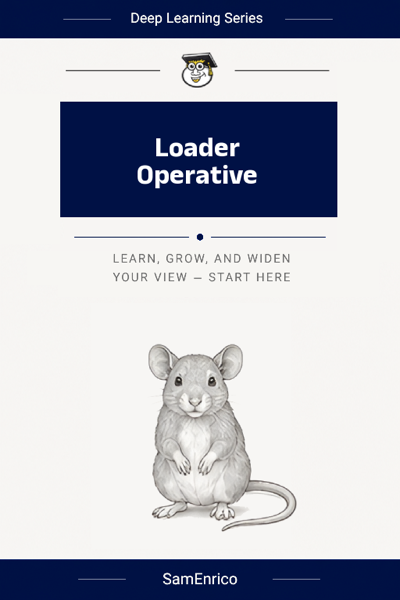
Loader Operative
A Coursebook on Loader Operative
A Coursebook on Loader Operative
Formats
About this book
Free sample
Chapter 1: The Iron Trinity...--The modern construction site is a symphony of controlled violence. Steel bites earth. Hydraulics strain against gravity. Diesel engines convert fuel into a throaty roar that announces productivity. At the center of this chaos—or perhaps the architect of it—sits the loader operative.
Not a driver. Not a machine attendant. An operative. The distinction matters because driving implies destination, while operating implies mastery over forces that would crush an unprepared worker in seconds.This chapter establishes the foundational knowledge required to select, justify, and operate the correct loader for any job. Before the engine turns over, before the seatbelt clicks, before the first bucket of material moves, you must understand what a loader is, why there are three distinct families of them, and how your role as an operative fits into the broader earthmoving ecosystem.
Without this foundation, every subsequent technique in this book—from V-pattern loading to fine grading to certification exams—rests on sand.The Three Faces of the Loader Family Walk onto any active construction site in North America, and you will encounter three primary machine classes that fall under the "loader" umbrella. They share common ancestry—all designed to scoop, lift, and transport material—but their differences determine which one belongs on your job and which one will waste your budget and endanger your crew.Wheel loaders are the workhorses. With buckets ranging from one to ten or more cubic yards, these articulated machines dominate large-scale earthmoving operations. Their defining characteristic is the center-pivot articulation—the machine bends in the middle to turn, rather than relying on differential braking or front-wheel steering. This design provides exceptional stability when lifting heavy loads but requires operator awareness of the "pinch point" at the articulation joint.
Wheel loaders excel at high-speed cycles over long distances, often exceeding five hundred feet between pile and truck. They load haul trucks, feed crushers, charge hoppers, and move material across sprawling sites. Their rubber tires offer speed but sacrifice flotation; a wheel loader that strays onto saturated ground will bury itself to the axles before the operator can…
This is the end of the free sample. Get the eBook to keep going. Buy now
Contents
- Chapter 1
- Chapter 2
- Chapter 3
- Chapter 4
- Chapter 5
- Chapter 6
- Chapter 7
- Chapter 8
- Chapter 9
- Chapter 10
- Chapter 11
- Chapter 12
Details
- Author
- Littleton Randell
- Publisher
- SamEnrico
- Language
- English
- Genre
- Non-Fiction, Informative, Educational
- Released
- 2026-05-11
- Pages (approx.)
- 139
- Available as
- eBook, Audiobook

Read better in the ZLOADR app
Your eBooks on your phone or tablet. Sign in with your SamEnrico account and start reading.
More by Littleton Randell
 Disability Body Self Esteem GuideLittleton Randell$11.99
 The Anger Intelligence WorkbookLittleton Randell$11.99
 Assertiveness During Performance ReviewsLittleton Randell$11.99
 Personal Property DepreciationLittleton Randell$11.99
 EQ for Workplace Leadership PrimerLittleton Randell$11.99
 The Light of Byzantium: The Science of the Eastern Roman EmpireLittleton Randell$11.99
 Data Presentation Glossary TermsLittleton Randell$12.99
 Strategic Sourcing Efficiency GuideLittleton Randell$12.99
 Understanding Macular Degeneration, PolymorphicLittleton Randell$17.99
 A Beginners Guide to Dragon boat racing (Volume 1)Littleton Randell$11.99
You may also like
 Hong Kong Handover 1997Dunn Johnnie$11.99
 Zumba For Postnatal Recovery CourseNeal Christian$11.99
 Zumba for BeginnersLadner Nikia$11.99
 YouTube Comment Mining GuideHumes Pandora$12.99
 Worry Box MeditationCarlin Rudy$11.99
 Workplace Stress MeditationNguyen Lynn$11.99
 Workplace Stress and Sleep RepairHawley Ivory$11.99
 Workplace Perfectionism CureDelaney Jeffry$11.99
 Workplace Injustice Anger GuideWallen Isabelle$11.99
 Work Addiction and Burnout LinkGreenwood Ester$11.99
 Women in Yoga and WellnessBeattie Galina$11.99
 Women in Stand Up ComedyChun Evangeline$11.99