
LinkedIn Profile for MOOCs eBook
Feature MOOC certificates on LinkedIn with section
Feature MOOC certificates on LinkedIn with section placement, verification, and endorsement strategies for recruiters.
Formats
Free sample
Chapter 1: The Credibility Chain--–- You have just completed a twelve-week specialization in data science from a top university on Coursera. You watched every video, finished every quiz, and submitted every project. You have the certificate downloaded, the digital badge issued, and the Linked In sharing link ready. You add it to your profile with quiet satisfaction, sit back, and wait for recruiters to notice. Days pass.
Then weeks. Your profile views do not increase. No messages arrive. The certificate sits on your profile like a trophy on a shelf that no one walks past. You are confused.
You did everything right. What went wrong?This is the experience of millions of professionals worldwide who believe that collecting certificates is the same as building a career. The hard truth is that certificates have become commodities. In 2026, with the explosive growth of platforms like Coursera, ed X, Udemy, and Linked In Learning, almost every professional in almost every field has completed some form of online certification. A certificate alone no longer differentiates you.
How you present it does. This chapter establishes the foundational principles that will guide every action in this book. You will learn why recruiters are deeply skeptical of online credentials, what verification actually means in practice, and how to transform your certificates from unsubstantiated claims into clickable, trustworthy evidence of your skills. By the end of this chapter, you will understand the "credibility chain" that connects your learning to recruiter interest—and you will know exactly why most MOOC learners fail to get noticed.The Hard Truth: Certificates Are Commodities Let us start with an uncomfortable fact. In 2012, when Coursera and ed X first launched, a certificate from a top university was genuinely rare and genuinely impressive.
Employers had never seen anything like it. A candidate who had completed Stanford's machine learning course stood out from the crowd. That world no longer exists.Today, more than 300 million learners have registered for at least one MOOC. Tens of millions have completed courses. Certificates are issued by the thousands every single day.
Recruiters have seen them all. A certificate from a MOOC platform is no longer a differentiator. It is table stakes.Think of it this way: In the 1990s, having an email address made you seem technologically advanced. By 2005, not having an email address made you seem unemployable. Certificates are following the same trajectory.
They have moved from "impressive" to "expected" to, increasingly, "invisible." A certificate alone will not get you noticed. It will not even get you considered. What matters is not that you have the certificate, but how you present it, where you place it, and how you connect it to the skills recruiters are actually searching for.This book is built on a single premise: verification is the missing link between certificate ownership and recruiter trust. Without verification, your certificate is just a graphic—a colorful PDF that could have been created by anyone with Photoshop and five minutes of free time. With verification, your certificate becomes evidence—a clickable, traceable, third-party-authenticated record of your achievement.The Trust Deficit: Why Recruiters Don't Believe You Recruiters have seen too much.
They have reviewed thousands of profiles containing hundreds of thousands of claims. They have interviewed candidates who listed "fluent in Spanish" who could not order coffee. They have hired people who claimed "advanced Excel skills" who did not know what a pivot table was. They have been burned too many times to take self-reported credentials at face value.This skepticism is not personal. It is the rational response to a system that has made credential fraud easier than ever.
With generative AI, anyone can fabricate a certificate from any university in any subject in under a minute. Without verification, a recruiter has no way to distinguish a legitimate Coursera specialization from a fake generated by a large language model. The technology for creating fake certificates has become sophisticated and accessible. This has forced recruiters to become skeptical by default.When a recruiter scans your Linked In profile, their first question upon seeing a certificate is not "What did this person learn?" It is "Can I prove this is real?" If the answer is not immediately obvious—if there is no verification link, no credential ID, no way to click and confirm—they move on. They do not have time to investigate.
They do not have patience to email you for proof. They have two hundred other candidates to evaluate before lunch.This is the trust deficit. And it is the single biggest barrier between you and the opportunities your certificates should unlock.The good news is that the trust deficit is solvable. It requires you to provide proof rather than just claims. It requires you to understand what recruiters actually look for when they scan a profile.
And it requires you to present your certificates in a way that leaves no room for doubt. This chapter gives you the framework. The remaining chapters give you the tools.What Recruiters Actually Look For Let us pull back the curtain on how recruiters evaluate online credentials. When a recruiter scans a Linked In profile, they are not reading every word. They are pattern-matching against a mental checklist of credibility signals.
For online certificates, these signals matter most, in order of importance:1. Verified Link (Non-Negotiable). A unique URL that leads to a verification page confirming your certificate is authentic. This is the single most important factor. Without it, recruiters have no way to trust your claim.
With it, they can click and confirm in seconds. A working verification link is the difference between a claim and evidence.2. Issuing Organization. Established platforms and accredited institutions carry weight. A certificate from Stanford University via Coursera is more credible than a certificate from an unknown provider.
Name recognition matters because it transfers trust from the platform to you. Recruiters may not know every MOOC platform, but they know Stanford.3. Completion Date. Certificates from the past 12-24 months signal active, ongoing development. Certificates from five years ago with no recent updates signal stagnation.
Recruiters want to see that you are continuously learning, not resting on past achievements. A recent certificate says "I am growing." An old certificate says "I stopped."4. Project Evidence. A certificate proves you watched videos and passed quizzes. A project proves you can apply the skills.
Recruiters care far more about the second. A portfolio link or project screenshot attached to your certificate entry transforms a theoretical credential into practical evidence. This is often the deciding factor between two candidates with similar credentials.5. Skills Alignment. The certificate topic must match the job requirements.
A certificate in Renaissance poetry will not help you get a data analyst job, no matter how prestigious the university. Recruiters scan for relevance. If your certificate does not match the keywords in the job description, it will not help you.A certificate from a MOOC platform alone is weak. A certificate with a verification link, a project portfolio, and skills that align with job descriptions is strong. The difference is not the certificate itself.
It is how you present it. The remaining chapters of this book show you exactly how to deliver each of these signals.The Credibility…
This is the end of the free sample. Get the eBook to keep going. Buy now
About this book
Details
- Author
- Holiday Nicky
- Publisher
- SamEnrico
- Language
- English
- Genre
- Non-Fiction, Student's Shortcut
- Released
- 2026-06-01
- Pages (approx.)
- 138
- Available as
- eBook, Audiobook

Read better in the ZLOADR app
Your eBooks on your phone or tablet. Sign in with your SamEnrico account and start reading.
More by Holiday Nicky
 Beginner Loving KindnessHoliday Nicky$11.99
 Cold Night Sleep MeditationHoliday Nicky$11.99
 Pet Companionship Loneliness GuideHoliday Nicky$11.99
 Francis and the Leper PriestHoliday Nicky$11.99
 The Hypnosis Listening ScheduleHoliday Nicky$11.99
 The Crown and the Compass: A Royal Love That Charted the WorldHoliday Nicky$11.99
 How to Start a Fish Oil (crude) Production Business (Beginners Guide)Holiday Nicky$11.99
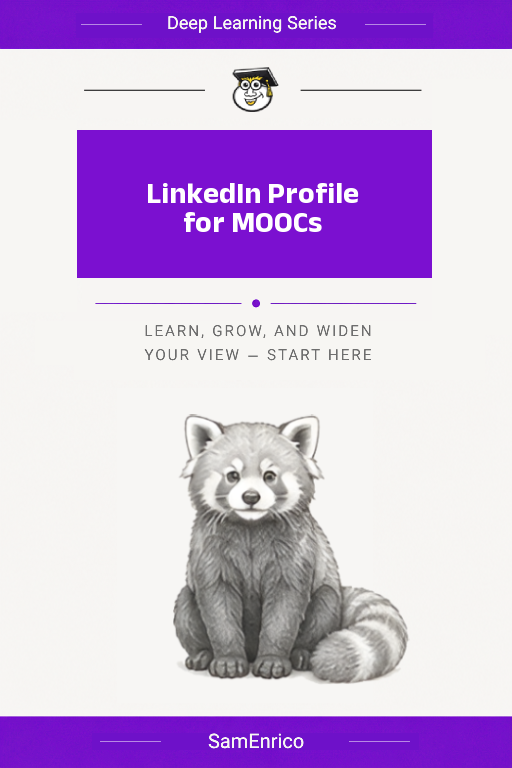 LinkedIn Profile for MOOCsHoliday Nicky$12.99LinkedIn Profile for MOOCsHoliday Nicky$12.99LinkedIn Profile for MOOCsHoliday Nicky$12.99LinkedIn Profile for MOOCsHoliday Nicky$12.99LinkedIn Profile for MOOCsHoliday Nicky$12.99
You may also like
 Hong Kong Handover 1997Dunn Johnnie$11.99
 Zumba For Postnatal Recovery CourseNeal Christian$11.99
 Zumba for BeginnersLadner Nikia$11.99
 YouTube Comment Mining GuideHumes Pandora$12.99
 Worry Box MeditationCarlin Rudy$11.99
 Workplace Stress MeditationNguyen Lynn$11.99
 Workplace Stress and Sleep RepairHawley Ivory$11.99
 Workplace Perfectionism CureDelaney Jeffry$11.99
 Workplace Injustice Anger GuideWallen Isabelle$11.99
 Work Addiction and Burnout LinkGreenwood Ester$11.99
 Women in Yoga and WellnessBeattie Galina$11.99
 Women in Stand Up ComedyChun Evangeline$11.99