
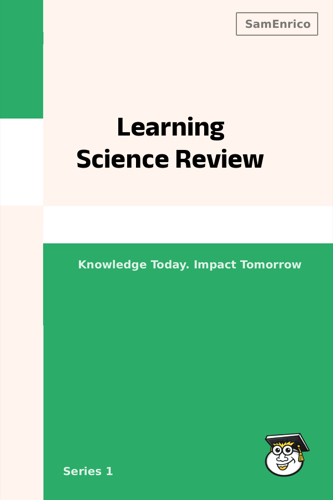
Learning Science Review Audiobook
undefined
undefined
Formats
Free sample
Chapter 1: The Attention Trap...--–- In 1610, Galileo Galilei pointed a modest telescope at the planet Jupiter and saw something no human had ever seen: four tiny points of light orbiting the giant planet. He sketched them night after night, watching them move. He published his findings in a small book called Sidereus Nuncius (The Starry Messenger), and within months, he was famous.But here is the detail that never makes it into the textbooks.Dozens of other astronomers owned telescopes. Many were as skilled as Galileo. Some had even built better instruments.
They pointed their lenses at the same patch of sky, at the same time of night, with the same expectation of discovery. And they saw absolutely nothing.Not fewer moons. No moons at all.The philosopher Thomas Hobbes later quipped that if Galileo had said the moons were invisible to everyone else, he might have been believed. But Galileo insisted they were right there, shining plainly for anyone who cared to look. His critics called him a fraud.
Some refused to even look through a telescope, claiming the device was a trick. Others looked and reported back that Jupiter was a single, blurry disk.What was the difference? Was Galileo’s vision sharper? Was his telescope secretly superior? Did he have some special genius that his peers lacked?The answer, it turns out, is both simpler and more profound.
Galileo saw the moons because he knew what to look for. His competitors did not.This chapter is about that difference. It is about the single most important bottleneck in all of human learning: your attention. Before you can remember something, before you can understand it, before you can apply it or teach it or build upon it, you must first notice it. And your brain, for reasons rooted in survival, is designed to ignore almost everything.The good news is that attention is not a fixed trait.
It is a skill. And like any skill, it can be trained, strengthened, and directed. The greatest minds in history were not necessarily smarter than the rest of us. They were better at deciding what to look at.By the end of this chapter, you will understand why multitasking is a myth, why your environment is silently stealing your focus, and how to achieve the state of deep, effortless concentration that Nobel laureates call “flow.” You will also learn the first…
This is the end of the free sample. Get the Audiobook to keep going. Buy now
About this book
Details
- Author
- Schultz Darnell
- Publisher
- SamEnrico
- Language
- English
- Genre
- Non-Fiction, Self-Help
- Released
- 2026-06-06
- Pages (approx.)
- 143
- Available as
- eBook, Audiobook

Listen in the VoxFlicks app
Audiobooks and audio dramas wherever you go. Sign in with your SamEnrico account and press play.
More by Schultz Darnell
 Writer Distraction Protection GuideSchultz Darnell$11.99
 Parent Loss Online Support GuideSchultz Darnell$11.99
 Bipolar Alternative TreatmentsSchultz Darnell$11.99
 Zapier Reminder AutomationSchultz Darnell$11.99
 Paraphrasing Skills WorkbookSchultz Darnell$11.99
 The Shelter Without ExitSchultz Darnell$11.99
 EQ for Difficult ConversationsSchultz Darnell$11.99
 One Suitcase and a PhotographSchultz Darnell$11.99
 The Almighty Coin: How the Thirty Years' War Bankrupted EuropeSchultz Darnell$11.99
 The Silent Whistle: How Larry Nassar’s Crimes Were Ignored for DecadesSchultz Darnell$11.99
 The Midnight Tunnel: How a Prisoner Vanished in Broad DaylightSchultz Darnell$11.99
 Upsell and Cross-Sell Automation SystemsSchultz Darnell$11.99
You may also like
 Hong Kong Handover 1997Dunn Johnnie$11.99
 Zumba For Postnatal Recovery CourseNeal Christian$11.99
 Zumba for BeginnersLadner Nikia$11.99
 YouTube Comment Mining GuideHumes Pandora$12.99
 Worry Box MeditationCarlin Rudy$11.99
 Workplace Stress MeditationNguyen Lynn$11.99
 Workplace Stress and Sleep RepairHawley Ivory$11.99
 Workplace Perfectionism CureDelaney Jeffry$11.99
 Workplace Injustice Anger GuideWallen Isabelle$11.99
 Work Addiction and Burnout LinkGreenwood Ester$11.99
 Women in Yoga and WellnessBeattie Galina$11.99
 Women in Stand Up ComedyChun Evangeline$11.99