
Non-FictionBusiness BriefLean Startup
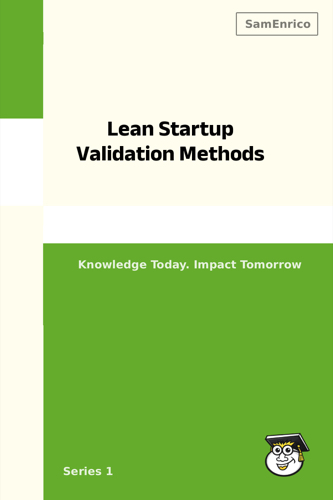
Lean Startup Validation Methods eBook
Applies build measure learn loop to test product m
Applies build measure learn loop to test product market fit quickly.
Formats
Free sample
Chapter 1: The 42% Graveyard--We had the best engineers. We had eight million dollars. We had no customers.This is how the obituary begins for Nebula Labs, a startup that spent eighteen months building a beautiful AI calendar assistant before launching to absolute silence. The founders did everything "right" by conventional standards. They raised money from a reputable venture firm.
They hired Stanford graduates. They built a sleek, scalable product with microservices and real-time synchronization. They emerged from stealth mode with a press release, a launch event, and a hundred thousand dollars in reserved ad spend.Zero paying customers signed up in the first week. Not one.The post-mortem revealed a single, devastating cause: the founders never once spoke to a potential customer before writing the first line of code. They had built the solution before understanding the problem.
They had optimized for technology when they should have optimized for learning. And they had joined a very large, very expensive club: the 42 percent.The Statistic That Should Keep You Up at Night According to CB Insights, which analyzed over one thousand startup failures, 42 percent of startups die because there is no market need for their product. Not because of bad execution. Not because of team conflicts. Not because of running out of money, though that is usually the final symptom.
The primary cause of death is building something that nobody wants.Let that sink in for a moment.Nearly half of all startups fail for a reason that is entirely preventable. You cannot prevent running out of money if you cannot raise more. You cannot always prevent a co-founder from leaving. You cannot control macroeconomic shifts. But you can absolutely prevent building something nobody wants.
The tool for prevention exists. It is called validation. And almost nobody uses it correctly.The Nebula Labs story is not an outlier. It is the default. For every Dropbox that tests demand with a video before writing code, there are a thousand startups that spend months or years building in the dark.
For every Zappos that validates the online shoe market with a manual prototype, there are ten thousand founders who believe their vision is so brilliant that customers will simply appear.They are almost always wrong.The Vision Trap Why do smart, experienced, well-funded founders repeatedly fall into this trap? The answer is psychological. It is called the Vision Trap, and it works like this.You have an idea. The idea feels brilliant. You can see it clearly in your mind: the user interface, the flow of data, the moment of delight when a customer first experiences your solution.
This vision gives you energy. It gets you out of bed in the morning. It convinces you to quit your job, take a pay cut, and convince other people to give you money.The problem is that visions are not hypotheses. Visions are stories we tell ourselves. And we fall in love with our own stories.The Vision Trap has three specific cognitive biases that reinforce each other.
The first is confirmation bias: once you believe your idea is good, you actively seek out evidence that supports this belief and ignore evidence that contradicts it. You remember the one friend who said "that sounds cool" and forget the three who looked confused. You count the survey responses that said "maybe" as validation.The second bias is the planning fallacy: we systematically underestimate how long things will take and how much they will cost, while systematically overestimating the positive impact of our work. Every founder believes their product is the exception. Almost none are.The third bias is sunk cost fallacy: the more time and money you invest in an idea, the harder it becomes to admit it might be wrong.
After six months of development, you cannot imagine pivoting. After a year, you cannot imagine killing the project. So you double down. You add features. You rebrand.
You hire a sales team. And you delay the inevitable, burning through cash that could have been used to find a real market.The Vision Trap is not a character flaw. It is a feature of how human brains work. The only defense is a systematic process for forcing yourself to confront disconfirming evidence. That process is the subject of this book.Failure vs.
Waste: A Crucial Distinction Before we go any further, we need to make a distinction that will appear repeatedly throughout these pages. It is the difference between failure and waste.Failure, as defined in this book, is an experiment that produces valid learning. You had a hypothesis. You designed a test. You ran the test.
The results contradicted your hypothesis. You now know something you did not know before. That is a successful failure. It is tuition. You paid some amount of time or money to learn that a particular path is a dead end.
That is valuable. That is progress.Waste, by contrast, is activity that produces no learning. Building a feature without testing the underlying assumption is waste. Writing code for a product nobody has asked for is waste. Spending six months on a rebrand when you have not yet found product-market fit is waste.
Waste is the enemy. Waste is what kills startups.The Lean Startup framework, which we will explore throughout this book, is fundamentally a machine for converting potential waste into productive failure. It does this by insisting on a specific sequence: hypothesis first, then experiment, then measurement, then decision. Most founders do the opposite: they build first, then measure, then maybe learn something, then maybe decide. By then, it is often too late.Consider two founders.
Founder A spends six months building a product, launches to silence, and learns that nobody wants it. Founder B spends six weeks building a landing page with a fake "Buy Now" button, measures click-through rates, learns that nobody is interested, and pivots to a different idea. Both experienced failure. Founder A experienced six months of waste followed by a single lesson. Founder B experienced six weeks of productive failure followed by five and a half months to try something else.Which founder would you rather be?The Scientific Method for Startups The scientific method is humanity's most successful invention for distinguishing truth from wishful thinking.
It works like this: observe a phenomenon, form a hypothesis that explains it, make a prediction based on that hypothesis, design an experiment to test the prediction, measure the results, and update your beliefs accordingly.Startups are not fundamentally different from laboratories. You have a hypothesis about what customers want. You predict that if you build a certain feature, customers will behave in a certain way. You run an experiment by exposing a small group of customers to a minimal version of that feature. You measure their behavior.
And you update your belief about whether to continue, pivot, or kill the idea.This is the Build-Measure-Learn feedback loop. It is the central engine of modern product development. And most people get the order wrong.The intuitive order is Build first, then Measure, then Learn. Build a product. Measure how customers react.
Learn from the data. This seems logical. It is also backward.The correct order, which we will drill throughout this book…
This is the end of the free sample. Get the eBook to keep going. Buy now
About this book
Details
- Author
- Jacques Marcy
- Publisher
- SamEnrico
- Language
- English
- Genre
- Non-Fiction, Business Brief, Lean Startup
- Released
- 2026-06-09
- Pages (approx.)
- 145
- Available as
- eBook, Audiobook

Read better in the ZLOADR app
Your eBooks on your phone or tablet. Sign in with your SamEnrico account and start reading.
More by Jacques Marcy
 Intermittent Fasting for WomenJacques Marcy$11.99
 Collaborative Legacy CanvasJacques Marcy$11.99
 Combat Veteran Nightmare GuideJacques Marcy$11.99
 Teacher and Educator Stress GuideJacques Marcy$11.99
 Bipolar Creativity Management GuideJacques Marcy$11.99
 UAE Green Tax IncentivesJacques Marcy$11.99
 TM for ScientistsJacques Marcy$11.99
 HGH Prescription GuideJacques Marcy$11.99
 The Last Emperor of the West: The Rise and Fall of MaxentiusJacques Marcy$11.99
 Silk & Spies: The Secret War of Parisian CoutureJacques Marcy$11.99
 Pharaoh's Shadow: The Lost Tomb of the Forgotten QueenJacques Marcy$11.99
 Growing SaritaeaJacques Marcy$11.99
You may also like
 Hong Kong Handover 1997Dunn Johnnie$11.99
 Zumba For Postnatal Recovery CourseNeal Christian$11.99
 Zumba for BeginnersLadner Nikia$11.99
 YouTube Comment Mining GuideHumes Pandora$12.99
 Worry Box MeditationCarlin Rudy$11.99
 Workplace Stress MeditationNguyen Lynn$11.99
 Workplace Stress and Sleep RepairHawley Ivory$11.99
 Workplace Perfectionism CureDelaney Jeffry$11.99
 Workplace Injustice Anger GuideWallen Isabelle$11.99
 Work Addiction and Burnout LinkGreenwood Ester$11.99
 Women in Yoga and WellnessBeattie Galina$11.99
 Women in Stand Up ComedyChun Evangeline$11.99