
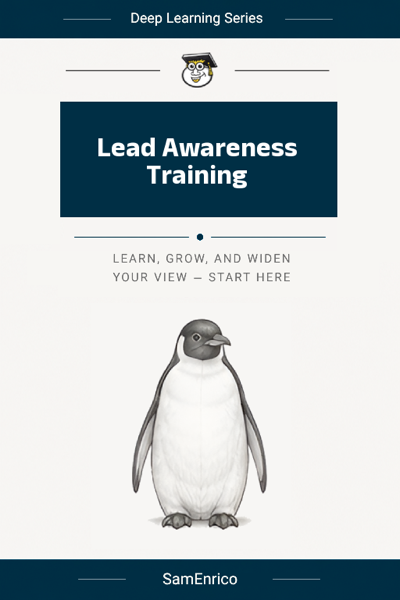
Non-FictionInformativeEducational
Lead Awareness Training eBook
A Coursebook on Lead Awareness Training
A Coursebook on Lead Awareness Training
Formats
Free sample
Chapter 1: The Silent Invader...--Lead does not announce itself. It does not glow, fume, or emit a warning odor. It does not cause immediate pain, redness, or fever. Unlike a broken bone that screams for attention or a laceration that bleeds visibly, lead enters the body quietly, settles into bones and soft tissues, and begins its work of disruption without a single alarm bell. This silence is its greatest weapon—and the reason why lead poisoning remains one of the most underrecognized public health crises of our time.Every year, despite decades of regulation and public health campaigns, hundreds of thousands of children in the United States alone are confirmed to have elevated blood lead levels.
Globally, the World Health Organization estimates that lead exposure accounts for nearly one million deaths annually, with the greatest burden falling on low- and middle-income countries. Yet ask the average person on the street what they know about lead poisoning, and they might recall the Flint water crisis—a single headline from nearly a decade ago—or vaguely remember that old paint can be dangerous. Few understand that lead is still present in their soil, their water pipes, their imported ceramics, their spices, and even their children’s toys. Fewer still recognize that there is no known safe level of lead in the blood.This chapter establishes the foundation for everything that follows in this coursebook. Before we can discuss regulations, protective equipment, medical surveillance, or leadership frameworks, we must first understand what we are fighting against.
We must understand why lead poisoning is called the "silent epidemic," where lead hides in our daily environments, how humanity came to spread this toxin so widely, and what happens when systemic failures allow lead to reach vulnerable populations. The story of lead is not just a story of toxicology—it is a story of industry, regulation, neglect, and, ultimately, preventable tragedy.Defining the Silent Epidemic Lead poisoning is the medical condition caused by elevated levels of the heavy metal lead in the body. But that clinical definition fails to capture the true nature of the threat. A more accurate description is this: lead poisoning is a chronic, progressive, and often asymptomatic condition that damages nearly every organ system in the human body, with effects that are most severe and most irreversible in young children.The term "silent epidemic" was coined by public health officials in the 1990s, but the phenomenon predates the name by centuries. Unlike infectious disease outbreaks that produce dramatic symptoms—fever, rash, vomiting—lead poisoning produces nothing obvious in its early stages.
A child with a blood lead level of 5 micrograms per deciliter—a level that research has shown to reduce IQ and increase the risk of attention disorders—looks and acts completely normal to any observer. There is no pale skin, no lethargy, no visible distress. The damage is happening inside the developing brain, at the molecular level, and it will not become apparent until that child enters school and struggles with reading, or reaches adolescence and exhibits impulsive behavior, or reaches adulthood and faces a higher risk of hypertension and kidney disease.This silence creates a profound public health challenge. When a threat is invisible, it is difficult to mobilize resources against it. Lead does not produce the kind of moral outrage that follows a plane crash or a factory explosion.
Instead, it produces a slow, grinding toll on human potential—lost IQ points, shortened attention spans, reduced lifetime earnings, increased healthcare costs. By the time the consequences become visible, the exposure happened years or decades earlier, and there is no way to reverse the damage.This is why lead awareness training matters. The only way to defeat a silent enemy is to make it visible through education, testing, and surveillance. This coursebook is designed to give you the tools to see what others cannot—to identify lead hazards before they cause harm, to interpret blood lead data before they trigger crisis, and to advocate for prevention rather than merely responding to poisoning after the fact.The Many Faces of Lead: Where It Hides To fight lead, you must first know where to find it. Lead is not a rare element—it is naturally occurring in the Earth’s crust at an average concentration of about 15 parts per million.
But human activity has concentrated lead in specific environments, creating hotspots of contamination that persist for generations. The following sources represent the most common pathways of exposure in the modern world.Paint remains the single largest source of lead exposure for children in the United States and other countries with aging housing stock. Lead was added to residential paint for most of the twentieth century because it improved durability, accelerated drying, and enhanced color retention. At its peak, lead constituted up to 50 percent of the dry weight of some paint formulations. The United States banned lead in residential paint in 1978, but an estimated 31 million homes still contain lead-based paint today.
The United Kingdom banned it earlier, in the 1960s, but similarly has a legacy of millions of older homes with original lead-painted surfaces.The danger from lead paint is not the paint itself—it is the deterioration. When lead paint peels, chips, or turns into dust through friction (windows opening and closing, doors rubbing against frames), it creates tiny particles that settle onto floors, windowsills, and toys. Children then ingest this dust through normal hand-to-mouth activity. A single square foot of peeling lead paint can contaminate an entire room.Soil is the second major reservoir of lead, often overlooked by homeowners and even some professionals. Decades of leaded gasoline exhaust—gasoline with tetraethyl lead, which was phased out in the United States between 1976 and 1996—deposited lead along roadways, where it settled into soil and remains today.
Homes near major highways, even those built after 1978, can have contaminated soil from this legacy pollution. Additionally, exterior lead paint sheds from older homes and contaminates the surrounding yard. Children playing in bare soil, gardening in contaminated dirt, or tracking soil indoors on shoes all face exposure risks. The Environmental Protection Agency sets an action level of 400 parts per million for lead in soil in children’s play areas—but many urban gardens test at levels two or three times that high.Water pipes represent a third major source, one that gained national attention through the Flint water crisis. Lead service lines—the pipes that connect water mains in the street to individual homes—were installed extensively in cities across the United States from the late 1800s through the 1950s.
An estimated 6 to 10 million homes still receive water through lead service lines. In addition, lead solder was used to join copper pipes until it was banned in 1986, and brass fixtures (including faucets and valves) can contain up to 0.25 percent lead even when labeled "lead-free" under the 2014 Reduction of Lead in Drinking Water Act.The danger from lead pipes is not inevitable. Lead is relatively stable in water when the water chemistry is properly managed through corrosion control—adding phosphates or adjusting p H to create a protective coating inside the pipes. The crisis in Flint occurred when the city switched water sources to…
This is the end of the free sample. Get the eBook to keep going. Buy now
About this book
Details
- Author
- Tibbs Dorthea
- Publisher
- SamEnrico
- Language
- English
- Genre
- Non-Fiction, Informative, Educational
- Released
- 2026-06-02
- Pages (approx.)
- 150
- Available as
- eBook, Audiobook

Read better in the ZLOADR app
Your eBooks on your phone or tablet. Sign in with your SamEnrico account and start reading.
More by Tibbs Dorthea
 Political Affiliation Wellness DivideTibbs Dorthea$11.99
 Yahoo's 2012 Breach Cover UpTibbs Dorthea$11.99
 Swaziland Sobhuza II GuideTibbs Dorthea$11.99
 Overcoming Self Doubt for TherapistsTibbs Dorthea$11.99
 Metta for Regret and GuiltTibbs Dorthea$11.99
 The Last Queen of France: Marie Antoinette’s Secret ExileTibbs Dorthea$11.99
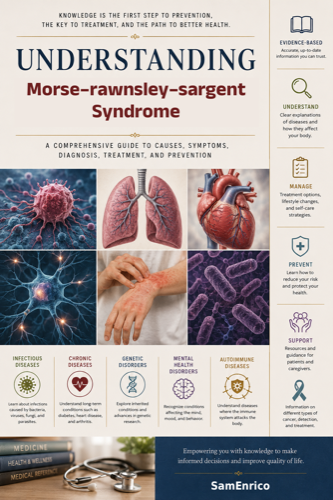 Understanding Morse–rawnsley–sargent SyndromeTibbs Dorthea$17.99
 Technical Writing Tools GuideTibbs Dorthea$12.99
 Remote Conflict Cheat SheetTibbs Dorthea$12.99
 How to Become a Cloth-mercerizer OperatorTibbs Dorthea$11.99
You may also like
 Hong Kong Handover 1997Dunn Johnnie$11.99
 Zumba For Postnatal Recovery CourseNeal Christian$11.99
 Zumba for BeginnersLadner Nikia$11.99
 YouTube Comment Mining GuideHumes Pandora$12.99
 Worry Box MeditationCarlin Rudy$11.99
 Workplace Stress MeditationNguyen Lynn$11.99
 Workplace Stress and Sleep RepairHawley Ivory$11.99
 Workplace Perfectionism CureDelaney Jeffry$11.99
 Workplace Injustice Anger GuideWallen Isabelle$11.99
 Work Addiction and Burnout LinkGreenwood Ester$11.99
 Women in Yoga and WellnessBeattie Galina$11.99
 Women in Stand Up ComedyChun Evangeline$11.99