
Non-FictionHealth & WellnessEnzymes
Lactase Pill Guide eBook
Using enzyme supplements for dairy tolerance.
by Teal Ariane
Using enzyme supplements for dairy tolerance.
Formats
Free sample
Chapter 1: The Pizza Test...–- It was a Friday night in Chicago, and Sarah had just accepted a slice of deep-dish pepperoni from her best friend’s husband. The cheese stretched from the pan to her plate in a glorious, golden arc. She took a bite. Then another. Thirty minutes later, she was curled up on the bathroom floor, regretting every life choice that had led to this moment.
For five years, Sarah believed she was “allergic to happiness.” She had cut out ice cream, avoided creamy pasta sauces, and learned to say “no thank you, I’ll just have the salad” at every dinner party. She carried the shame of a woman who couldn’t eat normal food. She also carried Gas-X in her purse at all times.What Sarah didn’t know—and what this chapter will teach you—was that she had been misdiagnosing herself for half a decade. She didn’t have a dairy allergy. She didn’t have a mysterious “sensitive stomach.” She had primary lactase deficiency, the most common digestive condition on the planet.
And once she understood the difference, everything changed. She stopped hiding in bathrooms. She started eating pizza again. And she learned that the human gut, for all its complexity, follows a few simple rules that anyone can master.This chapter is your pizza test. By the time you finish reading, you will know, with certainty, whether you are truly lactose intolerant or whether something else is causing your dairy distress.
You will understand the three distinct types of lactase deficiency and why only one of them responds to the pills sold in every pharmacy. You will learn the single most important concept in this entire book—the dose-response rule—which explains why you can eat Parmesan cheese without consequences but explode after a single latte. And you will calculate your personal lactose threshold, the number that will guide every dosing decision you make from Chapter 4 onward.Let us begin with a confession. Most people who buy lactase pills do not need them. Not because they aren’t suffering—they are suffering terribly—but because they are treating the wrong condition.
They pop a lactase pill, feel no relief, and conclude that the pills are useless. Then they return to a life of dairy avoidance, convinced that their bodies are broken. In reality, they may have a milk protein allergy, irritable bowel syndrome, small intestinal bacterial overgrowth, or any of a dozen other conditions that mimic lactose intolerance but do not respond to lactase. This chapter is your diagnostic toolkit. Let’s open it.The Great Imposters: Three Conditions That Look Like Lactose Intolerance (But Aren’t)Before we talk about lactose, we need to talk about everything else.
Because if you have the wrong condition, every pill you take is a waste of money and every symptom you suffer is unnecessary.Condition One: Milk Protein Allergy (Casein and Whey)Imagine your immune system as a security guard. For most people, dairy proteins (casein and whey) are harmless visitors. For someone with a milk protein allergy, the security guard tackles these visitors to the ground, handcuffs them, and calls for backup. This is an immune response, not a digestive one. The symptoms are dramatically different from lactose intolerance.A milk protein allergy typically causes hives (raised, itchy red welts on the skin), swelling of the lips, tongue, or face, wheezing or difficulty breathing, vomiting within minutes of consuming dairy, and in severe cases, anaphylaxis—a life-threatening reaction that requires immediate epinephrine.
The timing is fast: symptoms usually appear within minutes to two hours after eating dairy. Compare this to lactose intolerance, where symptoms take 30 minutes to two hours to appear and are purely digestive: gas, bloating, cramping, and diarrhea. No hives. No swelling. No wheezing.If you have ever broken out in hives after a glass of milk, or if your throat felt tight after eating cheese, you do not need lactase pills.
You need an allergist. Lactase will do nothing for an allergic reaction because there is no enzyme deficiency to correct. The problem is your immune system, not your digestive system. The solution is complete avoidance of dairy proteins, not enzyme supplements.Condition Two: Irritable Bowel Syndrome (IBS) with FODMAP Sensitivity IBS affects approximately 10-15 percent of adults worldwide. It is a functional disorder, meaning the gut looks normal under a microscope but behaves abnormally.
Many people with IBS have triggers that go far beyond dairy. They react to onions, garlic, wheat, beans, apples, stone fruits, and a host of other foods that ferment in the gut.Here is where it gets tricky. Lactose is a FODMAP—specifically, it is a disaccharide that ferments in the colon of people who cannot absorb it properly. So people with IBS often react to dairy and to many other foods. The key difference is the pattern.
Someone with lactose intolerance will react only to foods containing lactose, and will react consistently to those foods. Someone with IBS will react unpredictably, sometimes to dairy and sometimes to other triggers, with symptom severity that varies from day to day independent of how much lactose they consumed.Try this test. Keep a food diary for one week. Write down everything you eat and every symptom you experience. If you notice that dairy consistently causes symptoms but onions, garlic, and beans do nothing, you likely have lactose intolerance.
If you react to a wide range of fermentable carbohydrates, you may have IBS and should see a gastroenterologist for a low-FODMAP elimination diet.Condition Three: Small Intestinal Bacterial Overgrowth (SIBO)SIBO occurs when bacteria that normally live in the large intestine migrate upward and colonize the small intestine. These bacteria ferment carbohydrates—including lactose—producing hydrogen, methane, or both. The symptoms are nearly identical to lactose intolerance: gas, bloating, cramping, diarrhea, and sometimes constipation (in the case of methane-predominant SIBO).The critical difference is that SIBO does not respond to lactase pills. No matter how much enzyme you take, the bacteria will still ferment whatever lactose escapes digestion. In fact, if you have SIBO, taking lactase pills might make you feel worse because you are converting lactose into absorbable glucose and galactose that feed the bacteria more efficiently.How can you tell the difference?
The breath test. A hydrogen breath test with pure lactose can distinguish between true lactase deficiency and SIBO. If you test positive for hydrogen after drinking lactose, and then test negative after drinking glucose (which should be absorbed before reaching bacteria), you likely have lactase deficiency. If you test positive after both, you may have SIBO. We will return to this in Chapter 8 when we troubleshoot pill failure.
For now, simply know that if you have tripled your lactase dose and still have symptoms, SIBO is a likely culprit.The Three Types of Lactase Deficiency: Which One Do You Have?Now that we have cleared away the imposters, let us talk about the real thing. Lactase deficiency comes in three distinct forms, each with different causes, different ages of onset, and different treatment implications.Type One: Congenital Lactase Deficiency (Extremely Rare)Imagine being born without the ability to digest your mother’s milk. That is congenital lactase deficiency…
This is the end of the free sample. Get the eBook to keep going. Buy now
About this book
Details
- Author
- Teal Ariane
- Publisher
- SamEnrico
- Language
- English
- Genre
- Non-Fiction, Health & Wellness, Enzymes
- Released
- 2026-06-08
- Pages (approx.)
- 133
- Available as
- eBook, Audiobook

Read better in the ZLOADR app
Your eBooks on your phone or tablet. Sign in with your SamEnrico account and start reading.
More by Teal Ariane
 Supply Chain Creative GuideTeal Ariane$11.99
 Grief That Doesnt EndTeal Ariane$11.99
 Bedtime Mindfulness PracticeTeal Ariane$11.99
 The Blue Zone Downshift HabitsTeal Ariane$11.99
 The Fela Kuti Revolution: How One Man Turned a Festival into a MovementTeal Ariane$11.99
 Purchase Requisition StreamliningTeal Ariane$12.99
 Duplicate Detection AITeal Ariane$12.99
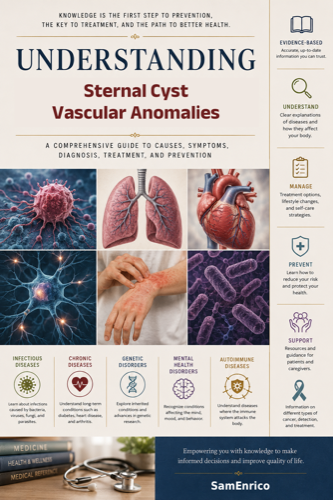 Understanding Sternal Cyst Vascular AnomaliesTeal Ariane$17.99
 How to Become a Sheet-metal WorkerTeal Ariane$11.99
 Cabriite MiningTeal Ariane$11.99
You may also like
 Hong Kong Handover 1997Dunn Johnnie$11.99
 Zumba For Postnatal Recovery CourseNeal Christian$11.99
 Zumba for BeginnersLadner Nikia$11.99
 YouTube Comment Mining GuideHumes Pandora$12.99
 Worry Box MeditationCarlin Rudy$11.99
 Workplace Stress MeditationNguyen Lynn$11.99
 Workplace Stress and Sleep RepairHawley Ivory$11.99
 Workplace Perfectionism CureDelaney Jeffry$11.99
 Workplace Injustice Anger GuideWallen Isabelle$11.99
 Work Addiction and Burnout LinkGreenwood Ester$11.99
 Women in Yoga and WellnessBeattie Galina$11.99
 Women in Stand Up ComedyChun Evangeline$11.99