
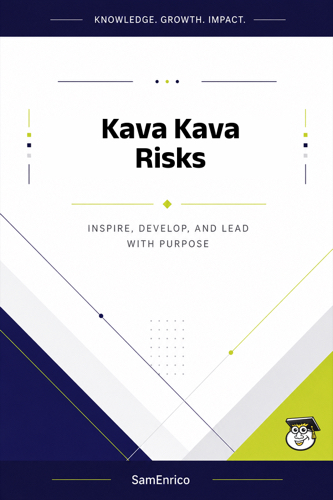
Non-FictionHealth & WellnessHerb
Kava Kava Risks eBook
Warns about liver toxicity with kava use.
Warns about liver toxicity with kava use.
Formats
Free sample
Chapter 1: The Sacred Root–- On a humid evening in the village of Erakor, on the island of Efate in Vanuatu, a circle of elders sits cross-legged on woven mats beneath the flickering light of kerosene lamps. In the center rests a large, carved wooden bowl—the tanoa—filled with a murky, earth-colored liquid that smells of wet soil and pepper. For the next several hours, the men will drink from half-coconut shells, passing the bowl in a clockwise direction, speaking softly, resolving disputes, and connecting with their ancestors. This ceremony has occurred in this exact form for at least three thousand years. And in all that time, no elder has ever turned yellow with jaundice.
No young warrior has ever been rushed to a clinic with acute liver failure. No family has ever buried a member whose death was attributed to the sacred root they call yaqona or awa.Yet, half a world away, in a sterile courtroom in Bonn, Germany, in the summer of 2002, a very different story was being told. Health officials presented evidence of thirty women and men—most in their thirties and forties, most living in Berlin, Hamburg, and Munich—who had developed severe hepatitis after taking kava pills purchased from health food stores. One had required an emergency liver transplant. Another had died while waiting for a donor.
The German health authority, Bf Ar M, did not hesitate. On June 14, 2002, it withdrew all kava-containing medications from the German market, triggering a domino effect that would see Canada, the United Kingdom, France, and Switzerland follow suit within months. The sacred root of the South Pacific had become, overnight, a suspected poison.This book is the story of that contradiction. It is an investigation into how the same plant can be simultaneously a safe ceremonial beverage for millions of Pacific Islanders and a suspected hepatotoxin in Western clinical trials. It is a forensic examination of the eighty-three published case reports of kava-associated liver injury, the scientific debates about causality, the regulatory battles, and the commercial interests that have shaped the narrative on both sides.
And it is a practical guide for consumers, clinicians, and policymakers who must navigate a landscape where the truth is more nuanced than either the industry advocates or the alarmists would have you believe.The Paradox That Demands Explanation Before we dissect the chemistry, the pharmacology, the case reports, and the regulatory history, we must sit with the paradox itself. Traditional kava use in the South Pacific—encompassing Fiji, Vanuatu, Samoa, Tonga, Hawaii, and the Solomon Islands—has never been credibly linked to liver disease. Anthropological studies dating back to Captain Cook’s voyages in the 1770s describe kava ceremonies without any mention of jaundice or liver failure. A 2003 World Health Organization report reviewed the medical literature from Pacific Island nations spanning more than a century and found zero cases of kava-associated hepatotoxicity among traditional users. Zero.Now consider the Western experience.
Between 1997 and 2002, six countries reported more than thirty cases of serious liver injury linked to kava supplements. The patients were typically taking standardized extracts in pill or capsule form, often for anxiety or insomnia. Their doses were not dramatically higher than traditional servings. Their duration of use ranged from one to six months—longer than typical ceremonial use but not extreme. And yet, their livers failed in ways that Pacific Islanders had never experienced.Something was different.
The question—the central question of this book—is what.The answer, we will argue, lies not in a single factor but in a convergence of four distinct variables. First, plant chemistry: the specific kavalactone profile varies dramatically between kava cultivars, and some cultivars (the so-called "Tudei" or two-day kava) contain compounds that are directly toxic to liver cells. Second, plant part: traditional use employs only the root; modern supplements have been found to contain aerial parts—stems, peel, and leaves—which contain hepatotoxic alkaloids. Third, extraction method: traditional preparation uses cold or lukewarm water, which extracts primarily the psychoactive but relatively safe kavalactones; modern supplements often use acetone or ethanol, which extract a broader and potentially more dangerous range of compounds, including flavokavains linked to liver cell death. Fourth, host susceptibility: a small subset of the population—perhaps one in five thousand to one in ten thousand—has genetic variations in liver enzymes that make them vulnerable to true idiosyncratic toxicity even from pure noble kava.This book is organized to guide you through each of these variables systematically.
But before we dive into the evidence, we must first understand the plant itself: its botany, its chemistry, its traditional preparation, and the critical distinction between noble and Tudei kava that has been at the center of the safety debate for two decades.Piper Methysticum: The Intoxicating Pepper The kava plant, Piper methysticum, belongs to the pepper family (Piperaceae), making it a relative of black pepper (Piper nigrum) and betel leaf (Piper betle). Its species name, methysticum, derives from the Greek methystikos, meaning "intoxicating." It is a perennial shrub that grows three to four meters tall in the tropical climates of the South Pacific, with large, heart-shaped leaves that can reach thirty centimeters across and jointed, herbaceous stems that propagate easily from cuttings.Notably, Piper methysticum is a sterile plant. It does not produce viable seeds. Every kava plant in existence is a clone, propagated through stem cuttings by generations of Pacific Islander farmers over the course of perhaps three thousand years. This means that all genetic variation in kava—and there is substantial variation—exists as a result of deliberate, centuries-long selection by human cultivators.
Farmers did not just plant kava; they bred it. They selected for desirable traits: higher kavalactone content, smoother taste, fewer negative side effects, and, crucially for our story, safety.This human-guided evolution produced dozens of distinct kava cultivars. The most important distinction for our purposes is between two broad categories: Noble kava and Tudei kava.Noble vs. Tudei: The Distinction That Changes Everything In the islands of Vanuatu—the spiritual and genetic homeland of kava—farmers have long recognized that not all kava is equal. They classify cultivars along a spectrum from "noble" (kava lau), which is suitable for daily ceremonial use, to "Tudei" (from the English "two day"), which produces effects that last longer but are associated with greater next-day grogginess, nausea, and—critically—a higher risk of adverse effects.The chemical basis for this distinction has been confirmed by modern analytical chemistry.
Noble kava cultivars (such as Borogu, Palisi, Melomelo, and Pia) have a specific kavalactone profile: high levels of kavain, moderate levels of dihydrokavain and yangonin, and low levels of the flavokavains (flavokavain A, B, and C). Tudei cultivars (such as Isa, Palasa, and Tudei proper) have a different profile: lower kavain, higher dihydromethysticin and methysticin, and significantly higher levels of flavokavains, particularly flavokavain B.Why does this matter for liver safety? Flavokavain B has been shown in multiple laboratory studies to be directly toxic to hepatocytes—liver cells. In a 2014 study published in the journal Planta Medica, researchers exposed cultured human liver cells to flavokavain B and observed dose-dependent cell death within twenty-four hours. The mechanism involved activation of the mitochondrial apoptosis pathway—essentially, the…
This is the end of the free sample. Get the eBook to keep going. Buy now
About this book
Details
- Author
- Presley Carita
- Publisher
- SamEnrico
- Language
- English
- Genre
- Non-Fiction, Health & Wellness, Herb
- Released
- 2026-06-10
- Pages (approx.)
- 147
- Available as
- eBook, Audiobook

Read better in the ZLOADR app
Your eBooks on your phone or tablet. Sign in with your SamEnrico account and start reading.
More by Presley Carita
 EMDR for Complicated GriefPresley Carita$11.99
 Castle Turret View GuidePresley Carita$11.99
 Walking Meditation For AthletesPresley Carita$11.99
 Small Talk for Pet OwnersPresley Carita$11.99
 Workaholic Sleep DeprivationPresley Carita$11.99
 Receiving Criticism GracefullyPresley Carita$11.99
 GAD And Birthday AnxietyPresley Carita$11.99
 The Vanishing of the Nine Ladies of Lough GurPresley Carita$11.99
 The Lion Kings of Timbuktu: The Warriors Who United an Empire Through SportPresley Carita$11.99
 A Collector's Handbook to the Fiat SpecialPresley Carita$11.99
 Mastering The Art of Sri LankaPresley Carita$11.99
 How to Produce Herbs and SpicesPresley Carita$11.99
You may also like
 Hong Kong Handover 1997Dunn Johnnie$11.99
 Zumba For Postnatal Recovery CourseNeal Christian$11.99
 Zumba for BeginnersLadner Nikia$11.99
 YouTube Comment Mining GuideHumes Pandora$12.99
 Worry Box MeditationCarlin Rudy$11.99
 Workplace Stress MeditationNguyen Lynn$11.99
 Workplace Stress and Sleep RepairHawley Ivory$11.99
 Workplace Perfectionism CureDelaney Jeffry$11.99
 Workplace Injustice Anger GuideWallen Isabelle$11.99
 Work Addiction and Burnout LinkGreenwood Ester$11.99
 Women in Yoga and WellnessBeattie Galina$11.99
 Women in Stand Up ComedyChun Evangeline$11.99