
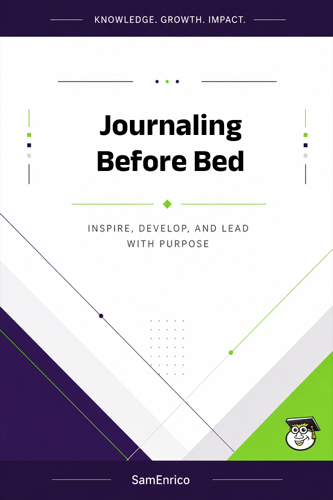
Journaling Before Bed eBook
Write down tasks and thoughts to clear mental clut
Write down tasks and thoughts to clear mental clutter.
Formats
Free sample
Chapter 1: The Midnight Tax--–- The ceiling stared back at you again last night. You remember it vividly: the same crack in the plaster, the same sliver of moonlight slicing through the blinds, the same dull ache in your eyes from watching the clock blink from 1:47 to 2:03 to 2:18. You were exhausted—bone-tired, the kind of tired that settles into your marrow—but your brain refused to cooperate. It wasn't loud, exactly. There was no panic, no heart-pounding anxiety.
Just a quiet, relentless hum of things. The email you forgot to send. The terse conversation with your partner that ended without resolution. The presentation due Friday that you haven't started. The sink that still leaks.
The birthday gift you didn't buy. The call you didn't return. Each thought arrived not as a catastrophe but as a dull, persistent pebble, and together they formed a landslide that buried sleep.If this scene feels familiar, you have paid the Midnight Tax.The Midnight Tax is the hidden cost of falling asleep with open mental loops. Unlike clinical insomnia—which is a medical condition requiring professional treatment—clutter-induced wakefulness is something else entirely. It is the price you pay for living in an age of infinite obligations, endless notifications, and a culture that mistakes busyness for virtue.
You are not broken. Your brain is not malfunctioning. You are simply asking it to do something it was never designed to do: store an ever-growing list of unfinished tasks, unresolved emotions, and undecided decisions while simultaneously powering down for restorative sleep.This chapter will show you why your brain insists on replaying your to-do list at 2:00 AM, how to distinguish between a sleep problem that requires a doctor and a clutter problem that requires a journal, and why the first step to sleeping better is not solving anything—but simply naming the tax you are paying.The Zeigarnik Effect: Why Your Brain Hates Unfinished Business In the 1920s, a Russian psychologist named Bluma Zeigarnik made a discovery that would forever change our understanding of memory and motivation. She noticed something peculiar: waiters in busy cafes could remember complex orders with astonishing accuracy—but only until the food was delivered. Once the bill was paid and the customers left, the waiters could recall almost nothing about who ordered what.
Zeigarnik took this observation into the laboratory and confirmed a powerful psychological principle: unfinished tasks are remembered better than completed ones.This is the Zeigarnik Effect, and it is the primary engine of your 2:00 AM racing thoughts.Your brain treats every unfinished task as an open problem. From an evolutionary perspective, this made excellent sense. If you were a hunter-gatherer and you did not finish building shelter before nightfall, your brain needed to keep that task front and center until it was resolved. Forgetting an unfinished task could mean death. So your neural architecture evolved a persistent reminder system: the more incomplete a task, the more cognitive resources your brain dedicates to keeping it active.The problem is that your modern life contains hundreds—sometimes thousands—of "unfinished tasks" at any given moment.
The email draft you saved but did not send. The text you meant to reply to. The decision you postponed about which contractor to hire. The conversation you ended awkwardly. The book you started but did not finish.
The exercise routine you abandoned. The promise you made to yourself to eat better.Your brain does not distinguish between life-threatening tasks and trivial ones. It treats an unanswered email the same way it treated an unfinished shelter: as an open loop that must remain active until closed.At night, when external distractions fade and your brain has nothing else to process, the Zeigarnik Effect goes into overdrive. Every open loop from the past several hours—and sometimes days or weeks—surfaces simultaneously. This is why you lie awake replaying a minor mistake from 2017 alongside a task from yesterday.
Your brain is not punishing you. It is trying to protect you. It is simply very, very bad at understanding modern life.Attention Residue: The Silent Killer of Sleep If the Zeigarnik Effect explains what keeps you awake, Attention Residue explains how it keeps you awake.Sophie Leroy, a business professor at the University of Washington, coined the term "attention residue" to describe a phenomenon she observed in knowledge workers. When you switch from Task A to Task B, your attention does not fully transfer. A portion of your cognitive resources remains stuck on Task A, lingering like smoke in a room after a fire.
This residue reduces your performance on Task B, increases your stress, and—most importantly for our purposes—prevents your brain from ever truly closing the loop on Task A.Here is what this looks like in practice. You finish work at 6:00 PM. You close your laptop. You make dinner. You watch a show.
You brush your teeth. You get into bed. But because you never performed a deliberate ritual to close the loop on your work tasks, attention residue has followed you like a ghost from your desk to your dinner table to your bedroom. When your head hits the pillow, that residue is still there—not as a full-blown thought, but as a low-grade hum of unfinished business.Attention residue is insidious because it does not feel like thinking. It feels like tension.
It feels like restlessness. It feels like the vague sense that you have forgotten something important. And because it lacks a clear shape, you cannot easily address it. You cannot solve a vague hum. You can only lie there, feeling vaguely uneasy, vaguely incomplete, vaguely awake.This is why simply "trying to stop thinking" never works.
Your brain cannot stop thinking about something until it has received a clear signal that the task is either complete or safely stored for later. Attention residue persists because your brain is waiting for that signal. Until you provide it, the residue will remain.Clinical Insomnia vs. Clutter-Induced Wakefulness: A Crucial Distinction Before we go any further, we must make a critical distinction. Not all sleep problems are the same, and journaling is not a cure for everything.Clinical insomnia is a diagnosable sleep disorder characterized by difficulty falling asleep, staying asleep, or waking too early despite adequate opportunity for sleep, accompanied by daytime impairment.
It can be caused by medical conditions, psychiatric disorders (such as depression or generalized anxiety disorder), medications, or primary sleep disorders like sleep apnea. If you have clinical insomnia, you may benefit from journaling as a complementary tool, but you almost certainly need professional evaluation from a sleep specialist or therapist. Cognitive Behavioral Therapy for Insomnia (CBT-I) is the gold-standard treatment, and many of the techniques in this book are inspired by CBT-I principles. However, this book is not a substitute for medical care.Clutter-induced wakefulness is different. It is characterized by:Content-specific thoughts: Your racing thoughts are about real, identifiable events, tasks, or interactions from your day—not abstract fears or existential dread.Temporal proximity: The thoughts are usually about recent events (today or this week), not distant traumas or chronic worries that have persisted for months or years.Resolution relief: When you complete a task or make a decision, the associated…
This is the end of the free sample. Get the eBook to keep going. Buy now
About this book
Details
- Author
- Couch Remedios
- Publisher
- SamEnrico
- Language
- English
- Genre
- Non-Fiction, Health & Wellness, Journaling
- Released
- 2026-06-07
- Pages (approx.)
- 159
- Available as
- eBook, Audiobook

Read better in the ZLOADR app
Your eBooks on your phone or tablet. Sign in with your SamEnrico account and start reading.
More by Couch Remedios
 Navigating Conflict At WorkCouch Remedios$11.99
 Tara Strong Pink PowerCouch Remedios$11.99
 Academic Pressure Self EsteemCouch Remedios$11.99
 The Morning Affirmation GuideCouch Remedios$11.99
 The Ruby Syndicate: Australia’s Billion-Dollar Gem HeistCouch Remedios$11.99
 Deepfake DetectiveCouch Remedios$11.99
 Understanding Wrinkly Skin SyndromeCouch Remedios$17.99
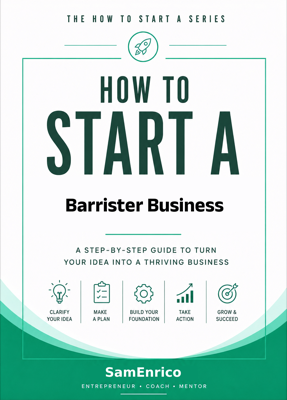 How to Start a Barrister Business (Beginners Guide)Couch Remedios$11.99
 Validately Testing GuideCouch Remedios$12.99
 High-Ticket CAC TacticsCouch Remedios$12.99
You may also like
 The Nap Journaling MethodLai Velva$11.99
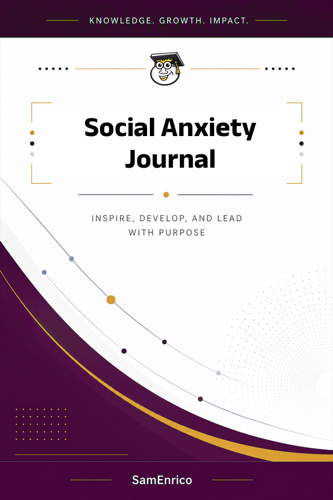 Social Anxiety JournalPoindexter Tosha$11.99
 The Gaming Relapse JournalMcswain Jessika$11.99
 Beginner Fitness Journal GuideBills Sylvie$11.99
 SAD Journaling GuideHarlow Paola$11.99
 Menopause Empowerment JournalRedden Emeline$11.99
 IBS Trigger Identification WorkbookDelatorre Takako$11.99
 Endometriosis JournalEleby Zenobia$11.99
 Sustainable Weight Loss JournalBellamy Mui$11.99
 Intuitive Eating Journal WorkbookJohn Beatriz$11.99
 The Postpartum JournalSanchez Tina$11.99
 Bipolar Journaling WorkbookWiggins Marquetta$11.99