

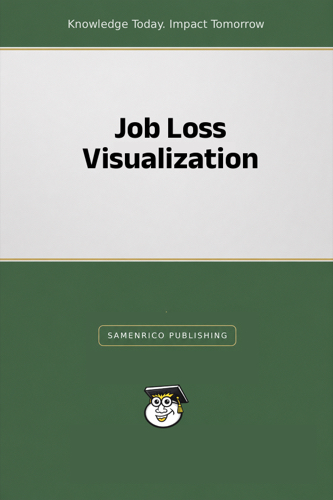
Free sample
Chapter 1: The Grief Analogue...--–- The morning of the layoff, you probably brushed your teeth, made coffee, and checked email like it was any other Tuesday. You might have had a deadline, a meeting, a project you were mildly stressed about. You might have been annoyed about a colleague's passive-aggressive Slack message or looking forward to lunch with a work friend. Then the calendar invite appeared. "Quick check-in," it said, with no agenda.
Or your boss asked you to join a video call with someone from HR. Or you opened your laptop to find your access revoked. And in the space of a single sentence—"Your position has been eliminated"—the world split into before and after.The person who existed before that sentence knew who they were. They had a title, a tribe, a trajectory. They knew what to say when someone asked, "What do you do?" They had a place to go in the morning, people who expected them, problems that needed solving.
The person who exists after that sentence is a stranger wearing your clothes. You recognize the hands, the reflection, the anxious habit of chewing your lip. But the internal architecture—the sense of solid ground, the unspoken certainty that tomorrow will resemble yesterday—has collapsed.This is not an overreaction. This is not weakness. This is grief.Grief Is Not Reserved for Death We have a cultural script for grief that includes funerals, casseroles, black clothing, and sympathy cards.
We understand that losing a parent, a spouse, a child, or a friend warrants time off work, patience from loved ones, and a slow, messy process of healing. But we have no script for losing a job. There is no ritual for the pink slip. There is no bereavement leave for a career. There is no moment when a colleague brings you a casserole and says, "I'm so sorry for your loss."And yet the psychological and physiological signatures of job loss are nearly identical to those of bereavement.
Dr. Lynn Joseph's landmark study, published in the Consulting Psychology Journal of the American Psychological Association, followed over 200 recently laid-off professionals and found that the vast majority met clinical criteria for an active grief response. They weren't just stressed. They weren't just worried about money. They were grieving—with the same neurological patterns, hormonal cascades, and emotional cycles as someone who had lost a person they…
This is the end of the free sample. Get the Audiobook to keep going. Buy now
About this book
Details
- Author
- Krieger Janella
- Publisher
- SamEnrico
- Language
- English
- Genre
- Non-Fiction, Self-Help / Visualization
- Released
- 2026-06-06
- Pages (approx.)
- 150
- Available as
- eBook, Audiobook

Listen in the VoxFlicks app
Audiobooks and audio dramas wherever you go. Sign in with your SamEnrico account and press play.
More by Krieger Janella
 The Growth Mindset for PerfectionismKrieger Janella$11.99
 The Announcer's Secret LifeKrieger Janella$11.99
 Stress and Cardiovascular AgingKrieger Janella$11.99
 Pelvic Floor During PregnancyKrieger Janella$11.99
 Self Esteem for Elderly WomenKrieger Janella$11.99
 First Responder Sleep GuideKrieger Janella$11.99
 Creative Routine for WritersKrieger Janella$11.99
 The Clockmaker's Dream: The Inventions of Christiaan HuygensKrieger Janella$11.99
 The Tokyo Strangler: A Killer’s Urban LabyrinthKrieger Janella$11.99
 How to Produce Corsages and BoutonnièresKrieger Janella$11.99
 Inventory Turnover Formula GuideKrieger Janella$12.99
 Wage and Hour Compliance PrimerKrieger Janella$12.99
You may also like
 Hong Kong Handover 1997Dunn Johnnie$11.99
 Zumba For Postnatal Recovery CourseNeal Christian$11.99
 Zumba for BeginnersLadner Nikia$11.99
 YouTube Comment Mining GuideHumes Pandora$12.99
 Worry Box MeditationCarlin Rudy$11.99
 Workplace Stress MeditationNguyen Lynn$11.99
 Workplace Stress and Sleep RepairHawley Ivory$11.99
 Workplace Perfectionism CureDelaney Jeffry$11.99
 Workplace Injustice Anger GuideWallen Isabelle$11.99
 Work Addiction and Burnout LinkGreenwood Ester$11.99
 Women in Yoga and WellnessBeattie Galina$11.99
 Women in Stand Up ComedyChun Evangeline$11.99