

Non-FictionHistoryContemporary History
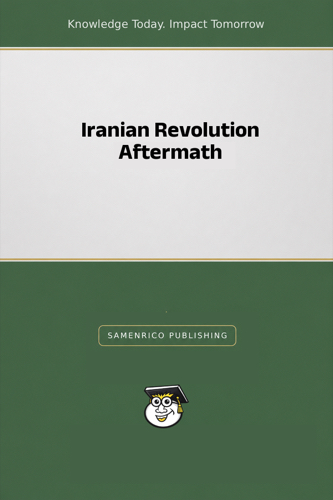
Iranian Revolution Aftermath
Assess the long term consequences for Iran, the Mi
Assess the long term consequences for Iran, the Middle East, and the world.
Formats
About this book
Free sample
Chapter 1: The Peacock’s Shadow...--The image is indelible: the Shah of Iran, Mohammad Reza Pahlavi, standing in the ruins of Persepolis in 1971, surrounded by robes of gold, endless tables of champagne, and the crowned heads of a dying aristocracy. He had spent over one hundred million dollars to throw the world’s most extravagant party, celebrating 2,500 years of uninterrupted Persian monarchy. On the surface, it was a declaration of power. Beneath the silk tents, the ground was already cracking. The Peacock Throne, as the Persian monarchy was poetically known, cast a long shadow over the country.
But by the mid-1970s, that shadow had become a suffocating darkness—economic misery for the many, spectacular wealth for the few, and a secret police that could vanish a professor, a poet, or a cleric without a trace. To understand the long shadow of the 1979 revolution, one must first understand the man who made it inevitable: a monarch who wanted to be a modern Cyrus the Great but who ruled like a paranoid emperor in decline.The Great Civilization and the Savage Contradiction In 1963, the Shah launched the “White Revolution”—a sweeping package of land reform, women’s suffrage, and industrialization designed to bypass the feudal elite and drag Iran into the modern age. To Western observers, it was a miracle. To the illiterate villagers of Fars and the devout merchants of the Tehran bazaar, it was a disaster. The White Revolution’s land reforms shattered ancient communal farming systems, tossing millions of peasants off the land and into the slums of south Tehran, where they joined an angry, impoverished working class.
The Shah had promised a “Great Civilization” of gleaming highways, nuclear power, and Western education. Instead, he delivered what one historian later called a “petrolic circus”—an oil-fueled boom that inflated real estate, enriched a tiny circle of royal cronies, and left the rest of the country choking on inflation and corruption.Foreign reporters marveled at the young women of Tehran in miniskirts, but they did not see the village women in chadors who watched their sons die from polluted water or…
This is the end of the free sample. Get the eBook to keep going. Buy now
Contents
- Chapter 1
- Chapter 2
- Chapter 3
- Chapter 4
- Chapter 5
- Chapter 6
- Chapter 7
- Chapter 8
- Chapter 9
- Chapter 10
- Chapter 11
- Chapter 12
Details
- Author
- Tilton Elenore
- Publisher
- SamEnrico
- Language
- English
- Genre
- Non-Fiction, History, Contemporary History
- Released
- 2026-06-11
- Pages (approx.)
- 92
- Available as
- eBook, Audiobook

Read better in the ZLOADR app
Your eBooks on your phone or tablet. Sign in with your SamEnrico account and start reading.
More by Tilton Elenore
 PMS Acne Control HandbookTilton Elenore$11.99
 GAD Research Update GuideTilton Elenore$11.99
 Natural Disaster Dream Trauma GuideTilton Elenore$11.99
 Mindful Walking MBSR PracticeTilton Elenore$11.99
 Whispers of the Marid: The Djinn King’s Lost OathTilton Elenore$11.99
 The Great Arctic Relay: How Arctic Terns Outran the ClockTilton Elenore$11.99
 Artificial Intelligence Architecture OutlookTilton Elenore$12.99
 Canadian Graduate Express Entry GuideTilton Elenore$12.99
 Bank TellerTilton Elenore$11.99
 Understanding Hashimoto's ThyroiditisTilton Elenore$17.99
 How to Start a Hobby in NudismTilton Elenore$11.99
You may also like
 Hong Kong Handover 1997Dunn Johnnie$11.99
 Zumba For Postnatal Recovery CourseNeal Christian$11.99
 Zumba for BeginnersLadner Nikia$11.99
 YouTube Comment Mining GuideHumes Pandora$12.99
 Worry Box MeditationCarlin Rudy$11.99
 Workplace Stress MeditationNguyen Lynn$11.99
 Workplace Stress and Sleep RepairHawley Ivory$11.99
 Workplace Perfectionism CureDelaney Jeffry$11.99
 Workplace Injustice Anger GuideWallen Isabelle$11.99
 Work Addiction and Burnout LinkGreenwood Ester$11.99
 Women in Yoga and WellnessBeattie Galina$11.99
 Women in Stand Up ComedyChun Evangeline$11.99