
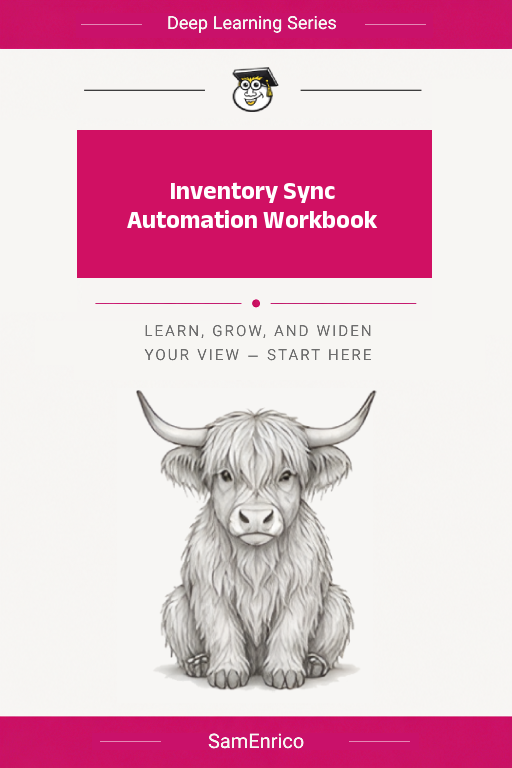
Non-FictionBusiness BriefInventory Management
Inventory Sync Automation Workbook eBook
Connect Chinese supplier inventory to Brazil Ghana
Connect Chinese supplier inventory to Brazil Ghana dropshipping stores automatically. Reduce overselling with real-time stock updates and buffer settings.
Formats
Free sample
Chapter 1: The Phantom Warehouse--–- On a Tuesday morning in São Paulo, a dropshipper named Carla watched her phone buzz with six refund requests before she had finished her first coffee. She had sold twenty pairs of running shoes overnight. Her Chinese supplier’s website showed “in stock: 45 units” when she went to bed. By the time she woke up, the supplier had fulfilled exactly zero of her orders because the shoes had been reserved for a Tik Tok live sale that sold out in eleven minutes. Carla’s inventory numbers had been a lie.
She was not overselling because her sync was slow. She was overselling because she never knew where the stock actually lived.This chapter teaches you how to identify the true source of inventory truth. Most dropshippers fail not because they lack automation, but because they automate the wrong data. They build elegant sync systems that move numbers from Point A to Point B, unaware that Point A was never the real warehouse in the first place. By the end of this chapter, you will understand the difference between actual stock, phantom stock, and the dangerous space in between where most cross-border sellers lose their money.The Three Faces of Supplier Inventory Before you can sync anything, you must accept a difficult truth: your Chinese supplier’s public-facing inventory number is almost never the full story.
Chinese suppliers operate inventory in three distinct layers, and only one of them matters to you.The Public Face (What You See)This is the number displayed on 1688, Taobao, or your supplier’s wholesale portal. It might say “872 units available.” This number is often aspirational. Suppliers routinely inflate this number to discourage competitors from buying out their stock, or they simply never update it because updating requires manual effort. Some suppliers deliberately keep this number high even when stock is low, gambling that they can source from another factory before you place a large order. For a dropshipper selling one unit at a time, this number is almost useless.The Reserved Pool (What You Cannot See)This is the phantom inventory introduced in the opening story.
A supplier may have 500 units physically in their Guangzhou warehouse, but 300 are reserved for a wholesale buyer in Europe, 100 are committed to a Tik Tok live seller, 50 are set aside for quality control sampling, and only 50 are actually available for dropshipping orders. The public number shows 500. The real number for you is 50. The difference of 450 units is phantom inventory—stock that exists in the world but not for you.The Virtual Warehouse (What Does Not Exist Yet)The most dangerous layer is the virtual warehouse. Some suppliers list stock they do not physically hold, operating on a “we can get it” model.
They keep a catalog of products from upstream factories and only purchase from those factories after you place an order. This model works for standard items with predictable restock times. It fails catastrophically for limited editions, seasonal goods, or any product where the upstream factory has already stopped production. You sell an item showing 100 units in stock. The supplier has zero units and no ability to get more.
You discover this only after fifty customers have paid.The Audit: Finding Your Phantom Risk Most dropshippers never audit their suppliers because they assume the number on the screen is the number in the warehouse. This assumption is the single largest cause of overselling in cross-border e-commerce. A proper inventory audit takes one morning and will save you months of refund headaches.Step One: Identify Your Top Fifty SKUs Do not audit your entire catalog. Focus on the fifty SKUs that generate eighty percent of your revenue. For each SKU, record the supplier’s stated inventory number at three different times: 9 AM China time, 3 PM China time, and 9 PM China time.
You are looking for patterns. A number that never changes across a full day is almost certainly fake. Real inventory fluctuates as orders come in. Phantom inventory sits perfectly still.Step Two: The Test Order Protocol Place a small test order for one unit of each SKU in your top fifty. Do not place all fifty orders at once.
Space them across two weeks. Record three metrics for each test order: confirmation time (how long until the supplier acknowledged the order), fulfillment time (how long until they provided a tracking number), and cancellation rate (how often they cancelled due to “stock issues”). A supplier who cancels more than five percent of test orders is lying about their inventory.Step Three: The Channel Conflict Interview Contact each supplier directly via We Chat or Ali Talk. Ask three specific questions:“Do you sell on Tik Tok Live, Taobao Live, or other real-time channels?”“Do you reserve inventory for wholesale buyers?”“If I place an order, do you ship from your own warehouse or do you source from another factory?”The answers to these questions define your phantom inventory risk. A supplier who sells on live channels without separate inventory pools will oversell you constantly.
A supplier who reserves for wholesale buyers will prioritize those buyers when stock runs low. A supplier who sources from upstream factories after you order cannot offer real-time sync at all.The Four Supplier Archetypes Based on your audit, every supplier falls into one of four categories. Your automation strategy depends entirely on which category they occupy.Archetype One: The Transparent Warehouse This supplier maintains a single inventory pool for all sales channels. They update their API or stock file in real time. They do not reserve stock for preferred buyers.
They ship from their own physical warehouse. This supplier is rare but ideal. You can connect them directly to your automation system with confidence. Less than five percent of Chinese suppliers on 1688 fit this description.Archetype Two: The Channel-Separated Warehouse This supplier maintains separate inventory pools for different sales channels. They allocate 500 units for wholesale, 300 for Tik Tok, and 200 for dropshipping.
The public number shows 1,000 total but your real available stock is only 200. This supplier can work for you if you gain access to the dropshipping-specific pool. Ask for a separate API endpoint or a dedicated stock file that shows only your allocated units. Without this separation, you cannot sync accurately.Archetype Three: The Virtual Warehouse This supplier does not hold physical stock. They list products from upstream factories and purchase after you order.
They show high inventory numbers because they assume the upstream factory has stock. When the upstream factory runs out, your orders cancel. This supplier is incompatible with real-time sync because the supplier themselves does not know their true stock until they attempt to purchase from their source. Avoid this archetype for any product where stockouts would damage your reputation.Archetype Four: The Phantom Operator This supplier deliberately inflates inventory numbers to attract orders. They cancel a percentage of orders and hope you do not complain.
They often sell on multiple platforms simultaneously without any inventory coordination. This supplier will destroy your business regardless of your sync system. Identify them in your audit and eliminate them immediately.Manual Spreadsheets: The Baseline Reality Before you build any automation, you must understand the manual alternative because many of your…
This is the end of the free sample. Get the eBook to keep going. Buy now
About this book
Details
- Author
- Greenberg Weldon
- Publisher
- SamEnrico
- Language
- English
- Genre
- Non-Fiction, Business Brief, Inventory Management
- Released
- 2026-05-30
- Pages (approx.)
- 155
- Available as
- eBook, Audiobook

Read better in the ZLOADR app
Your eBooks on your phone or tablet. Sign in with your SamEnrico account and start reading.
More by Greenberg Weldon
 Rollover Option DatabaseGreenberg Weldon$11.99
 Parenting with Chronic IllnessGreenberg Weldon$11.99
 Alcoholism and Grief Recovery ManualGreenberg Weldon$11.99
 Work Addiction for JournalistsGreenberg Weldon$11.99
 The Velvet Underground: How Andy Warhol and Edie Sedgwick Redefined FashionGreenberg Weldon$11.99
 How to Produce AltimetersGreenberg Weldon$11.99
 How to Start a Non-store Commission Agents (retail) Business (Beginners Guide)Greenberg Weldon$11.99
 Subcontracts AdministratorGreenberg Weldon$11.99
You may also like
 Hong Kong Handover 1997Dunn Johnnie$11.99
 Zumba For Postnatal Recovery CourseNeal Christian$11.99
 Zumba for BeginnersLadner Nikia$11.99
 YouTube Comment Mining GuideHumes Pandora$12.99
 Worry Box MeditationCarlin Rudy$11.99
 Workplace Stress MeditationNguyen Lynn$11.99
 Workplace Stress and Sleep RepairHawley Ivory$11.99
 Workplace Perfectionism CureDelaney Jeffry$11.99
 Workplace Injustice Anger GuideWallen Isabelle$11.99
 Work Addiction and Burnout LinkGreenwood Ester$11.99
 Women in Yoga and WellnessBeattie Galina$11.99
 Women in Stand Up ComedyChun Evangeline$11.99