
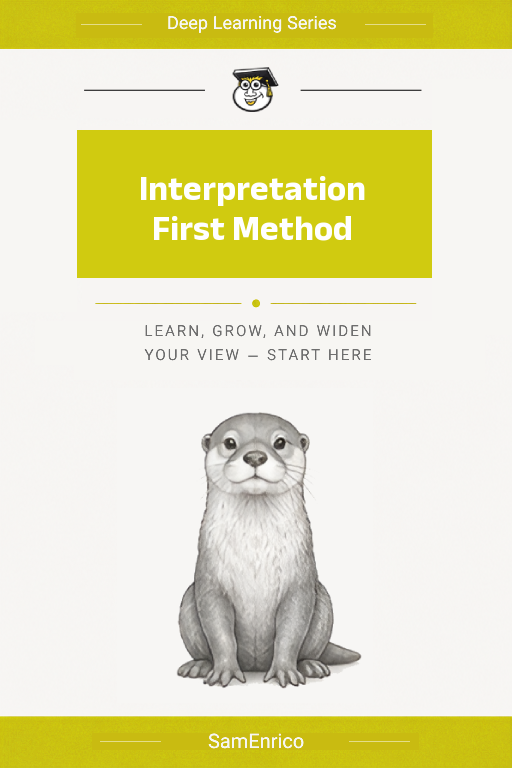
Non-FictionProfessional's Cheat SheetActive ListeningInterpretation
Interpretation First Method eBook
Repeat back what you heard each person say before
Repeat back what you heard each person say before responding to show listening.
Formats
Free sample
Chapter 1: The Interruption Epidemic--–- The voicemail ended, and I sat in my parked car, forehead against the steering wheel, replaying what I had just heard. My best friend of fifteen years had called to tell me her father was diagnosed with stage four pancreatic cancer. She was crying. She said she needed to talk. And my response, immortalized in that three-minute voicemail she left after hanging up on me, was a rambling story about my uncle who survived chemo.
I never said the words she needed to hear. I never said, "You just found out your dad might die. Tell me everything." Six months later, she stopped returning my calls. I wasn't a bad person. I was a bad listener.
And I didn't know there was a one-sentence fix.This is a book about that fix. But before we get to the solution, we have to understand the disease. And the disease is called the Interruption Epidemic.The Seventeen-Second Threshold Let me tell you something that will ruin your next conversation, and I mean that as a gift. Researchers have clocked how long the average person listens before interrupting. The number is not minutes.
It is not even thirty seconds. The average person listens for approximately seventeen seconds before they either speak over the other person or begin formulating their response so intensely that they have stopped hearing anything at all. Seventeen seconds. That is roughly the time it takes to tie a shoelace, microwave a cup of coffee, or read two text messages. And in that brief window, most of us decide that we already know what the other person is going to say, that our response is more important than their continued speaking, or that the discomfort of not knowing what to say next is unbearable.I want you to test this on yourself today.
Do not take my word for it. In your next conversation—with a partner, a colleague, a barista, anyone—count silently in your head after they finish a sentence. Do not speak. Just count. I promise you will feel an almost physical urge to fill the space by the time you reach five.
By ten, your brain will be racing to produce something—anything—to say. By fifteen, most people crack. They interrupt with a question, a story, advice, or a meaningless filler like "right" or "yeah" or "uh-huh" that signals nothing except their own discomfort. That urge is not listening. That urge is the enemy.Why We Can't Stop Ourselves The Interruption Epidemic is not caused by malice.
It is caused by four psychological drivers that operate below the level of conscious awareness. Once you name them, you can begin to disarm them. But first, you have to see them clearly.Driver One: Ego The first driver is ego, and it wears a mask. It does not announce itself as arrogance. Instead, it announces itself as helpfulness.
You hear someone describe a problem, and your brain immediately jumps to solutions. You are not interrupting because you think you are smarter. You are interrupting because you want to be useful. You want to relieve their distress. You want to prove that you are a good friend, a competent colleague, a capable partner.
And because you want to be helpful, you stop listening to their problem and start constructing your solution.Here is the painful truth that ego hides from you: your solution is almost never what they need first. Clinical research on couples therapy and workplace mediation shows that in the vast majority of conflicts, what the speaker wants most is not a solution. It is acknowledgment. It is validation. It is the experience of being heard.
Your well-intentioned advice, offered before you have fully understood the situation, is received not as help but as dismissal. They hear: "I don't need to hear the rest of your story because I already know what to do about it." Even if you would never say those words, that is what arrives on the other end of your interruption.Driver Two: Anxiety The second driver is anxiety, and it is more powerful than ego for most people. Silence makes us uncomfortable. Not the comfortable silence of two people who have been married for forty years and can sit reading in the same room without speaking. I mean the silence of uncertainty—the pause after someone has said something difficult, emotional, or confusing.
In that silence, your nervous system detects a threat. Something is unresolved. Something is unfinished. And your ancient, lizard-brain response to threat is to act. Do something.
Say something. Fill the void.This is why people so often say the wrong thing in moments of grief. Someone tells you their marriage is ending, and you blurt out, "Well, you never really seemed happy anyway." Someone tells you they lost their job, and you immediately launch into a story about your own layoff eight years ago. These responses are not calculated cruelty. They are anxiety responses.
Your brain could not tolerate the silence, so it grabbed the nearest available words and threw them into the space like a life preserver. The tragedy is that the silence was not dangerous. The silence was the only thing that would have helped. The silence would have given them room to continue, to clarify, to feel. But you stole the silence from them because you could not bear to share it.Driver Three: Pattern-Matching The third driver is pattern-matching, and it is the most insidious because it feels like intelligence.
Your brain is an extraordinary pattern-recognition machine. It takes in sensory information, compares it to past experiences, and makes lightning-fast predictions about what will happen next. This is how you catch a ball without doing calculus. This is how you recognize a friend's face in a crowd. This is how you finish someone's sentence when they are searching for a word.
Pattern-matching is a miracle of evolution.But it is a disaster for listening. Pattern-matching tells you that you already know what the other person is going to say. You have heard this story before. You have had this argument before. You have dealt with this type of person before.
So you stop listening. You check out. You mentally scroll through your file cabinet of past experiences and pull out the response that worked last time. But here is the problem: no two conversations are identical. The person speaking to you today is not the person who spoke to you last year.
Their situation has changed. Their feelings have changed. Their needs have changed. When you pattern-match, you are having a conversation with a ghost—a version of them that no longer exists. And they can feel it.
They can feel that you are not really here.Driver Four: Time Pressure The fourth driver is time pressure, and it is the excuse we hide behind. "I'm busy." "I have a meeting in five minutes." "Let me stop you there so we can stay on track." These phrases sound reasonable. They sound efficient. But they are almost always lies we tell ourselves to justify impatience. The research on perceived listening and time efficiency is clear and counterintuitive: conversations that feel…
This is the end of the free sample. Get the eBook to keep going. Buy now
About this book
Details
- Author
- Mcgraw Cecile
- Publisher
- SamEnrico
- Language
- English
- Genre
- Non-Fiction, Professional's Cheat Sheet, Active Listening, Interpretation
- Released
- 2026-05-29
- Pages (approx.)
- 160
- Available as
- eBook, Audiobook

Read better in the ZLOADR app
Your eBooks on your phone or tablet. Sign in with your SamEnrico account and start reading.
More by Mcgraw Cecile
 Defense Tech Capital AllocationMcgraw Cecile$11.99
 Self Esteem for Pivoting IndustriesMcgraw Cecile$11.99
 Death of Loved One Dream GuideMcgraw Cecile$11.99
 Wholesaling Partnership GuideMcgraw Cecile$11.99
 Vikram Pandit CitigroupMcgraw Cecile$11.99
 Mentorship for Educational AdministratorsMcgraw Cecile$11.99
 Rideshare Driver StressMcgraw Cecile$11.99
 CrossFit Workout Logging SystemMcgraw Cecile$11.99
 Breath for Seasonal Affective DisorderMcgraw Cecile$11.99
 The Last Unknown Shore: Magellan’s Legacy in the PacificMcgraw Cecile$11.99
 The Summit of Style: How Reinhold Messner and His Rivals Redefined Alpine FashionMcgraw Cecile$11.99
 The Resignation That Shook the World: Nixon’s Last StandMcgraw Cecile$11.99
You may also like
 Hong Kong Handover 1997Dunn Johnnie$11.99
 Zumba For Postnatal Recovery CourseNeal Christian$11.99
 Zumba for BeginnersLadner Nikia$11.99
 YouTube Comment Mining GuideHumes Pandora$12.99
 Worry Box MeditationCarlin Rudy$11.99
 Workplace Stress MeditationNguyen Lynn$11.99
 Workplace Stress and Sleep RepairHawley Ivory$11.99
 Workplace Perfectionism CureDelaney Jeffry$11.99
 Workplace Injustice Anger GuideWallen Isabelle$11.99
 Work Addiction and Burnout LinkGreenwood Ester$11.99
 Women in Yoga and WellnessBeattie Galina$11.99
 Women in Stand Up ComedyChun Evangeline$11.99