
Non-FictionHealth & WellnessIPTRelationships
Interpersonal Therapy for MDD eBook
Address role transitions, disputes, and grief that
Address role transitions, disputes, and grief that trigger depression.
Formats
Free sample
Chapter 1: The Loneliness Epidemic--–- You have been told, perhaps for years, that your depression is a chemical imbalance. A broken brain. A serotonin deficiency. A genetic misfortune that left you with faulty wiring. Doctors have said it.
Advertisements for antidepressants have sung it. Well-meaning friends have repeated it like a prayer: “It’s not your fault. It’s biology.”And that message is not entirely wrong. Biology matters. Genetics load the gun.
Early life experiences can pull the trigger. There are real, measurable differences in the brains of people who suffer from major depressive disorder. You are not imagining your suffering, and you are not weak for feeling it.But here is what the chemical imbalance story leaves out—and what the pharmaceutical advertisements will never tell you.Depression does not occur in a vacuum.Before the first symptom appeared—before the heaviness settled into your limbs, before the sleep went wrong, before food lost its taste and the future lost its color—something happened in your social world. A death. A divorce.
A conflict that would not end. A life change you did not choose. Or perhaps not a single event but a slow, quiet erosion: the gradual disappearance of people who used to matter, the hollowing out of relationships until you found yourself surrounded by bodies but utterly alone.The research is startlingly clear. Longitudinal studies following thousands of people for decades have identified the single strongest predictor of a first lifetime episode of major depression. It is not genetics.
It is not childhood trauma, although that matters enormously. It is social disconnection. People who report feeling lonely—not alone, but lonely—have a 300% higher risk of developing depression than those who feel meaningfully connected to others.Three hundred percent.That is larger than the effect size of most antidepressant medications.This chapter will ask you to set aside, temporarily, everything you have been told about depression as a purely internal medical condition. Not because that framing is useless—it has helped millions seek treatment without shame—but because it is incomplete. And an incomplete map will never lead you out of the forest.You are about to encounter a different map.
It is called the Interpersonal Formulation, and it comes from one of the most rigorously tested psychotherapies in existence: Interpersonal Psychotherapy, or IPT. For over forty years, clinical trials have shown that IPT works as well as medication for mild to moderate depression, and in many cases, its effects last longer because it teaches skills, not just symptom relief.The central idea is deceptively simple: Your mood and your life events are linked.When that link is broken—when a relationship falls out of balance, when a life role shifts without being mourned, when grief becomes stuck, when conflict freezes into silence—depression is often the result. Not because your brain is broken, but because your social world is. And social worlds can be repaired.This chapter is not asking you to abandon medication, therapy, or any other treatment that helps you. It is asking you to add one more tool to your kit: the understanding that your depression has a story, and that story involves other people.
Once you learn to read that story, you can begin to rewrite it.Let us begin with a question you may never have been asked in a doctor’s office.The Question No One Asked You When you arrive at a primary care physician’s office with symptoms of depression, the standard protocol is a checklist. For the past two weeks, have you felt sad or hopeless? Have you lost interest in activities you used to enjoy? Have you had trouble sleeping? Changes in appetite?
Fatigue? Difficulty concentrating? Thoughts of death?These are good questions. They measure the presence of depression. They do not measure its cause.Now imagine a different set of questions.What happened in your life just before you started feeling this way?Did someone close to you die?Did a significant relationship end—or become stuck in a conflict that never resolves?Did you go through a major life change, even a positive one—a new job, a new baby, a marriage, a move?Have you felt lonely, even when you are not alone?These are the interpersonal questions.
And for the vast majority of people with depression, at least one of them will yield an answer that points directly to the trigger.Clinical research suggests that approximately 70% of depressive episodes are preceded by a significant life event—and the vast majority of those events are interpersonal in nature. A death. A divorce. A job loss that severs daily social contact. A child leaving home.
A retirement that empties the calendar. A conflict with a partner that festers for months or years.Even episodes that appear to come “out of nowhere” often have an interpersonal context that has been overlooked. Consider the person who says, “I just woke up depressed one day.” When you ask carefully about the week before, you often discover something: a phone call with a critical parent, an anniversary of a loss, a birthday that went unacknowledged, a gradual withdrawal from friends that happened so slowly it felt invisible.Depression does not fall from the sky. It grows from the soil of our relationships.This is not blame. This is not saying that other people “caused” your depression.
It is saying that depression is a relational illness—it lives in the space between people, not just inside the individual skull. And if it lives between people, that is also where it can be healed.The Chemical Imbalance Story: Helpful but Harmful Let us be precise about what the chemical imbalance theory actually says and what it does not say.The theory emerged in the 1960s when researchers noticed that certain medications affecting serotonin and norepinephrine could alleviate depressive symptoms. This observation led to a reasonable hypothesis: if drugs that raise serotonin levels reduce depression, perhaps depression is caused by low serotonin.The hypothesis was never proven. In fact, subsequent research has severely undermined it. Large-scale meta-analyses have found no consistent evidence that depressed people have lower serotonin levels than non-depressed people.
The entire framework has been described by leading researchers as “not empirically substantiated.”And yet, the chemical imbalance story persists. It persists because it is simple. It persists because it sells medications. It persists because it offers something desperately needed: the promise that depression is not your fault.That last point is crucial. For centuries, depressed people were told they were weak, lazy, sinful, or morally defective.
The chemical imbalance story liberated millions from that shame. “It’s not you,” doctors said. “It’s your brain chemistry.” For the first time, depression was framed as a medical illness, no different from diabetes or heart disease.This was progress.But like all simplifications, it came with a cost.The cost is that the chemical imbalance story tells you that the problem is inside you. Your brain is broken. Your chemistry is wrong.
The solution, therefore, is to fix your internal machinery—with medication, with cognitive exercises, with willpower.The problem is not that these interventions are useless. The problem is that…
This is the end of the free sample. Get the eBook to keep going. Buy now
About this book
Details
- Author
- Regalado Macy
- Publisher
- SamEnrico
- Language
- English
- Genre
- Non-Fiction, Health & Wellness, IPT, Relationships
- Released
- 2026-06-09
- Pages (approx.)
- 143
- Available as
- eBook, Audiobook

Read better in the ZLOADR app
Your eBooks on your phone or tablet. Sign in with your SamEnrico account and start reading.
More by Regalado Macy
 Sponsor Selection and Relationship GuideRegalado Macy$11.99
 Ransom Note John Ramsey LinkRegalado Macy$11.99
 Spirituality and Secular RecoveryRegalado Macy$11.99
 The Druids of the Sacred Grove: Keepers of Celtic WisdomRegalado Macy$11.99
 Learn to Play the DulzainaRegalado Macy$11.99
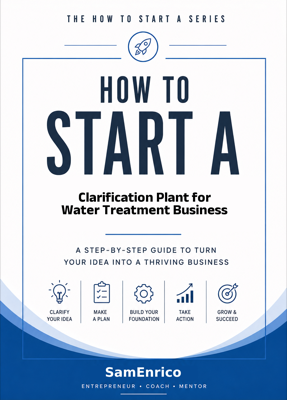 How to Start a Clarification Plant for Water Treatment Business (Beginners Guide)Regalado Macy$11.99
 Equity for Remote Co FoundersRegalado Macy$12.99
 Cake DecoratorRegalado Macy$11.99
You may also like
 Hong Kong Handover 1997Dunn Johnnie$11.99
 Zumba For Postnatal Recovery CourseNeal Christian$11.99
 Zumba for BeginnersLadner Nikia$11.99
 YouTube Comment Mining GuideHumes Pandora$12.99
 Worry Box MeditationCarlin Rudy$11.99
 Workplace Stress MeditationNguyen Lynn$11.99
 Workplace Stress and Sleep RepairHawley Ivory$11.99
 Workplace Perfectionism CureDelaney Jeffry$11.99
 Workplace Injustice Anger GuideWallen Isabelle$11.99
 Work Addiction and Burnout LinkGreenwood Ester$11.99
 Women in Yoga and WellnessBeattie Galina$11.99
 Women in Stand Up ComedyChun Evangeline$11.99