
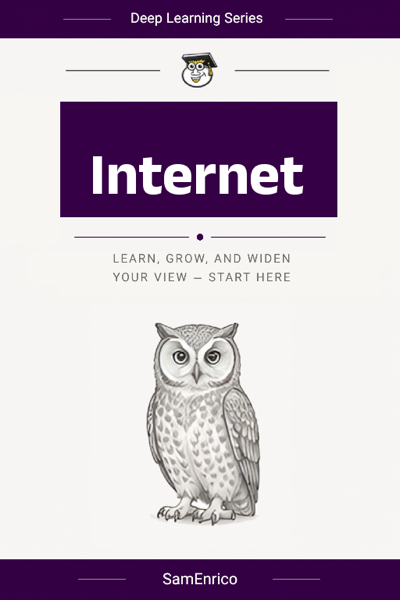
Non-FictionInformativeEducational
Internet
A Coursebook on Internet
A Coursebook on Internet
Formats
About this book
Free sample
Chapter 1: The Accidental Colossus...-- In the autumn of 1969, a grey metal box the size of a small refrigerator sat in a windowless room at the University of California, Los Angeles. It was called an Interface Message Processor, or IMP, and it weighed nearly 900 pounds. To the graduate students who tended it, the IMP was finicky, loud, and prone to overheating. They had no idea that they were looking at the first brick in a cathedral that would one day house two billion human souls.The story of the internet is not a story of military genius or corporate vision. It is a story of good intentions, bureaucratic accidents, and the strange afterlife of a system designed for a problem that never arrived.
Most people believe the internet was built to survive a nuclear war. This is a myth—a compelling one, but a myth nonetheless. The truth is stranger and more revealing. The internet was built to share expensive computers. Its resilience, its decentralization, its maddening resistance to control—these were side effects of a much more mundane goal.
And that accident changed everything.To understand the machine that now shapes your thoughts, your politics, and your relationships, you must first unlearn the stories you have been told. This chapter lays the foundation for everything that follows: the historical twists, the architectural bets, and the human ambitions that turned a research experiment into the defining infrastructure of the twenty-first century.The Prehistory: How Computers Learned to Talk Before the internet, there were computers. Massive, expensive, room-filling computers. In the 1950s and early 1960s, a single mainframe computer cost millions of dollars—the equivalent of a university's entire research budget. These machines were not designed for interaction.
A researcher would write a program on punch cards, hand the deck to an operator, and return the next day to collect the output. If you made a typo, you waited another day.This was not efficiency. This was desperation.The Advanced Research Projects Agency, or ARPA, was created in 1958 in response to the Soviet launch of Sputnik. America was terrified of falling behind…
This is the end of the free sample. Get the eBook to keep going. Buy now
Contents
- Chapter 1
- Chapter 2
- Chapter 3
- Chapter 4
- Chapter 5
- Chapter 6
- Chapter 7
- Chapter 8
- Chapter 9
- Chapter 10
- Chapter 11
- Chapter 12
Details
- Author
- Davison Deandra
- Publisher
- SamEnrico
- Language
- English
- Genre
- Non-Fiction, Informative, Educational
- Released
- 2026-06-02
- Pages (approx.)
- 142
- Available as
- eBook, Audiobook

Read better in the ZLOADR app
Your eBooks on your phone or tablet. Sign in with your SamEnrico account and start reading.
More by Davison Deandra
 The Titanic Wreck Discovery GuideDavison Deandra$11.99
 Self Talk For JealousyDavison Deandra$11.99
 Pomodoro for Audio ProductionDavison Deandra$11.99
 Assertiveness for Lawyers GuideDavison Deandra$11.99
 Breaking the Barriers: The Untold Story of New Zealand's First Female OlympiansDavison Deandra$11.99
 How to Become a Shake SawyerDavison Deandra$11.99
 Fast Track Developer TimelineDavison Deandra$12.99
 Pricing for Restaurants and Food ServiceDavison Deandra$12.99
 Understanding OphthalmophobiaDavison Deandra$17.99
You may also like
 Hong Kong Handover 1997Dunn Johnnie$11.99
 Zumba For Postnatal Recovery CourseNeal Christian$11.99
 Zumba for BeginnersLadner Nikia$11.99
 YouTube Comment Mining GuideHumes Pandora$12.99
 Worry Box MeditationCarlin Rudy$11.99
 Workplace Stress MeditationNguyen Lynn$11.99
 Workplace Stress and Sleep RepairHawley Ivory$11.99
 Workplace Perfectionism CureDelaney Jeffry$11.99
 Workplace Injustice Anger GuideWallen Isabelle$11.99
 Work Addiction and Burnout LinkGreenwood Ester$11.99
 Women in Yoga and WellnessBeattie Galina$11.99
 Women in Stand Up ComedyChun Evangeline$11.99