

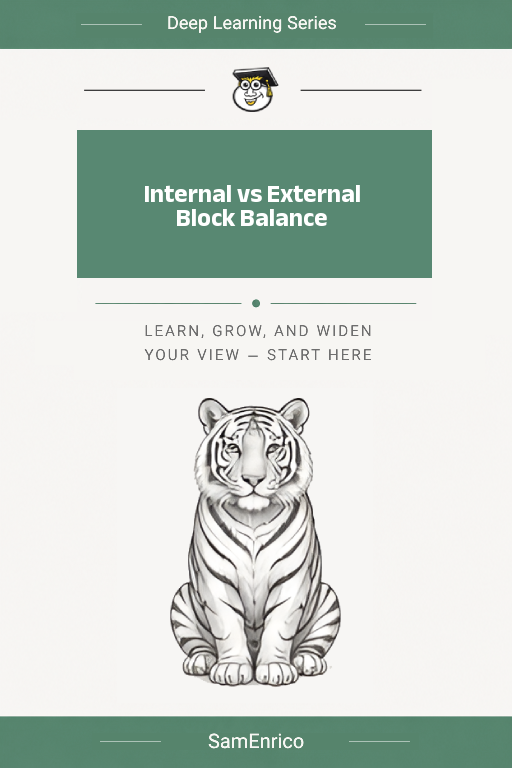
Non-FictionProfessional's Cheat SheetBalance
Internal vs External Block Balance eBook
Allocate blocks for internal strategy vs external
by Clay Tatyana
Allocate blocks for internal strategy vs external stakeholder meetings based on role demands.
Formats
Free sample
Chapter 1: The Open-Door Corpse--–- The CEO who had everything—except a single hour to think.The first time I met Sarah Chen, she was crying into a 12cupofcoldbrewatahotellobbyindowntown San Francisco.Itwas7:45ona Tuesdaymorning.Shewasthefounderand CEOofalogisticssoftwarecompanythathadjustraised12 cup of cold brew at a hotel lobby in downtown San Francisco. It was 7:45 on a Tuesday morning. She was the founder and CEO of a logistics software company that had just raised 12cupofcoldbrewatahotellobbyindowntown San Francisco.Itwas7:45ona Tuesdaymorning.Shewasthefounderand CEOofalogisticssoftwarecompanythathadjustraised47 million in Series B funding. Her calendar was open on her laptop, and I couldn’t help but glance at it. It was a masterpiece of modern misery.
Back-to-back color-coded blocks from 6:30 AM to 8:00 PM. Green for internal meetings. Blue for external. Red for “urgent.” There was no white space. There was no lunch.
There was no thinking.“I haven’t had an original idea in eighteen months,” she told me, wiping her eyes with a napkin. “I used to be the visionary. Now I’m just a very expensive firefighter. My CTO quit last week. He said I was ‘never present’—which is insane, because I’m in meetings all day.
I am literally always present.”That was the trap. And Sarah Chen was its perfect victim.She had built a company from her garage. She had outmaneuvered competitors. She had recruited top talent. And then, somewhere between the Series A and the Series B, she had made a fatal error.
She had confused availability with leadership. She had believed that being in every room, answering every Slack message, and attending every “quick sync” was the price of success. It was not the price. It was the poison.Eight months after that hotel lobby conversation, Sarah’s company was acquired for less than the value of its last funding round. She walked away with nothing.
The board blamed “market conditions.” Her investors blamed “execution.” But I had watched it happen in slow motion. She had died the death of a thousand meetings. She had been busy, not productive. Reactive, not strategic. Present, not thoughtful.This book is for every leader who feels their calendar is a cage.
It is for the CEO who cannot remember the last time they had an idea in the shower. It is for the executive who reads email on vacation and calls it “staying on top of things.” It is for the manager who has confused being indispensable with being effective. And it is for Sarah Chen, wherever she is now, who learned the hard way that the open door is not a strategy. It is a symptom.The Lie of Availability We have been sold a story. The story says that great leaders are responsive, accessible, and always on.
The story says that if you are not answering email within minutes, you are dropping the ball. The story says that a full calendar is a sign of importance, and an empty calendar is a sign of irrelevance.The story is wrong.In fact, the story is a lie—and it is burning out an entire generation of leaders. Data from the Harvard Business Review analyzed the calendars of 27 CEOs over 12 weeks, tracking every minute of their time. The findings were devastating. The average CEO spent only 28 percent of their time alone.
The rest was meetings, calls, and external events. Even more alarming, 59 percent of that precious alone time came in blocks of one hour or less—too fragmented to support anything resembling deep strategic thought.Let me translate that into human terms. If you are a CEO working 60 hours per week, you are spending approximately 17 hours alone. But of those 17 hours, 10 of them are in chunks of 60 minutes or less. That means you are getting perhaps 7 hours of truly uninterrupted thinking time per week.
Seven hours. To set strategy. To solve problems. To innovate. To lead.That is not enough.
It is not nearly enough. And yet most leaders accept this as normal. They have internalized the lie so completely that they no longer see it as a problem. They wear their full calendars like medals of honor. They brag about how many meetings they attended.
They measure their worth by their responsiveness.Sarah Chen was a master of this performance. She would respond to Slack messages at 11:00 PM. She would join calls from her phone while walking between meetings. She would “multi-task” during her supposed “focus blocks”—checking email, reviewing documents, approving expenses. She was always moving, always reacting, always exhausted.
And she was failing.The Availability-Productivity Paradox This brings us to a concept that will appear throughout this book: the Availability-Productivity Paradox. It is a simple but counterintuitive idea. The more available you are, the less productive you become. Not despite your availability, but because of it.Let me be precise about what I mean. Availability, in this context, means the degree to which you are accessible to others for unscheduled, reactive, or interruptive communication.
It includes open-door policies, instant message notifications, email push alerts, and the cultural expectation that you will respond “right away.” Productivity, in contrast, means the degree to which you generate high-leverage, strategic, or creative output that moves your organization forward.The paradox is this. When you are highly available, you are constantly switching contexts. Every email, every Slack ping, every “quick question” pulls your brain away from whatever you were doing. Neuroscience research shows that even a two-second interruption can increase error rates by 200 percent. It takes an average of 23 minutes to fully return to a complex task after an interruption.
If you are interrupted every 10 minutes—which is common for leaders who keep notifications on—you are literally never in deep focus. You are perpetually in a shallow, reactive, low-quality mental state.And yet, availability feels productive. When you answer an email, you see immediate results: the email is gone, the person is happy, the task is “done.” When you attend a meeting, you feel the social validation of being included. When you keep your door open, you feel generous, helpful, and engaged. These are powerful psychological rewards.
They are also illusions.The truth is that most of what we do in a reactive state does not matter. It is noise. It is motion without progress. It is the urgent crowding out the important, day after day, until one day you look up and realize that you have not thought about strategy in six months. Your calendar is full.
Your team is busy. And your company is drifting.Sarah Chen had fallen into this trap so deeply that she no longer recognized it. She would tell me, “But I have to be responsive. My team needs me. My investors expect updates.
My customers have issues.” And she was right, to a point. Responsiveness is not evil. The problem is that she had never learned to distinguish between responsiveness that creates value and responsiveness that destroys it.The Continuum of Attention To understand why availability destroys productivity, we need a better model of how leaders actually spend their time. I call this the Continuum of Attention.Imagine a spectrum. At one end is Deep, Solitary Focus.
This is the state where you are doing one thing, alone, without interruption. You are writing a strategy document. You…
This is the end of the free sample. Get the eBook to keep going. Buy now
About this book
Details
- Author
- Clay Tatyana
- Publisher
- SamEnrico
- Language
- English
- Genre
- Non-Fiction, Professional's Cheat Sheet, Balance
- Released
- 2026-05-30
- Pages (approx.)
- 135
- Available as
- eBook, Audiobook

Read better in the ZLOADR app
Your eBooks on your phone or tablet. Sign in with your SamEnrico account and start reading.
More by Clay Tatyana
 Teresas Incorrupt Heart DiscoveryClay Tatyana$11.99
 The Build Mastery GuideClay Tatyana$11.99
 Metabolic Adaptation ResearchClay Tatyana$11.99
 IBS And Menopause GuideClay Tatyana$11.99
 How to Say No at WorkClay Tatyana$11.99
 Shift Work Policy HandbookClay Tatyana$11.99
 Catherine Memoir Writing StrategyClay Tatyana$11.99
 Parent of LGBTQ ChildClay Tatyana$11.99
 The Odd Couple: How a Math Whiz and a Gambling Addict Revolutionized Fantasy SportsClay Tatyana$11.99
 The Flames of Freedom: How a People Rose from the Ashes of OppressionClay Tatyana$11.99
 Service Providers Guide to Foot & Ankle OrthopedicsClay Tatyana$11.99
 How to Start a Elevated Railways (scheduled Passenger Transport) Business (Beginners Guide)Clay Tatyana$11.99
You may also like
 Hong Kong Handover 1997Dunn Johnnie$11.99
 Zumba For Postnatal Recovery CourseNeal Christian$11.99
 Zumba for BeginnersLadner Nikia$11.99
 YouTube Comment Mining GuideHumes Pandora$12.99
 Worry Box MeditationCarlin Rudy$11.99
 Workplace Stress MeditationNguyen Lynn$11.99
 Workplace Stress and Sleep RepairHawley Ivory$11.99
 Workplace Perfectionism CureDelaney Jeffry$11.99
 Workplace Injustice Anger GuideWallen Isabelle$11.99
 Work Addiction and Burnout LinkGreenwood Ester$11.99
 Women in Yoga and WellnessBeattie Galina$11.99
 Women in Stand Up ComedyChun Evangeline$11.99