
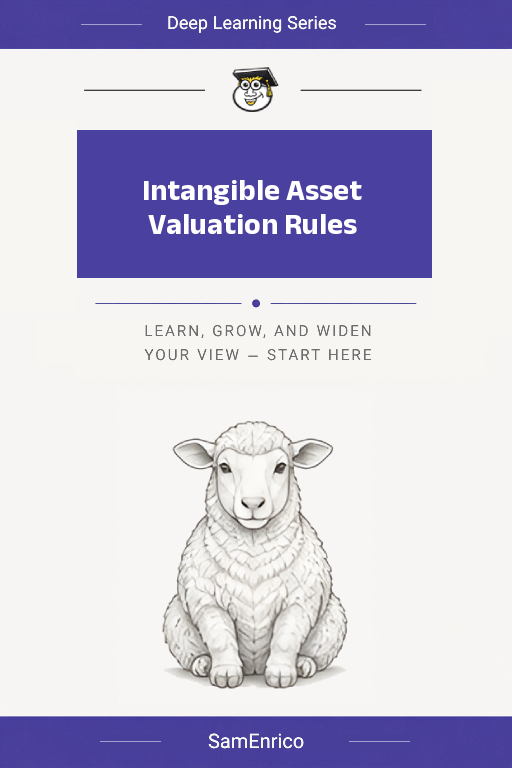
Non-FictionAnnual CheckupIntangibles
Intangible Asset Valuation Rules Audiobook
Value intellectual property, goodwill, and custome
Value intellectual property, goodwill, and customer lists for estate and gift tax purposes.
Formats
Free sample
Chapter 1: The Invisible Fortune--The day her husband died, Sarah discovered she was worth $14 million more than she thought. Not in cash. Not in real estate. Not in the modest stock portfolio they had built together over forty years. The wealth was invisible—a customer list, a brand name, and thirty years of accumulated goodwill in a regional plumbing supply business that her husband had run from a cinder-block building on the edge of town.The IRS found it before she did.Eighteen months after filing the estate tax return—which had valued the business at 2.1millionbasedonitsphysicalassetsandcashinthebank—Sarahreceivedanoticeofdeficiency.The IRShadperformeditsownvaluation.Usingamethodshehadneverheardofcalledthe Multi−Period Excess Earnings Method,theagencyconcludedthatthebusiness′scustomerrelationshipsandtradenamewereworthanadditional2.1 million based on its physical assets and cash in the bank—Sarah received a notice of deficiency.
The IRS had performed its own valuation. Using a method she had never heard of called the Multi-Period Excess Earnings Method, the agency concluded that the business's customer relationships and trade name were worth an additional 2.1millionbasedonitsphysicalassetsandcashinthebank—Sarahreceivedanoticeofdeficiency.The IRShadperformeditsownvaluation.Usingamethodshehadneverheardofcalledthe Multi−Period Excess Earnings Method,theagencyconcludedthatthebusiness′scustomerrelationshipsandtradenamewereworthanadditional14 million. The resulting tax bill, including penalties for "substantial valuation misstatement," was $5.6 million—more than the family's entire liquid net worth.Sarah's attorney explained the bad news first: the statute of limitations had not yet expired because the original appraisal had failed to include one of the six required elements for adequate disclosure. The IRS could audit her return indefinitely. Then came the worse news: the family had no defense because they had never identified the intangible assets in their estate planning documents.
"You cannot value what you have not named," the attorney said, "and the IRS will name it for you."This book exists to ensure you are never Sarah.The landscape of American wealth has transformed fundamentally over the past three decades, but estate planning—and critically, estate tax valuation—has not kept pace. In 1990, the typical millionaire's net worth consisted of publicly traded stocks, bonds, and real estate. Today, for families owning closely-held businesses, professional practices, or intellectual property, intangible assets routinely constitute 70% to 90% of enterprise value. Customer lists, trade secrets, patents, trademarks, non-compete agreements, and goodwill are no longer peripheral considerations. They are the fortune.Yet the IRS knows this, and the IRS has a playbook.
Revenue Ruling 59-60, the foundational document for estate and gift tax valuations, was written in 1959—before the personal computer, before the internet, before intellectual property became the dominant…
This is the end of the free sample. Get the Audiobook to keep going. Buy now
About this book
Details
- Author
- Whelan Cortney
- Publisher
- SamEnrico
- Language
- English
- Genre
- Non-Fiction, Annual Checkup, Intangibles
- Released
- 2026-05-30
- Pages (approx.)
- 153
- Available as
- eBook, Audiobook

Listen in the VoxFlicks app
Audiobooks and audio dramas wherever you go. Sign in with your SamEnrico account and press play.
More by Whelan Cortney
 Breaking Parental Criticism LoopsWhelan Cortney$11.99
 Physical Release for AngerWhelan Cortney$11.99
 Nightmare Processing For GriefWhelan Cortney$11.99
 Past Trauma Anger TriggersWhelan Cortney$11.99
 Keto One Meal A Day PlanWhelan Cortney$11.99
 Missing 411 David PaulidesWhelan Cortney$11.99
 Race Bias In IdentificationWhelan Cortney$11.99
 The Serpent’s Oath: Nefertiti’s Forgotten ExileWhelan Cortney$11.99
 The Armada's Last Broadcast: England's Digital DefianceWhelan Cortney$11.99
 How to Produce SpecialtyWhelan Cortney$11.99
 Understanding SynesthesiaWhelan Cortney$11.99
 How to Produce Golf EquipmentWhelan Cortney$11.99
You may also like
 Hong Kong Handover 1997Dunn Johnnie$11.99
 Zumba For Postnatal Recovery CourseNeal Christian$11.99
 Zumba for BeginnersLadner Nikia$11.99
 YouTube Comment Mining GuideHumes Pandora$12.99
 Worry Box MeditationCarlin Rudy$11.99
 Workplace Stress MeditationNguyen Lynn$11.99
 Workplace Stress and Sleep RepairHawley Ivory$11.99
 Workplace Perfectionism CureDelaney Jeffry$11.99
 Workplace Injustice Anger GuideWallen Isabelle$11.99
 Work Addiction and Burnout LinkGreenwood Ester$11.99
 Women in Yoga and WellnessBeattie Galina$11.99
 Women in Stand Up ComedyChun Evangeline$11.99