
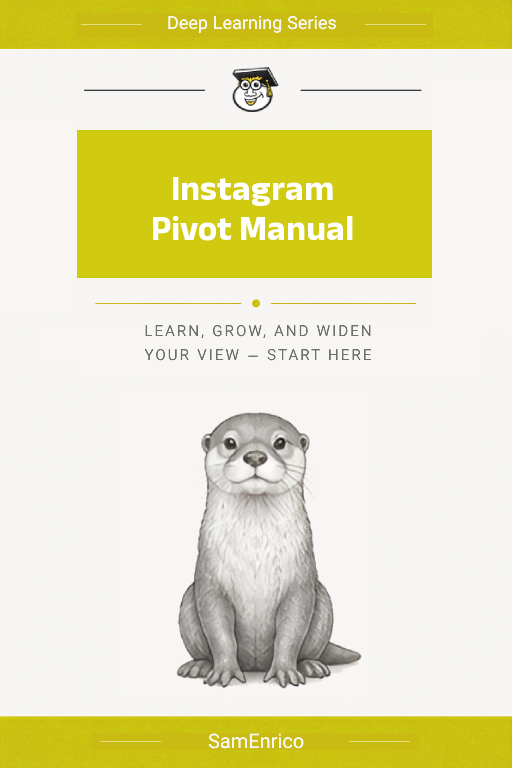
Non-FictionStartup GuideProduct Evolution
Instagram Pivot Manual eBook
Study how Instagram pivoted from Burbn, a cluttere
by Hooper Altha
Study how Instagram pivoted from Burbn, a cluttered check in app, to a streamlined photo sharing platform including feature pruning and user feedback loops.
Formats
Free sample
Chapter 1: The Whiskey Hangover--–- Kevin Systrom was nursing a glass of bourbon when the realization hit him like a physical blow. It was a cold December evening in 2009, and he sat alone in the cramped San Francisco office he shared with his co-founder, Mike Krieger. The dashboard on his laptop screen told a story he had been avoiding for weeks: Burbn, the location-based check-in app he had named after his favorite whiskey, was dead on arrival. Ninety-eight of his one hundred users had opened the app exactly once, poked around for less than a minute, and never returned. Two users, however, were doing something strange.
They were using Burbn every single day—not to check in, not to earn points, not to plan nights out with friends. They were using it to share photos of their food, their commutes, and their pets.Systrom poured another drink and stared at the ceiling. He had raised $500,000 from top-tier investors. He had a Stanford degree and a stint at Google on his resume. He had done everything right by Silicon Valley standards.
And yet, he had built something nobody wanted.This moment—the moment you realize your product is failing—is the most dangerous and most fertile moment in any founder’s journey. It is dangerous because your ego will fight like hell to protect the story you have been telling yourself. It is fertile because the truth, once accepted, sets you free to build something that actually matters.This chapter is about that moment. It is about the psychological traps that keep founders building the wrong things for too long. It is about the difference between users who tolerate you and users who need you.
And it is about the first, most painful step of any successful pivot: admitting that your current product is a ghost ship sailing toward an iceberg, and that adding more deck chairs will not save it.The Anatomy of a Ghost Ship Let us define our terms clearly. A ghost ship product is one that appears alive on the surface—it has users, it has features, it has a roadmap—but it has no momentum. Users do not return. They do not invite friends. They do not pay.
They do not care. The product exists, but it does not matter.Burbn was a ghost ship disguised as a real company. By the numbers, it looked respectable. One hundred registered users. A functioning i OS app.
A backlog of planned features. Investor meetings scheduled for the new year. But beneath those numbers was a wasteland of indifference. The app’s retention curve was a cliff: day one, one hundred users; day seven, twelve users; day thirty, two users.The two users who stuck around were not using Burbn as intended. They had hacked the product into something else entirely.
They ignored the check-in button. They ignored the points leaderboard. They ignored the planning tools. They posted photos. That was it.
Photos of their morning coffee. Photos of the fog over San Francisco. Photos of their dogs looking confused.Systrom could have dismissed these two users as outliers. Most founders would have. Outliers complicate the narrative.
Outliers suggest that your carefully crafted vision might be wrong. It is much easier to believe that the ninety-eight users who left simply “didn’t get it” than to believe that the two users who stayed are pointing toward the truth.But outliers are not noise. Outliers are signals. They are the canaries in the coal mine of your product strategy. When a small group of users adopts your product in a way you did not predict, you have two choices: ignore them and continue building your original vision, or abandon your original vision and build for them.The difference between successful pivots and failed startups often comes down to which choice the founder makes.The 100/10 Rule: Why Most Users Are a Mirage One of the most dangerous metrics in early-stage product development is “total users.” Founders love to report this number to investors, to their teams, to themselves.
“We have one hundred users!” feels like progress. It is not.Let me introduce you to the 100/10 Rule, a framework that will save you years of wasted effort.The 100: These are users who try your product once or twice, then vanish. They signed up because of a promotion, a blog post, or a friend’s recommendation. They are curious, not committed. They do not return because your product does not solve a pressing problem in their lives.
They are not angry at you—they simply do not think about you at all. Indifference is worse than hatred, because hatred at least implies that you matter enough to provoke an emotional response.The 10: These are users who cannot live without your product. They use it daily, often multiple times per day. They notice when it is down. They tell their friends about it unprompted.
They forgive bugs and missing features because the core value is so strong. They are not representative of the general population—they are better. They are the seeds of everything that matters.Here is the hard truth that most founders never accept: you do not need the 100. The 100 are a distraction. They will tell you they want more features, more options, more complexity.
Their feedback will lead you down endless rabbit holes. They will demand that you build the product they think they want, which is usually just a slightly different version of what already exists.The 10, by contrast, will show you the future. Their behavior—not their words, but their actual, repeated behavior—reveals what your product should become. They are using your product to solve a problem so painful that they will tolerate half-built software to get relief. That problem is your gold mine.Systrom had two users who were posting photos obsessively.
That was his 10. Not one hundred. Not fifty. Two. Two users who cared enough to hack his product into something useful.
Those two users were worth more than a thousand indifferent signups.The Sunk Cost Fallacy in Silicon Valley Why do founders ignore their 10 and continue building for the 100? The answer is psychological, not strategic. It is a cognitive bias called the sunk cost fallacy, and it has destroyed more startups than bad ideas ever have.The sunk cost fallacy works like this: you have invested time, money, and emotional energy into a project. Those investments are gone—they are “sunk”—but your brain treats them as reasons to continue. You think, “We have already spent six months building this feature.
We cannot delete it now.” Or, “We raised money based on this vision. We cannot change direction without looking foolish.”This is the Whiskey Hangover—the specific form of sunk cost fallacy that afflicts product builders. You are hungover from the decisions you have already made. Your head pounds with the memory of late nights coding, investor pitches delivered, and features launched. The easiest way to stop the pain is to keep doing what you have been doing.
More features. More marketing. More denial.But the hangover will not cure itself. Every feature you keep that is not essential to your core value is a…
This is the end of the free sample. Get the eBook to keep going. Buy now
About this book
Details
- Author
- Hooper Altha
- Publisher
- SamEnrico
- Language
- English
- Genre
- Non-Fiction, Startup Guide, Product Evolution
- Released
- 2026-06-01
- Pages (approx.)
- 120
- Available as
- eBook, Audiobook

Read better in the ZLOADR app
Your eBooks on your phone or tablet. Sign in with your SamEnrico account and start reading.
More by Hooper Altha
 The Anger Trigger Log WorkbookHooper Altha$11.99
 EQ Remote Team ManagementHooper Altha$11.99
 Mindfulness For OverworkersHooper Altha$11.99
 Kelsea Ballerini Pop Country GuideHooper Altha$11.99
 Virtual Reality Cognitive TrainingHooper Altha$11.99
 The Vanishing Hour: How 1977’s NYC Blackout Rewrote Time ItselfHooper Altha$11.99
 Gold Beneath the Ashes: The Untold Story of the 1936 Berlin Olympics’ Forgotten ChampionHooper Altha$11.99
 Understanding Frontometaphyseal DysplasiaHooper Altha$17.99
 Andesine MiningHooper Altha$11.99
 Volume Discount AdjustmentHooper Altha$12.99
 How to Start a Bacteria Bed Tile Business (Beginners Guide)Hooper Altha$11.99
You may also like
 Hong Kong Handover 1997Dunn Johnnie$11.99
 Zumba For Postnatal Recovery CourseNeal Christian$11.99
 Zumba for BeginnersLadner Nikia$11.99
 YouTube Comment Mining GuideHumes Pandora$12.99
 Worry Box MeditationCarlin Rudy$11.99
 Workplace Stress MeditationNguyen Lynn$11.99
 Workplace Stress and Sleep RepairHawley Ivory$11.99
 Workplace Perfectionism CureDelaney Jeffry$11.99
 Workplace Injustice Anger GuideWallen Isabelle$11.99
 Work Addiction and Burnout LinkGreenwood Ester$11.99
 Women in Yoga and WellnessBeattie Galina$11.99
 Women in Stand Up ComedyChun Evangeline$11.99