
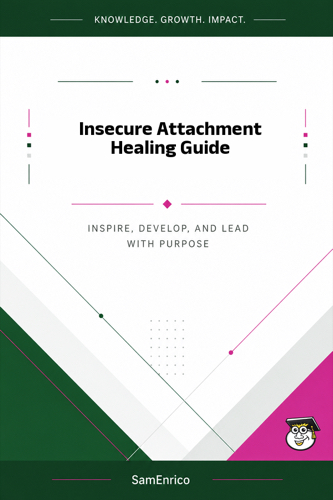
Non-FictionSelf-HelpAttachment Healing
Insecure Attachment Healing Guide eBook
Transform anxious or avoidant patterns into secure
by Vargas Emily
Transform anxious or avoidant patterns into secure, confident relationship behaviors.
Formats
Free sample
Chapter 1: The Neediness Lie--–- You are about to read something that might upset you. Not because it is cruel, but because it contradicts almost everything you have been taught about love, strength, and what it means to be an adult. Here it is: the desire to be held, reassured, and prioritized by the person you love is not a weakness. It is not a character flaw. It is not evidence that you are broken, too much, or unworthy of relationship.
That ache you feel when your partner pulls away—the one that makes you want to text again, to check if they are upset, to ask “are we okay?” for the fifth time—is not neediness. It is biology.The word “needy” has become one of the most effective weapons in modern relationships. Call someone needy, and they will shrink. Call yourself needy, and you will try to want less, ask for less, be less. But here is the truth that the top ten attachment books all converge upon, even if they phrase it differently: human beings are wired for proximity to attachment figures from the cradle to the grave.
A baby crying for its mother is not “needy.” A toddler reaching for a parent’s hand in a crowded store is not “needy.” And an adult whose nervous system registers a partner’s withdrawal as a survival threat is not “needy” either. They are functioning exactly as evolution designed them to function.This chapter dismantles the shame around wanting connection. It reframes attachment not as psychology to be analyzed, but as biology to be understood. By the time you finish these pages, you will never use the word “needy” against yourself again. And more importantly, you will understand why the silent treatment hurts more than a shouted argument, why a delayed text can ruin your afternoon, and why the solution is not to need less—but to signal your needs more clearly while learning to self-regulate while you wait for a response.The Neuroscience of Rejection Let us start with a study that should be taught in every high school health class.
In 2003, neuroscientist Naomi Eisenberger and her colleagues at UCLA performed a now-famous experiment. Participants played a virtual ball-tossing game while inside an f MRI machine. At first, the other two players (who were actually computers) included the participant. Then, without warning, they stopped. The participant was excluded.
They watched the ball pass back and forth between the other two players while they sat alone.The results were shocking. The same brain regions that activated during physical pain—the anterior cingulate cortex and the insula—also activated during social exclusion. The brain does not distinguish between a broken bone and a broken heart. It does not differentiate between a burn on your hand and a partner who refuses to look at you after a fight. To your nervous system, both are threats.
Both demand immediate attention. Both will trigger a cascade of stress hormones designed to compel you to restore safety.This is not a metaphor. This is measurable neurobiology. When your partner gives you the silent treatment, your brain releases the same chemical signals as when you stub your toe. When they cancel plans at the last minute, your anterior cingulate cortex lights up as if you had been physically struck.
When you see that they have read your message but not responded, your insula registers a threat to your social survival. And here is the part that will make you angry: none of this is under your conscious control.You cannot decide not to feel rejection. You can only decide what to do after the feeling arrives.The second critical piece of neuroscience involves two branches of your autonomic nervous system. The first is the sympathetic nervous system, which is responsible for the famous “fight or flight” response. When you perceive a threat—including social rejection—your sympathetic system activates.
Your heart rate increases. Your pupils dilate. Cortisol and adrenaline flood your bloodstream. You become hypervigilant, scanning the environment for more threats. This is the state in which you send the seventh text, or check their Instagram story to see if they are online, or drive past their apartment “just to see if their car is there.”The second branch is the parasympathetic nervous system, specifically the ventral vagal pathway, which is responsible for what Stephen Porges (creator of Polyvagal Theory) calls the “social engagement system.” When this system is active, you feel safe, connected, and open.
Your voice is warm. Your face is expressive. You can receive comfort and offer it. This is the state in which you can say “I am feeling anxious right now, could I have a hug?” without shame.Here is the problem that fuels every anxious-avoidant cycle, every protest behavior, every stonewalling episode. The fight or flight response is fast—milliseconds fast.
The social engagement system is slower. It requires safety cues: a soft voice, eye contact, a familiar face. When your partner withdraws, your sympathetic system activates instantly. And once that system is online, your ability to access your social engagement system drops dramatically. You cannot ask for a hug in a warm voice when your body believes it is under attack.The Tend and Befriend Discovery For decades, the stress response was described as “fight or flight.” But in the year 2000, UCLA psychologist Shelley Taylor and her colleagues published a landmark paper pointing out a massive problem with this model.
Most of the research on stress had been conducted on male subjects. When researchers finally studied female subjects, they found something different. Under stress, women often responded not with fight or flight, but with “tend and befriend.”Tending meant tending to offspring. Befriending meant reaching out to social groups. In other words, the mammalian stress response includes a powerful drive toward connection, not just aggression or escape.This discovery changes everything about how we understand attachment insecurity.
The anxious partner who text bombs is not failing at fight or flight. They are succeeding at tend and befriend—but in a context where the other person is not available. The avoidant partner who withdraws is not succeeding at fight or flight either. They are attempting to bypass the entire stress response by shutting down their attachment system before it can activate. Both strategies are adaptations.
Both strategies made sense in the environment in which they were learned. Both strategies become destructive when applied rigidly to adult romantic relationships.Let me be explicit so there is no confusion later in this book: avoidant attachment is not a failure of love. It is a failure of permission. The avoidant person learned that closeness leads to criticism, control, or engulfment. Their nervous system deactivates to protect them.
Anxious attachment is not a failure of independence. It is a failure of predictability. The anxious person learned that caregivers are inconsistent—sometimes warm, sometimes cold. Their nervous system hyperactivates to monitor and chase. Neither is choosing to be this way.
Neither is weak. Both are exhausted.The Intermittent Reinforcement Trap Now we arrive at the mechanism that keeps insecure patterns locked in place. It is borrowed from addiction neuroscience, and it is called intermittent…
This is the end of the free sample. Get the eBook to keep going. Buy now
About this book
Details
- Author
- Vargas Emily
- Publisher
- SamEnrico
- Language
- English
- Genre
- Non-Fiction, Self-Help, Attachment Healing
- Released
- 2026-06-06
- Pages (approx.)
- 142
- Available as
- eBook, Audiobook

Read better in the ZLOADR app
Your eBooks on your phone or tablet. Sign in with your SamEnrico account and start reading.
More by Vargas Emily
 Job Loss Identity Recovery GuideVargas Emily$11.99
 Micronutrients For VegansVargas Emily$11.99
 Remote Return to Office GuideVargas Emily$11.99
 Body Image Resilience WorkbookVargas Emily$11.99
 The Silk Road of Science: How a Russian Chemist Unlocked the Secrets of Fermentation in Central AsiaVargas Emily$11.99
 The Silk Road's Shadow: What If Marco Polo Never Returned?Vargas Emily$11.99
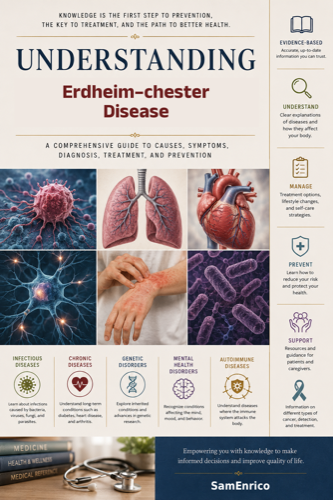 Understanding Erdheim–chester DiseaseVargas Emily$17.99
 Licensed MechanicVargas Emily$11.99
 Remote Cross Cultural MentoringVargas Emily$12.99
 ATS Friendly CV Writing GuideVargas Emily$12.99
 Ultimate Handbook Guide to Seoul : (South Korea) Travel GuideVargas Emily$11.99
You may also like
 Hong Kong Handover 1997Dunn Johnnie$11.99
 Zumba For Postnatal Recovery CourseNeal Christian$11.99
 Zumba for BeginnersLadner Nikia$11.99
 YouTube Comment Mining GuideHumes Pandora$12.99
 Worry Box MeditationCarlin Rudy$11.99
 Workplace Stress MeditationNguyen Lynn$11.99
 Workplace Stress and Sleep RepairHawley Ivory$11.99
 Workplace Perfectionism CureDelaney Jeffry$11.99
 Workplace Injustice Anger GuideWallen Isabelle$11.99
 Work Addiction and Burnout LinkGreenwood Ester$11.99
 Women in Yoga and WellnessBeattie Galina$11.99
 Women in Stand Up ComedyChun Evangeline$11.99