
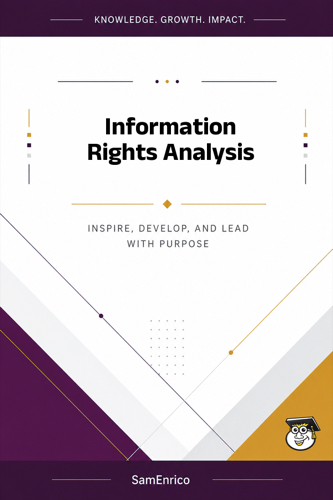
Non-FictionCapital & Valuation RegisterInformation
Information Rights Analysis eBook
Reporting and inspection provisions granted to inv
Reporting and inspection provisions granted to investors in term sheets.
Formats
Free sample
Chapter 1: The Billion-Dollar Blindfold--Every venture capital term sheet contains a trap. It is not hidden in the fine print or buried in the definitions section. It sits in plain view, on the first page, in the largest font, discussed for hours by lawyers and founders alike. The trap is valuation. Not because valuation doesn't matter—it does.
But because valuation is the only number on the term sheet that every single person in the room believes they understand. And that shared confidence is precisely what makes it so dangerous.Consider two real investments made by the same venture capital firm in the same year. The first deal had a pre-money valuation of $8 million. The second had a pre-money valuation of $18 million. By any measure, the first deal looked cheaper.
The firm owned more of that company for less money. But three years later, the first company had imploded, and the second had returned seven times the invested capital. The difference was not the founders, the market, or the technology. The difference was information rights. In the first deal, the firm accepted the standard NVCA information package without modification.
In the second deal, they negotiated aggressively for monthly KPIs, board observer rights, and objective Material Adverse Change triggers. When the second company hit turbulence in year two, the firm saw it in time to help. When the first company hit turbulence, they found out at the board meeting, ninety days too late.This book is about that difference. It is about the ninety-day gap between what founders know and what investors are told. It is about the clauses that close that gap and the clauses that leave it wide open.
And it is about why mastering information rights—not valuation, not liquidation preference, not board seats—is the single highest-leverage activity available to any venture investor.Welcome to Information Rights Analysis.The Day the Music Died Let me tell you about a phone call I received on a Tuesday afternoon in November. The caller was a limited partner in a venture fund I had been advising. His fund had invested $4 million in a Series B round eighteen months earlier. The company was a classic venture story: two Stanford dropouts, a disruptive AI platform, Fortune 500 customers, glowing press. The valuation had been $40 million post-money, which everyone agreed was reasonable given the traction.The caller's voice was tight.
"We just got the quarterly board deck," he said. "And it's not good."I asked for specifics. Revenue was flat, not growing. Cash burn had increased forty percent because the founders had hired aggressively. The runway was down to six months.
The key customer that had anchored the Series B pitch was now sixty days past due on its contract. The founders had known all of this for at least ninety days. They had not mentioned any of it on the monthly investor calls. They had not triggered the MAC clause. They had simply waited until the board meeting to drop the news."Can you do anything?" the LP asked.I reviewed the term sheet.
The information rights were standard NVCA: quarterly unaudited financials within forty-five days, annual audited financials within ninety days, inspection rights upon reasonable notice. No monthly KPIs. No board observer seat. No objective MAC triggers. The founders had not violated a single covenant.
They had simply waited until the last possible moment to share bad news, which is exactly what the term sheet permitted them to do.The fund had two options. They could convert their preferred shares to common and try to sell on the secondary market at a steep discount. Or they could participate in a bridge financing that would dilute them further. Either way, they were going to lose money on a deal that had looked like a home run eighteen months earlier.The LP asked the question that haunts me to this day: "What should we have negotiated differently?"The answer was simple and devastating. They should have negotiated stronger information rights.
Not a lower valuation. Not a better liquidation preference. Not an extra board seat. Just the right to see what was happening inside the company before the quarterly board meeting.That phone call is the reason this book exists.The Three Functions of Every Term Sheet Before we can understand why information rights matter, we need to understand how term sheets are structured. Every venture capital term sheet, regardless of deal size, industry, or stage, contains provisions that serve three distinct functions.
Think of these as the three legs of a stool. Remove any one, and the stool collapses.Economics. These provisions determine how much money investors make if the company succeeds. The most famous economic term is valuation—both pre-money and post-money. But valuation is just the beginning.
Liquidation preference determines who gets paid first and how much in an exit. Participation allows investors to double-dip, taking both their preference and their pro-rata share of remaining proceeds. Anti-dilution protects investors from down-rounds. Pay-to-play penalizes investors who skip future financings. Together, these provisions create the financial geometry of the deal.
They answer the question: if this company succeeds, how rich do I get?Control. These provisions determine who makes decisions when the company faces critical choices. Board composition specifies how many seats each investor group receives and whether independent directors are required. Protective provisions (sometimes called veto rights) give investors the power to block specific actions, such as selling the company, raising more money, changing the authorized share count, or amending the charter. Drag-along rights allow a majority of shareholders to force a minority to participate in a sale.
These provisions answer the question: when disagreements arise, who wins?Rights. These provisions determine what information investors receive and what opportunities they retain. Information rights specify what financial and operational data the company must provide, how often, and with what level of detail. Inspection rights grant physical access to the company's books, records, and facilities. Preemptive rights (also called pro-rata rights) allow investors to maintain their ownership percentage in future financings.
Right of first refusal gives investors the first opportunity to buy shares before they are sold to outsiders. These provisions answer the question: how do I know what's really happening?Most founders—and, embarrassingly, most investors—spend ninety percent of their negotiation time on Economics. They argue about valuation, liquidation preference, and participation until everyone is exhausted. The Control terms get some attention, usually focused on board composition and protective provisions. The Rights terms are treated as boilerplate.
They are reviewed by junior associates, signed without comment, and forgotten.This is a catastrophic mistake.Why Valuation Is a Trap To understand why valuation is a trap, we need to distinguish between what valuation measures and what valuation obscures. Valuation measures the price of a transaction. It tells you how much ownership your investment buys at a specific moment in time. That is useful information, but it is backward-looking. Valuation is a snapshot of a negotiation, not a forecast of a company's future.What valuation obscures is the information gap between investors and founders.
Founders know everything. They know the product roadmap, the customer churn rate, the engineering morale, the co-founder's late-night doubts, the feature that…
This is the end of the free sample. Get the eBook to keep going. Buy now
About this book
Details
- Author
- Mcdade Brandee
- Publisher
- SamEnrico
- Language
- English
- Genre
- Non-Fiction, Capital & Valuation Register, Information
- Released
- 2026-06-08
- Pages (approx.)
- 150
- Available as
- eBook, Audiobook

Read better in the ZLOADR app
Your eBooks on your phone or tablet. Sign in with your SamEnrico account and start reading.
More by Mcdade Brandee
 Snowfall Serenity GuideMcdade Brandee$11.99
 Phosphorus Bone And Energy GuideMcdade Brandee$11.99
 The IBS Pregnancy GuideMcdade Brandee$11.99
 Pet Loss For The IncarceratedMcdade Brandee$11.99
 The Event Planner Stress GuideMcdade Brandee$11.99
 Time Blocking For Burnout RecoveryMcdade Brandee$11.99
 OCD Tips GuideMcdade Brandee$11.99
 Anger In Infertility JourneyMcdade Brandee$11.99
 The Healing Hands of Ancient Nubia: The Doctors of the NileMcdade Brandee$11.99
 The Skyward Spires: How the Gothic Cathedrals Defied HeavenMcdade Brandee$11.99
 Echoes of the Deep: The AI That Listened to the OceanMcdade Brandee$11.99
 The 101 Handbook: Integrated / UnifiedMcdade Brandee$11.99
You may also like
 Hong Kong Handover 1997Dunn Johnnie$11.99
 Zumba For Postnatal Recovery CourseNeal Christian$11.99
 Zumba for BeginnersLadner Nikia$11.99
 YouTube Comment Mining GuideHumes Pandora$12.99
 Worry Box MeditationCarlin Rudy$11.99
 Workplace Stress MeditationNguyen Lynn$11.99
 Workplace Stress and Sleep RepairHawley Ivory$11.99
 Workplace Perfectionism CureDelaney Jeffry$11.99
 Workplace Injustice Anger GuideWallen Isabelle$11.99
 Work Addiction and Burnout LinkGreenwood Ester$11.99
 Women in Yoga and WellnessBeattie Galina$11.99
 Women in Stand Up ComedyChun Evangeline$11.99