
Non-FictionStudent's ShortcutIndustry
Industry Experience for PhD eBook
Frames industry R&D work and technical problem-sol
Frames industry R&D work and technical problem-solving as equivalent to publications for doctoral admissions in applied fields.
Formats
Free sample
Chapter 1: The Translation Trap--–- Every year, hundreds of qualified industry professionals—engineers who have shipped products, biotech researchers who have validated assays, data scientists who have deployed models—decide not to apply for a Ph D. They sit at their desks, open the admissions website of their dream program, and then close the browser. The reason is always the same: “I don’t have enough publications.”This is a tragedy. And it is based on a lie.Not a deliberate lie, exactly. No admissions committee is conspiring against industry applicants.
But there is a silent, pervasive assumption that has calcified into conventional wisdom: the belief that first-author academic publications are the only legitimate currency of research readiness. If you don’t have them, the logic goes, you cannot possibly be ready for doctoral work. You are a doer, not a thinker. A builder, not a researcher.This chapter will dismantle that assumption. It will show you what admissions committees actually look for—which is not papers per se, but the functions that papers serve.
It will introduce a diagnostic tool that separates the rare case of genuine research deficit from the common case of translation deficit. And it will reframe your relationship with your own industry experience: not as something you need to apologize for, but as evidence you need to teach committees to read.By the end of this chapter, you will know exactly which track of this book applies to you, and you will never again ask yourself “Do I have enough papers?” Instead, you will ask the right question: “How do I present my technical problem-solving as evidence of doctoral readiness?”The Anxiety of the Industry Applicant Let us name the feeling. You have been working in R&D for three, five, maybe eight years. You have solved problems that saved your company millions. You have debugged systems that no one else understood.
You have held a prototype in your hands and watched it work for the first time. You have also watched things fail—spectacularly, expensively, and in ways that taught you more than any success ever could.And yet, when you look at the CVs of traditional Ph D applicants, you see a list of first-author papers with journal names you recognize. You see “Nature Communications” or “IEEE Transactions” or “Neur IPS.” You see citations. You see a clean, linear trajectory from undergraduate research assistant to published author. Your own CV, by contrast, looks messy.
Patents. Technical reports. Product launch documents. Internal presentations. Code repositories.
Nothing that looks like a publication. Nothing that seems to count.So you tell yourself: I’m not ready. I don’t have the credentials. Maybe I should take a year to publish something. Maybe I should do a master’s first.
Maybe I should just stay where I am.Stop.This anxiety is real, but it is misdirected. The problem is not that your experience is worthless. The problem is that you are trying to translate your experience into a language the committee does not yet understand—and you are assuming that your failure to translate means failure to qualify. It does not.What Admissions Committees Actually Ask Let me tell you what happens inside an admissions committee meeting. I have synthesized this account from insider descriptions in The Professor Is In and similar sources, as well as interviews with faculty who have served on admissions committees in applied fields.A committee member opens a file.
They have about ten minutes to make an initial judgment. They are not counting publications. They are not running a citation analysis. They are asking three questions, and only three questions.Question One: Research Judgment Can this person identify a meaningful problem, select an appropriate method, execute with rigor, and interpret results honestly—including negative findings?This is the core of doctoral work. A Ph D is not about being smart.
It is about having good judgment: knowing which questions matter, which methods are appropriate, when to stop, when to pivot, and how to learn from failure.Publications are one way to demonstrate research judgment. A well-designed study, honestly reported, with thoughtful limitations, is evidence. But a granted patent that survived adversarial examination is also evidence of judgment—you had to convince a skeptical examiner that your invention was novel and useful. A technical report that passed legal and regulatory review is evidence—you had to anticipate objections and defend your methodology. A validation report that changed manufacturing protocols is evidence—you had to interpret data and recommend action under uncertainty.The committee does not care about the format of the evidence.
They care about what the evidence shows about your judgment. The problem is that industry evidence is often invisible to them because it is packaged differently. Your job—and the job of this book—is to make it visible.Question Two: Direction Clarity Does this applicant understand what doctoral research actually is—iterative, uncertain, long-term, and often lonely—as opposed to industry execution, which is milestone-driven, resourced, team-based, and product-focused?This is where many industry applicants fail, but not for the reason they think. They fail not because they lack direction clarity, but because they describe their experience in ways that suggest they lack it.Consider two ways of describing the same project.Version A: “I worked on a team that optimized the recommendation engine for a streaming platform. My manager assigned me to tune hyperparameters and run A/B tests.
We improved click-through rate by 12 percent.”Version B: “I observed that our recommendation engine performed well on historical data but failed in production because user preferences reversed over time. I hypothesized that position bias in user feedback corrupted our training data. I designed an experiment comparing three candidate sampling strategies, found that stratified negative sampling reduced bias by 34 percent, and documented a trade-off between diversity and relevance that the literature had not previously acknowledged.”Version A sounds like an employee. Version B sounds like a researcher. The difference is not the work—it is the framing.
Version B demonstrates direction clarity because it shows the applicant asking a research question, designing an approach, and interpreting results, not just executing tasks.The committee is not evaluating whether you have written a dissertation before. They are evaluating whether you understand what it means to formulate a research question and pursue it. And you can demonstrate that understanding using industry experience—if you frame it correctly.Question Three: Maturity Will this person finish?This is the most practical question committees ask. A Ph D program is an investment. Faculty spend years mentoring students.
Funding is scarce. Attrition is expensive. Committees want to know that you will survive the inevitable slumps, the failed experiments, the advisor conflicts, the impostor syndrome.Here, industry applicants have an enormous advantage—one they almost never articulate. You have already worked under real constraints: budgets, deadlines, competing priorities, regulatory oversight. You have already experienced failure at scale.
You have already had to motivate yourself when no one was watching. You have already collaborated with people who did not share your expertise or your incentives.Traditional applicants, by contrast, have often only experienced academic success. They have never had a…
This is the end of the free sample. Get the eBook to keep going. Buy now
About this book
Details
- Author
- Villanueva Freeman
- Publisher
- SamEnrico
- Language
- English
- Genre
- Non-Fiction, Student's Shortcut, Industry
- Released
- 2026-05-30
- Pages (approx.)
- 137
- Available as
- eBook, Audiobook

Read better in the ZLOADR app
Your eBooks on your phone or tablet. Sign in with your SamEnrico account and start reading.
More by Villanueva Freeman
 EMDR And Dream Processing ManualVillanueva Freeman$11.99
 The Assertive Cultural Adaptation GuideVillanueva Freeman$11.99
 Ottoman Empire Napoleonic Relations HandbookVillanueva Freeman$11.99
 The Memory Palace Construction GuideVillanueva Freeman$11.99
 DBT For HopelessnessVillanueva Freeman$11.99
 Silk and Scandal: The Duchess Who Ruled from the ShadowsVillanueva Freeman$11.99
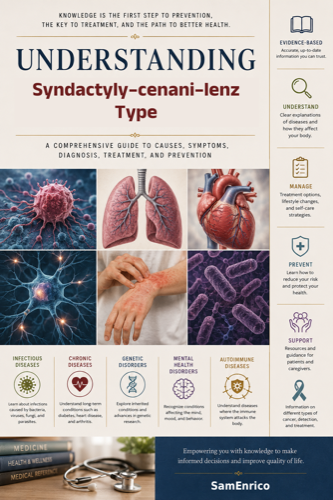 Understanding Syndactyly–cenani–lenz TypeVillanueva Freeman$17.99
 Long Term Contracts ChinaVillanueva Freeman$12.99
 Fry CookVillanueva Freeman$11.99
 How to Start a Muslin Finishing Business (Beginners Guide)Villanueva Freeman$11.99
You may also like
 Hong Kong Handover 1997Dunn Johnnie$11.99
 Zumba For Postnatal Recovery CourseNeal Christian$11.99
 Zumba for BeginnersLadner Nikia$11.99
 YouTube Comment Mining GuideHumes Pandora$12.99
 Worry Box MeditationCarlin Rudy$11.99
 Workplace Stress MeditationNguyen Lynn$11.99
 Workplace Stress and Sleep RepairHawley Ivory$11.99
 Workplace Perfectionism CureDelaney Jeffry$11.99
 Workplace Injustice Anger GuideWallen Isabelle$11.99
 Work Addiction and Burnout LinkGreenwood Ester$11.99
 Women in Yoga and WellnessBeattie Galina$11.99
 Women in Stand Up ComedyChun Evangeline$11.99