
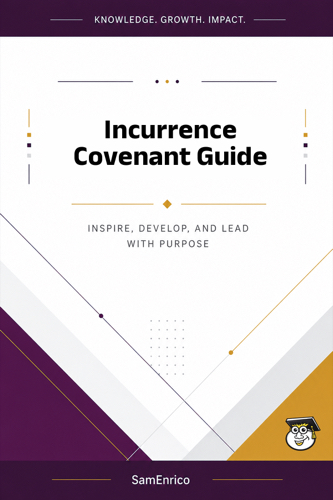
Non-FictionCapital & Valuation Register
Incurrence Covenant Guide Audiobook
Models debt incurrence tests based on pro-forma le
Models debt incurrence tests based on pro-forma leverage ratios.
Formats
Free sample
Chapter 1: The Two Billion Dollar Comma--–- In the summer of 2021, a well-regarded private equity firm signed off on a $2.1 billion leveraged buyout of a specialty chemicals company. The deal had everything: a blue-chip sponsor, a resilient target with pricing power, and a debt package that was oversubscribed within hours. The credit agreement ran 487 pages. The incurrence covenant, buried on page 312, contained a single comma that should not have been there. That comma shifted the timing of a pro-forma adjustment by three months.
When the company's earnings dipped the following year, that comma turned a technical pass into a catastrophic fail. The lenders lost $400 million. The sponsor lost its equity. And the lawyers who drafted the comma—both sets of them—spent the next eighteen months in litigation.The incurrence covenant is the most powerful and most misunderstood provision in modern leveraged finance. It determines how much debt a company can raise, when it can raise it, and under what conditions.
It separates the winners from the losers in distressed situations. And yet, most professionals who rely on it every day cannot explain how it actually works.This book exists because of that comma.The Problem That Created Incurrence Covenants To understand why incurrence covenants exist, you must first understand the problem they were designed to solve. In the early 1980s, corporate lending operated on a simple model: a company borrowed money from a bank, and the bank required the company to maintain certain financial ratios every single quarter. If the company's leverage exceeded 4.0x at any quarter-end, the bank could declare a default, accelerate the loan, and seize collateral. These were called maintenance covenants.For a bank lending to a stable industrial company, this worked beautifully.
The bank had a direct relationship with the borrower, regular access to internal financial information, and the ability to call a loan officer if something looked wrong.Then came the high-yield bond market.Michael Milken and Drexel Burnham Lambert pioneered the idea of selling debt to hundreds of disparate investors rather than a single bank. A bondholder in Tokyo cannot pick up the phone and negotiate a waiver. A mutual fund in Boston cannot inspect the borrower's monthly financials. The entire relationship changed from ongoing monitoring to upfront underwriting.The bond market needed a different kind of covenant. Not quarterly testing—that was operationally impossible when you had thousands of bondholders.
Instead, the covenant would only trigger when the borrower took an action that increased risk, like issuing new debt or…
This is the end of the free sample. Get the Audiobook to keep going. Buy now
About this book
Details
- Author
- Tackett Henry
- Publisher
- SamEnrico
- Language
- English
- Genre
- Non-Fiction, Capital & Valuation Register
- Released
- 2026-06-06
- Pages (approx.)
- 141
- Available as
- eBook, Audiobook

Listen in the VoxFlicks app
Audiobooks and audio dramas wherever you go. Sign in with your SamEnrico account and press play.
More by Tackett Henry
 Alcoholism Recovery for Introverts WorkbookTackett Henry$11.99
 Working Parent Boundary SettingTackett Henry$11.99
 Work Addiction for PsychologistsTackett Henry$11.99
 The Great Shanghai Fake: The Million-Dollar Insurance Scam That Fooled a NationTackett Henry$11.99
 Cross Border Payment Automation RoadmapTackett Henry$12.99
 Stamp CollectingTackett Henry$11.99
 How to Produce AlcoholsTackett Henry$11.99
 How to Become a Maintenance SupervisorTackett Henry$11.99
You may also like
 Hong Kong Handover 1997Dunn Johnnie$11.99
 Zumba For Postnatal Recovery CourseNeal Christian$11.99
 Zumba for BeginnersLadner Nikia$11.99
 YouTube Comment Mining GuideHumes Pandora$12.99
 Worry Box MeditationCarlin Rudy$11.99
 Workplace Stress MeditationNguyen Lynn$11.99
 Workplace Stress and Sleep RepairHawley Ivory$11.99
 Workplace Perfectionism CureDelaney Jeffry$11.99
 Workplace Injustice Anger GuideWallen Isabelle$11.99
 Work Addiction and Burnout LinkGreenwood Ester$11.99
 Women in Yoga and WellnessBeattie Galina$11.99
 Women in Stand Up ComedyChun Evangeline$11.99