
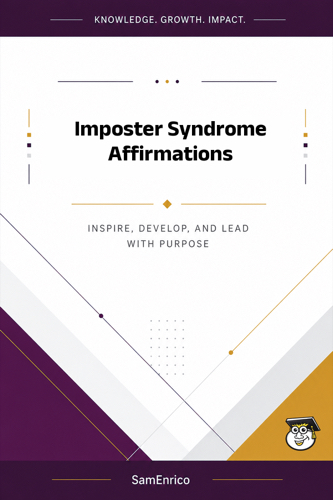
Non-FictionSelf-HelpAffirmations
Imposter Syndrome Affirmations
Use evidence-based statements to interrupt fraudul
Use evidence-based statements to interrupt fraudulent feelings in real time.
Formats
About this book
Free sample
Chapter 1: The Affirmation Trap--–- You have probably done it before. Standing in front of a mirror, or sitting in a parked car before a big meeting, repeating some version of the phrase: “I am enough. I am capable. I belong here.” And instead of feeling empowered, you felt worse. A little nauseous, perhaps.
Definitely unconvinced. The voice in your head—the one that sounds reasonable and cruel in equal measure—piped up immediately: That’s a lie. You don’t really believe that. Who are you trying to fool?If this has happened to you, you are not broken. You are not resistant to self-help.
And you are certainly not alone. In fact, your brain’s rejection of those generic, upbeat affirmations is not a bug—it is a feature. A feature of a healthy, pattern-recognizing, truth-seeking mind that refuses to swallow a platitude when the evidence of your own perceived fraudulence feels so much heavier.This chapter is called The Affirmation Trap for a reason. The trap is this: we have been told that positive thinking is the antidote to negative self-talk. But for people who experience imposter syndrome—that persistent, gut-churning belief that you have fooled everyone into overestimating your abilities—standard positive affirmations do not work.
Worse, they can increase anxiety. The gap between what you are saying (“I am worthy”) and what you believe (“I am a fraud about to be discovered”) creates cognitive dissonance, and your brain resolves that dissonance not by upgrading your self-image, but by discarding the affirmation as useless propaganda.This book exists because that model is backwards. You do not need softer, kinder, more generic lies to tell yourself. You need sharper, more specific, evidence-based statements that your logical brain cannot refute. You need to stop asking for faith and start citing data.This chapter will walk you through exactly why traditional affirmations fail for the imposter-prone brain, introduce the core concept of the Evidence-Based Affirmation, and give you your first real tool for interrupting the fraud feeling in real time.
By the end of this chapter, you will never again waste time telling yourself “I am enough.” You will have…
This is the end of the free sample. Get the eBook to keep going. Buy now
Contents
- Chapter 1
- Chapter 2
- Chapter 3
- Chapter 4
- Chapter 5
- Chapter 6
- Chapter 7
- Chapter 8
- Chapter 9
- Chapter 10
- Chapter 11
- Chapter 12
Details
- Author
- Woodson Hulda
- Publisher
- SamEnrico
- Language
- English
- Genre
- Non-Fiction, Self-Help, Affirmations
- Released
- 2026-06-05
- Pages (approx.)
- 135
- Available as
- eBook, Audiobook

Read better in the ZLOADR app
Your eBooks on your phone or tablet. Sign in with your SamEnrico account and start reading.
More by Woodson Hulda
 Resilience Training CourseWoodson Hulda$11.99
 Financial Stress Sleep Solutions GuideWoodson Hulda$11.99
 Thunberg Mental HealthWoodson Hulda$11.99
 Fitness Instagram Body ComparisonWoodson Hulda$11.99
 The Herd Immunity PrimerWoodson Hulda$11.99
 Low Self Worth From Divorce OriginsWoodson Hulda$11.99
 Self Talk for Career SuccessWoodson Hulda$11.99
 FLDS Polygamy EscapeWoodson Hulda$11.99
 Bloodlines of Power: The Bhuttos and Pakistan's Unfinished RevolutionWoodson Hulda$11.99
 The Silent Scream: The Lost Boy Who Defied the SystemWoodson Hulda$11.99
 Frostbound Hearts: The Forbidden Love of Skadi and NjordWoodson Hulda$11.99
 The Dancer's Guide to PryvitWoodson Hulda$11.99
You may also like
 Hong Kong Handover 1997Dunn Johnnie$11.99
 Zumba For Postnatal Recovery CourseNeal Christian$11.99
 Zumba for BeginnersLadner Nikia$11.99
 YouTube Comment Mining GuideHumes Pandora$12.99
 Worry Box MeditationCarlin Rudy$11.99
 Workplace Stress MeditationNguyen Lynn$11.99
 Workplace Stress and Sleep RepairHawley Ivory$11.99
 Workplace Perfectionism CureDelaney Jeffry$11.99
 Workplace Injustice Anger GuideWallen Isabelle$11.99
 Work Addiction and Burnout LinkGreenwood Ester$11.99
 Women in Yoga and WellnessBeattie Galina$11.99
 Women in Stand Up ComedyChun Evangeline$11.99