
Imposter At Work Guide eBook
Overcome professional self doubt and own your expe
Overcome professional self doubt and own your expertise.
Formats
Free sample
Chapter 1: The Secret Keepers--–- You are not broken. Let that sentence land before we go anywhere else. Not “you are not broken, but.” Not “you are not broken, however.” Just: you are not broken. If you have picked up this book, there is a very good chance that you have spent weeks, months, or perhaps years secretly convinced that you are one performance review away from being exposed as a fraud. You believe your colleagues are smarter, more prepared, and more legitimate than you.
You believe your successes are flukes—lucky breaks, good timing, or the result of people not yet having figured you out. And you believe that someday, soon, the other shoe will drop. Someone will tap you on the shoulder and say, “We’ve reviewed your file. You don’t belong here. Please pack your desk.”I have news for you.
That moment is not coming. Not because you will finally become “good enough” to deserve your seat—but because you were already good enough the day you walked in. The feeling that says otherwise is not evidence. It is a symptom. And symptoms are not diagnoses.This chapter is called “The Secret Keepers” for a reason.
You are not alone in keeping this secret. In fact, you are in spectacular company. The most accomplished people in almost every field—Nobel laureates, Fortune 500 CEOs, award-winning artists, celebrated surgeons, and elite athletes—have described feeling exactly what you feel. The difference is not that they stopped feeling like imposters. The difference is that they stopped letting the feeling stop them.
And that is precisely what this book will teach you to do.Before we can fix a problem, we have to understand it. Most people who struggle with professional self-doubt make one critical error: they treat the feeling as proof of inadequacy rather than as a predictable psychological response to a specific set of conditions. This chapter will dismantle that error. You will learn why high competence combined with high responsibility almost guarantees imposter feelings. You will learn the five distinct ways imposter syndrome shows up in your behavior—and why identifying your personal “face of fraud” is the first step toward disarming it.
You will learn why caring deeply about your work is the actual root of your anxiety, not a sign that you lack skill. And you will take your first concrete action: a diagnostic assessment that will serve as your compass for the rest of this book.Let us begin with a question that will reframe everything you think you know about yourself.The Paradox of the Competent Imagine two employees at the same level in the same company. The first employee is genuinely unqualified. They were hired through a clerical error, lack the baseline skills for the role, and produce work that is consistently below standard. The second employee is highly qualified.
They have a track record of success, possess all the required skills, and consistently deliver above-average results. Which of these two employees is more likely to experience imposter syndrome?If you answered the unqualified employee, you are wrong. And that is the most important misconception to clear up immediately.Research consistently shows that imposter syndrome is positively correlated with competence and achievement. The more you know, the more acutely you are aware of what you do not know. The more responsibility you carry, the more opportunities you have to make mistakes that matter.
The more visible your work becomes, the more people are watching—and the more you fear being “found out.” Psychologists call this the Imposter Equation: (Competence × Responsibility) ÷ Psychological Safety = Imposter Intensity.Let me break that down. Competence is your actual skill and knowledge. Responsibility is the weight of the outcomes you are accountable for. Multiply them, and you get the raw potential for imposter feelings. Then divide by psychological safety—the degree to which your environment tolerates questions, mistakes, and vulnerability.
If your workplace punishes uncertainty, the denominator shrinks, and the intensity spikes.The unqualified employee, by contrast, often feels no imposter syndrome at all. This phenomenon has a name: the Dunning-Kruger effect. People with low competence tend to overestimate their abilities because they lack the metacognitive skills to recognize their own limitations. They do not know what they do not know. And because they are not accountable for high-stakes outcomes, they never face the kind of scrutiny that would trigger self-doubt.You feel like an imposter not in spite of your competence but because of it.
The people who never feel like imposters are either ignorant of their limits or apathetic about their performance. You are neither. You care. And caring, as you are about to discover, is the actual root of the problem—and also the solution.The Care Paradox Let me tell you about a software engineer I worked with several years ago. Let us call her Priya.
Priya had been promoted three times in five years. She had led two major product launches that generated millions in revenue. Her performance reviews were glowing. And yet, every Monday morning, she sat in her car outside the office for ten minutes, unable to open the door. Her internal monologue sounded like this: “Today is the day they figure out I don’t actually know what I’m doing.
I’ve been faking it for five years. My luck is about to run out.”Priya was experiencing the Care Paradox in its purest form. The Care Paradox states: high performers feel imposter syndrome because they care, not because they lack skill. The people who never question whether they belong are often the people who do not care enough to ask the question. Apathy is the enemy of self-doubt.
Caring is its fuel.Here is why. When you care deeply about your work, several things happen automatically. First, you set high standards for yourself—standards that may be higher than anyone else’s expectations of you. Second, you pay close attention to gaps between those standards and your actual performance, because you want to improve. Third, you remember your mistakes vividly because they feel like violations of your values.
Fourth, you discount your successes because you attribute them to effort (which you are supposed to put in) rather than to talent (which would feel like proof of belonging).The result is a distorted internal scorecard. Your mistakes loom large. Your wins shrink to nothing. And because you are surrounded by other high performers who are equally skilled at hiding their own self-doubt, you conclude that you are the only one struggling. This is the secret that keepers keep: everyone is faking it to some degree.
The difference is that some people have learned to fake confidence while you are still faking competence.The solution to the Care Paradox is not to care less. I do not want you to become apathetic or detached from your work. The solution is to decouple caring from self-punishment. You can care deeply about doing good work without using every minor imperfection as evidence of your illegitimacy. You can hold yourself to high standards without treating those standards as a pass-fail exam where one wrong answer erases everything you have ever done right.Decoupling is…
This is the end of the free sample. Get the eBook to keep going. Buy now
About this book
Details
- Author
- Hirsch Maybell
- Publisher
- SamEnrico
- Language
- English
- Genre
- Non-Fiction, Self-Help, Career
- Released
- 2026-06-10
- Pages (approx.)
- 132
- Available as
- eBook, Audiobook

Read better in the ZLOADR app
Your eBooks on your phone or tablet. Sign in with your SamEnrico account and start reading.
More by Hirsch Maybell
 The Startup Insurance AccountingHirsch Maybell$11.99
 Artist Studio Time GuideHirsch Maybell$11.99
 Iggy Pop Stooge IdolHirsch Maybell$11.99
 Political Refugee Talent FlowsHirsch Maybell$11.99
 Morning Block Scheduling GuideHirsch Maybell$11.99
 Listening Protocols for HypnosisHirsch Maybell$11.99
 Deep Work RitualsHirsch Maybell$11.99
 The Clockmakers of Geneva: A Love Story in TimeHirsch Maybell$11.99
 The Black Sun’s Oath: A Slavic Knight’s Forgotten QuestHirsch Maybell$11.99
 Exploring Poster Art: Lithography & AdvertisingHirsch Maybell$11.99
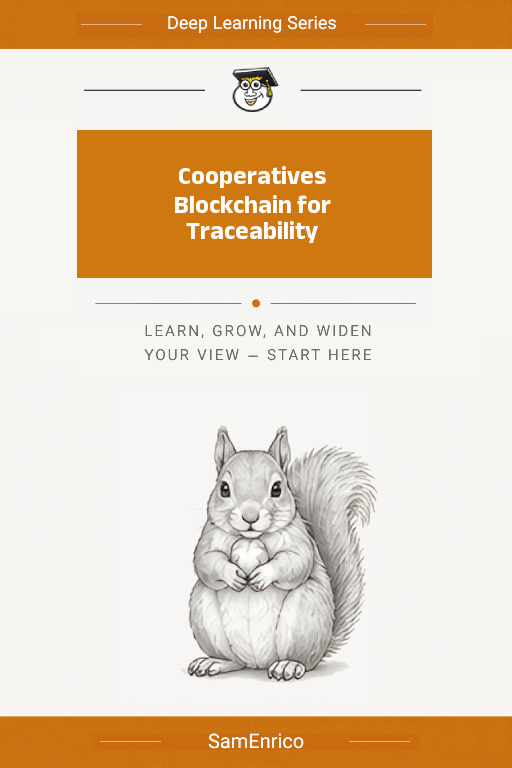 Cooperatives Blockchain for TraceabilityHirsch Maybell$12.99
 South African Stock Option TaxationHirsch Maybell$12.99
You may also like
 The Joy of WorkCulbertson Marceline$11.99
 The Career Ruin FearKerns Ladawn$11.99
 The Career Change Difficult TalkJoyner Jere$11.99
 Emotional Regulation For Job LossThigpen Lakesha$11.99
 Career Affirmations GuideEly Minerva$11.99
 Workplace Assertiveness SkillsRau Wilhelmina$11.99
 Forgiveness for Career SetbacksBanuelos Dayna$11.99
 Validation For Career CrisesRedd Aletha$11.99
 The Resignation ConversationWhitfield Fletcher$11.99
 The Career Change AnnouncementFredrickson Briana$11.99
 Resigning From a Job GracefullyHughey Raina$11.99
 Fear Of Failure At WorkKirchner Sondra$11.99