
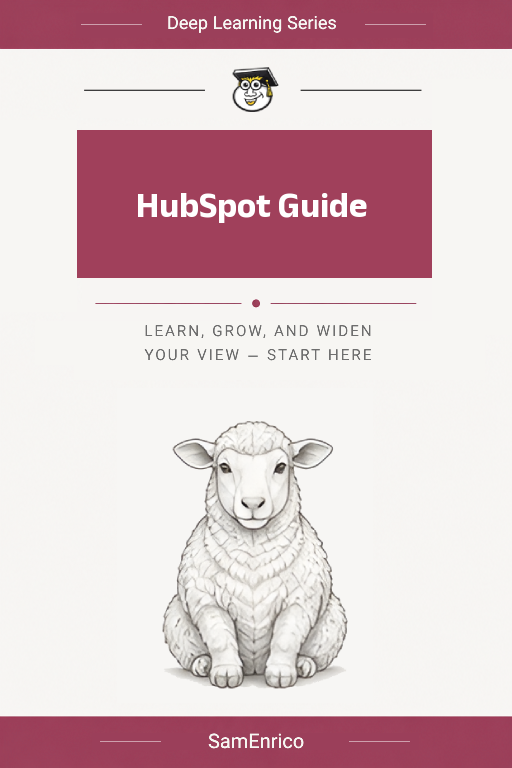
HubSpot Guide eBook
Explore culture code transparency, inbound recruit
Explore culture code transparency, inbound recruiting, and employee advocacy for talent attraction.
Formats
Free sample
Chapter 1: The Iceberg Principle...--The first time I saw a high-growth company collapse under the weight of its own hiring, I was sitting in a glass-walled conference room on the third floor of a venture-backed startup in San Francisco. The founder, a brilliant engineer named Marcus, had just finished a presentation to the board showing 300% year-over-year revenue growth. The room applauded. The lead investor gave a standing ovation. Everyone was smiling.Three weeks later, six key engineers quit on the same Friday.They didn't quit because of compensation.
They didn't quit because of better offers. They quit because, as one of them wrote in a devastatingly honest exit interview, "I realized I was hired into a company that looked amazing from the outside but was rotting from the inside out. The culture we sold to candidates wasn't the culture we lived."Marcus called me the day after that exit interview. He was confused, angry, and embarrassed. "We have a four-star rating on Glassdoor," he said.
"We have free lunches and a nap room and equity. How is this possible?"I asked him a question that changed how I think about talent forever: "Marcus, do your employees trust each other enough to say 'I don't know' in a meeting?"He was silent for a long time. Then he said, "No. Definitely not."And that, right there, is the iceberg principle.Here is the uncomfortable truth that most founders, recruiters, and HR leaders refuse to accept: you cannot out-recruit a bad reputation. No amount of inbound marketing, no careers page optimization, no recruiter charm, and no signing bonus will overcome a culture that is broken below the surface.
Candidates are smarter than you think. They will discover the truth within ninety days of hiring. And when they do, they will tell everyone on Glassdoor, Blind, Linked In, and Reddit.This chapter is about why most companies fail at talent attraction before they even write a job description—and how to fix the foundation before you build the house.The New Reality: Your Culture Is Public Infrastructure Fifteen years ago, a company's internal culture was exactly that: internal. The only people who knew what it was like to work at your company were your employees. If you wanted to attract talent, you controlled the narrative through employer branding, polished careers pages, and carefully curated testimonials.
Candidates had almost no visibility into the truth until after they accepted the offer and showed up on day one.That world is dead.Today, your internal culture is public infrastructure. It is as visible and searchable as your product pricing. Platforms like Glassdoor, Blind, Linked In, Reddit, and even Tik Tok have democratized access to insider information. A candidate can now know, before their first interview, whether your engineering team has a psychological safety problem, whether your sales leadership churns through reps every nine months, and whether your "unlimited PTO" policy is actually a trap.Consider this data point: according to a recent survey by Jobvite, 83% of candidates read employer reviews before applying for a job. Among Millennial and Gen Z candidates, that number jumps to 92%.
They are not looking at your careers page first. They are looking at what your employees say about you when you are not in the room.And here is the kicker: candidates trust those anonymous reviews more than they trust you. The Edelman Trust Barometer, which we will explore in depth later in this book, consistently finds that "a person like yourself" is trusted three times more than a CEO, and employees are trusted four times more than corporate communications. When your Glassdoor rating contradicts your careers page, the candidate believes Glassdoor every time.This is not a crisis. It is an opportunity.
But only if you are willing to stop performing culture and start building it.The Hub Spot Example: HEART as a Decision Filter I want to tell you about a company that understood this before almost anyone else. That company is Hub Spot, and their story runs through every chapter of this book because they turned cultural transparency into a competitive advantage long before it was fashionable.In the early 2010s, Hub Spot was growing fast but not always well. They had the same problems as every other high-growth Saa S company: hiring mistakes, culture dilution, and the slow creep of corporate secrecy as the company got bigger. Founder and CTO Dharmesh Shah noticed something troubling. As the company scaled, employees were making decisions based on what they thought leadership wanted, not on shared principles.
Meetings were becoming performative. Junior employees were staying silent. The magic was fading.So Hub Spot did something radical. They stopped trying to control behavior through rules and started codifying behavior through values. They called it HEART: Humble, Empathetic, Adaptable, Remarkable, Transparent.Here is what makes HEART different from the vast majority of corporate values statements.
Most companies have values that are aspirational posters on a wall—"Integrity," "Excellence," "Innovation"—that no one can remember and no one uses to make decisions. Hub Spot's HEART values are decision-making filters. They are designed to be used in real time, in real meetings, when real trade-offs need to be made.Take "Transparent," for example. At most companies, transparency means leadership shares information when it is convenient. At Hub Spot, "Transparent" means sharing board meeting notes with every single employee.
It means having open salary bands. It means documenting why decisions were made, not just what was decided. This directly replaces the corporate secrecy that poisons most scaling organizations.Or take "Humble." At most companies, humility is a nice-to-have personality trait. At Hub Spot, it is a hiring and promotion criterion. The most technically brilliant engineer who cannot admit when they are wrong will not succeed at Hub Spot.
The most polished salesperson who blames others for missed quota will not succeed. Humility is not about being soft; it is about being coachable.What Hub Spot discovered is that these values do not just guide behavior—they attract talent. Candidates who read about HEART and see it demonstrated in interviews self-select into the funnel. Candidates who are repelled by transparency or humility self-select out. This is inbound recruiting at the cultural level, and it is far more powerful than any job posting.The Experience Mindset: Why EX Drives CX Drives Growth Tiffani Bova, a growth and innovation evangelist at Salesforce, wrote a brilliant book called The Experience Mindset.
In it, she makes a deceptively simple argument that fundamentally changed how I think about culture, talent, and business performance.Here is her argument in three sentences:Employee Experience (EX) drives Customer Experience (CX).Customer Experience drives Growth.Therefore, Employee Experience drives Growth.This sounds obvious when you say it out loud. Of course happy employees create happy customers. Of course happy customers buy more, stay longer, and refer their friends. But if this is so obvious, why do so few companies act on it?Because EX is invisible to most leaders. CX is visible—you can measure NPS, churn, support tickets, and revenue.
Growth is visible—you can measure ARR, margins, and market share. But EX? That requires asking uncomfortable questions and sitting with uncomfortable answers. It requires…
This is the end of the free sample. Get the eBook to keep going. Buy now
About this book
Details
- Author
- Hildebrand Santana
- Publisher
- SamEnrico
- Language
- English
- Genre
- Non-Fiction, Strategic Atlas, Talent Intelligence
- Released
- 2026-06-01
- Pages (approx.)
- 152
- Available as
- eBook, Audiobook

Read better in the ZLOADR app
Your eBooks on your phone or tablet. Sign in with your SamEnrico account and start reading.
More by Hildebrand Santana
 Weather Small Talk MasteryHildebrand Santana$11.99
 King's BookshelfHildebrand Santana$11.99
 Ethnicity Gaming DemographicsHildebrand Santana$11.99
 MBSR for Depression RelapseHildebrand Santana$11.99
 Body Scan For Panic AttacksHildebrand Santana$11.99
 The Last Voyage of the Flying Dutchman: A Cursed Port’s SecretHildebrand Santana$11.99
 Executive Assistant to the PresidentHildebrand Santana$11.99
 Consulting Marketing One Page PlanHildebrand Santana$12.99
 Understanding Ptosis Strabismus Ectopic PupilsHildebrand Santana$17.99
 How to Become a Oil-spot WasherHildebrand Santana$11.99
You may also like
 Zapier GuideGallardo Alica$12.99
 Toast GuidePacheco Lorina$12.99
 Stripe Early Talent GuideHendrick Santo$12.99
 SpaceX Hiring GuideObryan Kyung$12.99
 Snap GuidePeak Berenice$12.99
 Salesforce GuideCuster Cruz$12.99
 Rippling GuideMcinnis Josefine$12.99
 Reddit GuideHolton Danyelle$12.99
 Pinterest GuideLindgren Solange$12.99
 Palantir GuideBarrera Shonda$12.99
 OpenAI GuideFay Zack$12.99
 Nvidia GuideOtero Michiko$12.99